

What's the Difference Between Autism and Speech Delay?
Autism vs Speech Delay & Key Differences Explained | Apex
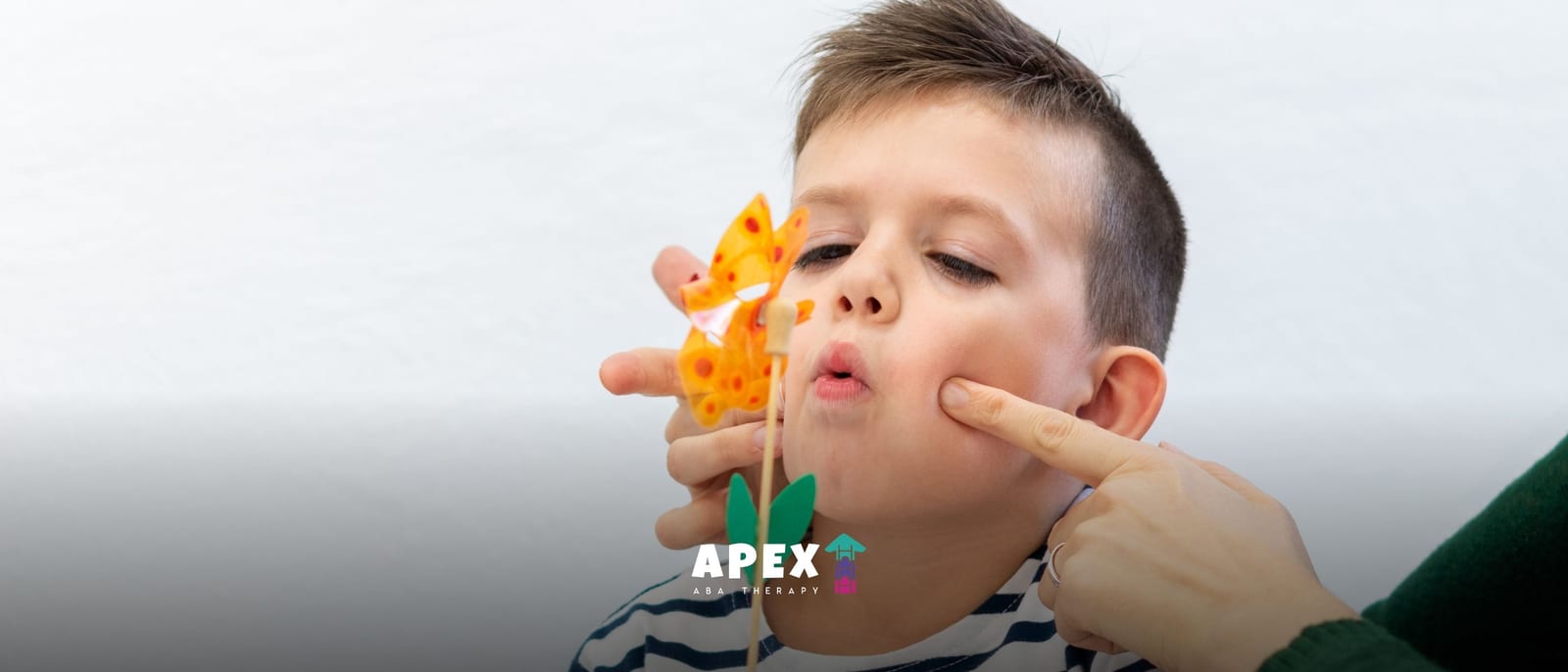
A speech delay means a child is learning to talk later than expected, while their gestures, social skills and play develop on track. Autism affects social communication and behavior, not just speech, so autistic children may also use few gestures, avoid eye contact or repeat actions. A child can have both, so an evaluation is key.
If your toddler isn't talking yet, it's natural to wonder whether it's "just" a speech delay or a sign of autism. Many parents ask this, especially when their child seems to understand everything but says very little. If that sounds like your child, our article on a 2-year-old not talking but understanding everything is a helpful place to start. This guide explains how the two differ, where they overlap, and what to do next.
What Is a Speech Delay?
A speech delay means a child is learning to talk later than expected, while other areas of development are on track. Speech-language pathologists often call this late language emergence, and toddlers with it are sometimes called "late talkers."
The American Speech-Language-Hearing Association describes a common guideline: a 2-year-old with fewer than 50 words and no two-word phrases (ASHA). Late talking is common, and many children catch up by the time they start school.
A child with a speech delay may:
- Say fewer words than other children their age
- Have trouble pronouncing words or putting words together
- Understand much more than they can say
- Still use gestures, eye contact and facial expressions to communicate
- Enjoy playing with others and sharing attention with you
Speech delays can have many causes, including hearing loss, problems with the muscles used for speech, or simply a slower pace of development.
What Is Autism?
Autism spectrum disorder (ASD) is a lifelong difference in how the brain develops. It affects how a child communicates, interacts with others and responds to the world around them.
Autism is more than a speech difference. Some autistic children talk early and use many words, and some speak very little or not at all. What sets autism apart is a pattern of differences in social communication along with repetitive behaviors or focused interests.
Key Differences Between Autism and Speech Delay
The biggest difference is how a child connects and communicates without words.
Speech delay | Autism | |
Spoken words | Fewer words than expected | Can range from no words to many words |
Gestures | Usually points, waves and uses gestures | May use few gestures, like pointing or waving |
Eye contact | Usually looks at faces and shares smiles | May avoid or not keep eye contact |
Response to name | Usually responds | May not respond to their name |
Shared attention | Shows you things they find interesting | May not share interests with others |
Play | Plays in varied, imaginative ways | May line up toys or play the same way each time |
Repetitive behaviors | Not typical | May repeat words, movements or routines |
Social interest | Wants to connect, even without words | May show less interest in other children |
In short, a child with a speech delay usually finds other ways to connect, like pointing, gesturing and making eye contact. An autistic child may also have trouble with those nonverbal ways of communicating.
Where Autism and Speech Delay Overlap
Autism and speech delay can look alike, especially in toddlers. Both can involve:
- Saying few or no words
- Frustration or tantrums when they can't get their needs across
- Trouble following spoken directions
A child can also have both. Many autistic children have a speech delay, and some children with a speech delay are later diagnosed with autism. Other conditions can look similar too, such as speech apraxia, a motor speech disorder that makes it hard to plan the movements for speech.
That's why it's important not to guess. A professional evaluation is the only way to know for sure.
Signs That May Point to Autism
According to the CDC, signs of autism can include (CDC):
- Not responding to their name by 9 months
- Using few or no gestures, like waving goodbye, by 12 months
- Not sharing interests with others by 15 months
- Not pointing to show you something interesting by 18 months
- Avoiding or not keeping eye contact
- Repeating words or phrases over and over (echolalia)
- Lining up toys and getting upset when the order changes
- Getting upset by small changes in routine
- Unusual reactions to sounds, smells, tastes or textures
If your child shows several of these, along with a speech delay, talk to your pediatrician about an autism screening. On the other hand, our article on signs your toddler is not autistic explains the reassuring signs many late talkers show.
How Speech Delay and Autism Are Diagnosed
Speech and Language Evaluation
A speech-language pathologist (SLP) checks how well your child understands words, uses words, and pronounces sounds. They may also recommend a hearing test, because hearing loss is a common cause of speech delay.
Autism Evaluation
An autism evaluation is done by a developmental pediatrician, child psychologist, psychiatrist or neurologist. It looks at social communication, play and behavior, not just speech. Many specialists use the Autism Diagnostic Observation Schedule (ADOS), a play-based assessment.
Why Early Evaluation Matters
Whether your child has a speech delay, autism or both, getting help early makes a real difference. Don't wait to "see if they grow out of it" if you're worried. If your child is later found to be developing on track, an early evaluation has only given you peace of mind.
Treatment and Support
Speech Therapy
Speech therapy helps children with both speech delays and autism. An SLP may use play-based activities, modeling words, expanding on what your child says, and practicing sounds. Speech therapy often works best when parents learn the same strategies to use at home.
ABA Therapy for Autism
For autistic children, Applied Behavior Analysis (ABA) can help build communication alongside social, play and daily living skills. A Board Certified Behavior Analyst (BCBA) designs a plan around your child's needs, which may include:
- Teaching your child to ask for what they want, using words, signs or pictures
- Reducing frustration by giving your child a reliable way to communicate
- Building back-and-forth play and shared attention
- Coordinating with your child's speech therapist so goals support each other
Alternative Ways to Communicate
Not every child communicates with spoken words first. Some children use sign language, picture cards, or a speech-generating device. Our guide to AAC devices for autism explains how these tools work. Using AAC doesn't stop a child from learning to talk. It gives them a way to communicate while speech develops.
How to Support Your Child at Home
Whether your child has a speech delay, autism or both, these everyday strategies can help:
- Talk about what you're doing. Narrate routines like bath time, meals and getting dressed.
- Get face to face. Sit at your child's level so they can see your mouth and expressions.
- Follow their lead. Join in with what your child is interested in and name what they're doing.
- Give them time. Pause and wait before answering for them.
- Celebrate all communication. Respond warmly to words, sounds, gestures, signs and pictures.
- Keep routines predictable. Familiar routines give your child more chances to practice the same words.
- Read together. Picture books with simple, repetitive words are great for building vocabulary.
Get Support From Apex ABA Therapy
At Apex ABA Therapy, we help autistic children build communication skills through personalized ABA therapy in North Carolina, Georgia and Maryland. We offer in-home, school-based and daycare ABA, with parent training included, and we work alongside your child's speech therapist.
Contact us to schedule a free consultation and talk through what you're seeing in your child.
Frequently Asked Questions
Q: How do I know if it's autism or just a speech delay?
A: Look at how your child connects without words. Children with a speech delay usually point, gesture, make eye contact and want to share things with you. If your child also has trouble with these, or shows repetitive behaviors, ask your pediatrician about an autism screening.
Q: Can a child have both autism and a speech delay?
A: Yes. Many autistic children have a speech or language delay. A child can also have a speech delay without autism, so an evaluation is the best way to understand your child's needs.
Q: Will my late talker catch up?
A: Many do. Many late talkers catch up to their peers by the time they start school, especially with early support. Speech therapy and everyday language practice at home can help.
Q: Can autistic children talk normally?
A: Some autistic children talk early and use many words, while others speak very little or not at all. Autism affects social communication, so even children with strong vocabularies may have trouble with back-and-forth conversation.
Q: Does ABA therapy help with speech delay?
A: ABA is mainly used for autistic children. It can help build communication skills, like asking for help or making choices, and works well alongside speech therapy. For a speech delay without autism, speech therapy is usually the main treatment.
Sources
- American Speech-Language-Hearing Association. Late Language Emergence (Practice Portal). https://www.asha.org/practice-portal/clinical-topics/late-language-emergence/
- Centers for Disease Control and Prevention. Signs and Symptoms of Autism Spectrum Disorder. https://www.cdc.gov/autism/signs-symptoms/index.html
Get started today
Ready to talk about ABA therapy?
Apex ABA Therapy helps families in North Carolina, Maryland, and Georgia access in-home, school-based, and daycare ABA services.
Popular services
Serving families in