
The Costume Goes On Tuesday: A 5-Week Halloween Plan for Autistic Kids
A week-by-week Halloween plan for autistic kids: costume trials, a trick-or-treat script, a 5-house exit plan, and sensory-safe candy swaps.
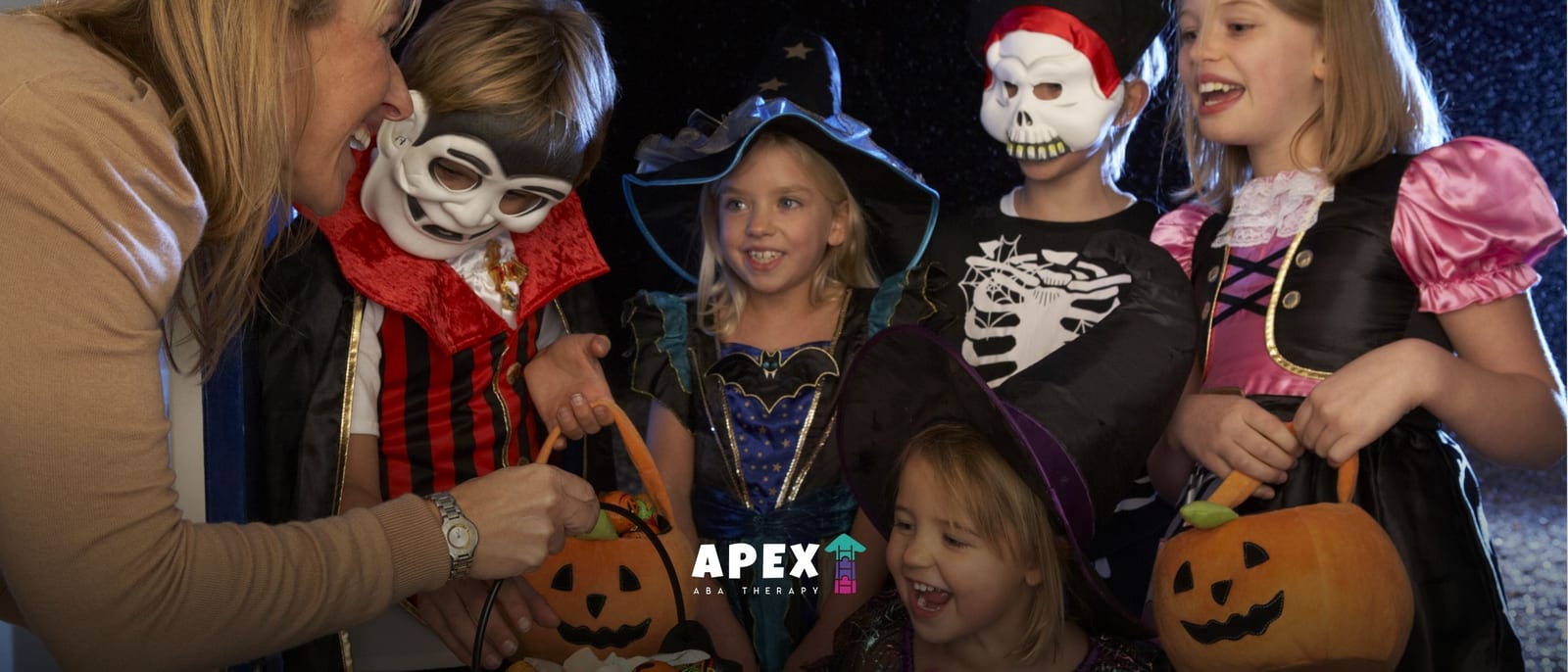
Last year, the costume lasted four minutes. Long enough for a photo on the porch, not long enough to make it past the neighbor's driveway before the tag on the collar became the only thing in the universe that mattered. The candy bucket got left on the sidewalk. Halloween got filed under "we don't do that again."
Here's the thing worth knowing before you write this year off too: none of that was really about Halloween. A scratchy tag, an unplanned route with no clear end, a script nobody rehearsed, these are the actual obstacles, and every one of them is fixable with enough runway.
Halloween is about five weeks out right now, which happens to be exactly enough time to fix them. This is a genuine, five-week plan, not "just try again and hope," built around the same sensory processing realities that made last year hard in the first place.
Why Halloween Is Genuinely Harder, Not Just Different
Halloween stacks several difficult things on top of each other at once: an unfamiliar or uncomfortable costume, a break from the evening routine, strangers who expect a specific scripted exchange, and a level of sensory noise, flashing lights, fog machines, other kids screaming, that a regular Tuesday never asks for.
Our broader guide to autism during the holiday season covers this pattern across every major holiday, and Halloween tends to hit hardest because so much of it is genuinely novel every single year: a new costume, a new route, sometimes a new neighborhood entirely.
When a meltdown happens at the third house, it's rarely random. It's usually one of a few familiar drivers, escape from an uncomfortable costume or overwhelming noise, a bid for attention after being ignored at a porch, or a reaction to sensory overload building all evening. Understanding the function behind a behavior is the same lens ABA uses year-round, and it applies just as well to a Halloween meltdown as anything else.
The Five-Week Plan
Week 5 (now): Choose and trial the costume. Skip anything you haven't physically put on your child yet, no matter how much they loved it in the store. Cut out tags, wash new fabric to soften it, and do a 10-minute trial around the house. If a full costume is a losing battle, a themed t-shirt over regular clothes is still a costume.
Week 4: Walk the actual route, in daylight, with no bucket. Just the walk, so the neighborhood itself stops being a surprise on the night that matters. If you're looking for other ways to build in this kind of low-stakes practice, our list of autism-friendly activities has more ideas for turning a new skill into a repeatable, low-pressure routine.
Week 3: Rehearse the script. Practice the exact exchange your child will use, whether that's "trick or treat," a wave, a pre-made card, or simply reaching into the bowl if pointing works better than words. Role-play both sides of the interaction at home first; our guide to role-playing for social skills walks through exactly this kind of rehearsal in more depth.
Week 2: Set and teach the exit plan. Pick the real number, five houses, ten minutes, one street, before the night arrives, and say it out loud repeatedly in the days leading up: "We're doing five houses, then we're done." A visual countdown (five fingers, five stickers to remove one by one) makes the abstract number concrete.
Week 1: Full dress rehearsal. Costume, script, and the real bucket, all together, on the actual route if possible, ending exactly at house five. This is the one that reveals what still needs adjusting before the real night.
Sensory-Safe Candy: What Actually Helps
Not every child wants the candy at all, and that's fine. The Teal Pumpkin Project, a food-allergy initiative from FARE, encourages households to offer non-food treats like stickers, small toys, or glow sticks alongside candy, and it explicitly describes itself as useful for "other children for whom candy is not an option," which covers plenty of sensory and dietary reasons beyond allergies specifically.
A separate option some autism families use is a blue trick-or-treat bucket, an informal, unofficial signal that a child may not speak or make eye contact at the door. It's genuinely optional and a little contested within the autism community, since some advocates worry it singles a child out without their say, so treat it as one tool to consider, not a must-do.
Making Peace With However the Night Actually Goes
Two houses with a full costume and a real "trick or treat" is a win. So is five houses in pajamas with a wave instead of words. So is handing out candy from your own porch instead of walking at all.
If trick-or-treating itself turns out to be the wrong format this year, that's fine too; our roundup of recreational activities for autism has plenty of lower-pressure alternatives worth trying instead, from a sensory-friendly community event to simply handing out candy together at your own door. The plan above is meant to lower the odds of a repeat of last year, not to guarantee a specific version of the night.
We Build Plans Like This Every Week, Just Not Only for Halloween
A five-week costume-and-script plan is really just applied behavior analysis in miniature: break a hard goal into small steps, rehearse each one enough times that it stops being scary, and build in an exit before you need it.
It's the same structure behind the ABA techniques our clinical team uses year-round for everything from haircuts to dentist visits, and it's exactly the kind of individualized planning parent training at Apex ABA is built around.
If Halloween went sideways last year, or you're bracing for a first one, explore our ABA therapy services across North Carolina, Georgia, and Maryland, or reach out to our team for a plan built around your specific kid, not a generic list.
Frequently Asked Questions
Q: Should I tell neighbors in advance that my child is autistic?
That's entirely your call, and there's no single right answer. Some families find a quick heads-up to regular neighbors makes the night smoother, while others prefer not to disclose anything and simply let the visit unfold naturally. Neither approach is wrong.
Q: What if my child wants to trick-or-treat but refuses to wear a costume?
Let them go as themselves. Trick-or-treating without a costume is increasingly common and accepted, and forcing a costume issue can turn a fun night into a fight before you even leave the house.
Q: Is it okay to trick-or-treat earlier in the evening, before it gets dark or crowded?
Yes, and many families do exactly this. Some neighborhoods and organized events specifically offer earlier or daytime trick-or-treating hours for this reason, so it's worth checking local listings before assuming evening is the only option.
Q: How do I handle a meltdown if it happens despite all the preparation?
Preparation lowers the odds, but it doesn't guarantee a meltdown-free night. Have your exit plan ready to use immediately rather than pushing through "just one more house," and treat leaving early as the plan working, not the plan failing.
Sources
- FARE (Food Allergy Research & Education), About the Teal Pumpkin Project — https://www.foodallergy.org/resources/about-teal-pumpkin-project
- Newsweek, Halloween Blue Bucket Autism Link Explained — https://www.newsweek.com/blue-bucket-halloween-autism-trick-treat-1465718
- Forbes, Here's Why Some Parents of Children With Autism Use Blue Trick-or-Treating Buckets — But Others Say It Stigmatizes — https://www.forbes.com/sites/conormurray/2023/10/31/heres-why-some-parents-of-children-with-autism-use-blue-trick-or-treating-buckets-for-halloween-but-others-say-it-stigmatizes/
Get started today
Ready to talk about ABA therapy?
Apex ABA Therapy helps families in North Carolina, Maryland, and Georgia access in-home, school-based, and daycare ABA services.
Popular services
Serving families in