

Job Interview Prep for Autistic Teens and Young Adults: An 8-Week Countdown
The traditional job interview wasn't built for autistic candidates. Here's an 8-week countdown with what to practice, what to request, and how to handle disclosure — start to finish.
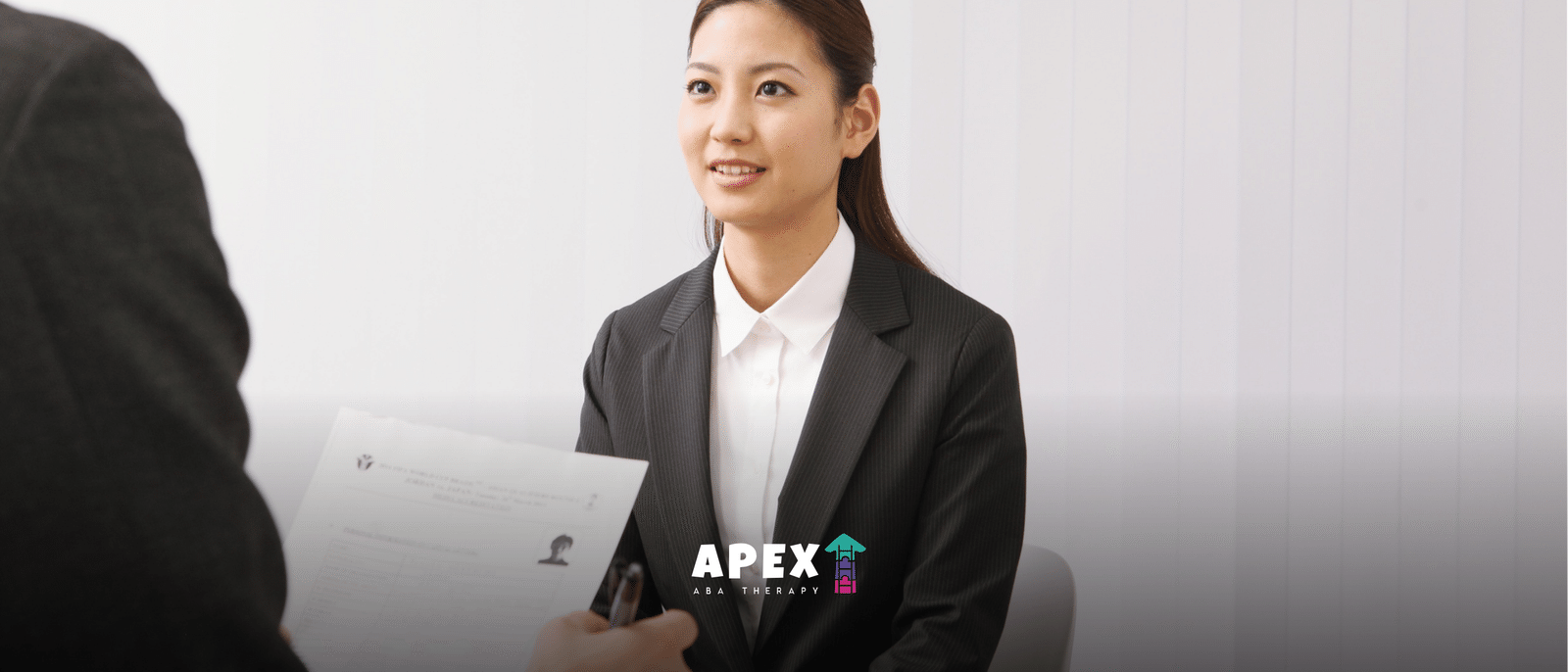
Here's what most job interview advice for autistic candidates gets wrong: it treats the interview as a single event you either pass or fail. That framing sets you up to over-prepare in the wrong ways, panic about the wrong things, and miss the actual leverage — which is what you do in the weeks and days leading up to the interview.
The traditional job interview format wasn't built with autistic candidates in mind. Small talk, hypothetical scenarios, reading facial expressions, thinking on your feet, "selling yourself" — the interview is designed to test skills that many autistic candidates don't naturally use, in an unfamiliar sensory environment, under time pressure. Meanwhile, the actual job the person is interviewing for often requires exactly the strengths autistic candidates bring: focused attention, deep expertise, reliability, direct communication.
That gap between "interview performance" and "job capability" is why the autism employment gap sits around 85% underemployment for college-educated autistic adults. An eight-year longitudinal study of 2,449 autistic adults by Bury and colleagues (2024) found that nearly half experienced stable unemployment across the entire study period, despite having the skills and qualifications. The gap is not about capability — it's about a hiring process that wasn't built for how autistic candidates communicate their skills.
Preparation closes a lot of that gap. This guide gives you a week-by-week countdown from 8+ weeks out to weeks after the interview, with specific tactics for each stage. Whether you're the autistic teen or young adult preparing for your first real interview, or a parent supporting that process, the structure below tells you what to do when.
Why the Traditional Interview Format Fights You
Before the countdown starts, it helps to name what you're actually working around. The specific parts of a standard interview that create genuine difficulty for many autistic candidates:
- Small talk in the opening minutes — designed to build rapport, but often experienced as awkward or pointless
- Reading facial expressions and body language — many autistic people process these differently
- Hypothetical questions ("Tell me about a time when…") that require recalling a specific past event and framing it into a narrative on the spot
- "Sell yourself" prompts that require self-promotion in a way that feels dishonest for candidates whose default is factual directness
- Rapid back-and-forth with limited processing time
- Sensory environment — unfamiliar lighting, HVAC noise, unfamiliar smells, sometimes multiple interviewers producing sensory input at once
- Interview anxiety amplified by unpredictability — not knowing the questions, format, or people involved
- Vague questions like "tell me about yourself" or "where do you see yourself in five years?" where the actual information sought isn't clear
Where autistic candidates often outperform, in contrast:
- Technical or skills-based questions with concrete answers
- Questions about special interests — a University of Bath finding showed interview questions focused on special interests meaningfully increased autistic hiring rates
- Work sample assessments where you do actual work
- Structured competency-based questions ("Walk me through how you'd approach X")
- Detailed, accurate answers — the autistic tendency toward directness is often appreciated
The countdown below is designed to lean into those strengths and prepare around the mismatches.
The 8-Week Countdown
8+ Weeks Out: Build the Foundation Skills
If you have 8+ weeks — or if you're a parent starting the process for a teen who isn't job-searching yet — this is the highest-leverage phase.
Do:
- Start regular practice interviews with a family member, career coach, or job coach. Once every two weeks minimum.
- Build a working list of your accomplishments. School projects, volunteer work, previous jobs, extracurriculars, specific technical skills, awards, unusual competencies. Nothing is too small.
- Research career fields where your specific interests and strengths align (see our special interests and career pathways content for more on this).
- If you're eligible, contact your state Vocational Rehabilitation (VR) agency. VR services — including interview coaching and job placement — are free to eligible clients, and every state has one.
- If your school has a transition coordinator (required by IDEA starting at age 16), get involved with them.
- Research employers with formal autism hiring programs (SAP Autism at Work, Microsoft Neurodiversity Hiring Program, JPMorgan Chase Autism at Work, Auticon, Aspiritech, EY Neurodiversity Center of Excellence, and others).
Don't:
- Try to fix everything at once. Pick one specific interview skill to work on at a time.
- Focus only on "fixing" autistic traits. The interview format is the problem, not you.
4-6 Weeks Out: You Have a Real Interview Coming
You've applied, you've been invited to interview, and you have a date. Now the specific prep begins.
Do:
- Read the job description five times. Note every specific skill, tool, and requirement.
- Deep-research the company. Website, recent news, LinkedIn, Glassdoor, mission statement, main products or services. This is the kind of research many autistic candidates find genuinely engaging — special-interest energy channeled well.
- Look up the interviewer(s) on LinkedIn. Note their background, tenure, and any shared interests.
- Start drafting answers to the 10 most common interview questions (see the question bank below).
- Begin building 4-6 STAR-format stories from your experience (see STAR section below).
- Think about disclosure. Are you going to disclose? Before, during, or after? See the disclosure section below.
2-3 Weeks Out: Requests, Practice, and Refinement
Do:
- If you're going to request interview accommodations, do it now. Email in writing — clearer than a phone call, and you have a record. See the accommodations section below for what to ask for.
- Do at least two full-length mock interviews with someone who can give honest feedback.
- Refine your prepared answers based on the mock feedback. Write each one out. Say them aloud. Refine again.
- Practice the specific type of interview you'll face — panel, video, phone, technical, or working interview.
- If it's a video interview: test the platform, camera, microphone, and internet in advance. Do a test call.
- Prepare 5 questions to ask the interviewer at the end.
1 Week Out: Logistics Lock-In
Do:
- Confirm all interview details: date, time, location, interviewer names, format, expected length.
- Confirm your outfit — try it on to make sure it fits comfortably and meets the dress code without sensory issues.
- Plan your route. If it's in-person, know the address, parking, and public transit options. Aim to arrive 10-15 minutes early (not more).
- Prepare your interview kit: printed resume copies (3-5), portfolio if applicable, notebook, pen, water bottle, snacks for after.
- If you've received accommodation confirmation, print or save that email.
- Continue mock interviews if you can. The last week is where confidence gets built.
The Day Before: Rest and Sensory Prep
Do:
- Review your notes once — don't over-cram.
- Get your interview kit ready. Set it by the door.
- Charge your phone.
- Eat a familiar meal.
- Do a decompression activity you enjoy in the evening.
- Sleep. Genuinely. If you struggle to sleep the night before big events, plan for this. Wind down early, avoid screens for the last hour, use whatever sleep supports work for you.
Don't:
- Rehearse until 11 PM. Cramming reduces performance for most people, including autistic candidates.
- Try a brand-new sleep routine or food the night before.
- Add new stressors — this is not the day to have a difficult conversation about something else.
The Day Of: From Arrival to Closing
Morning:
- Follow your normal morning routine as closely as possible.
- Wear your prepared outfit.
- Bring your interview kit.
- If you have a commute, use noise-canceling headphones if that helps.
- Give yourself buffer time. Getting there early and sitting in the parking lot decompressing is fine.
On arrival:
- Arrive 10-15 minutes before the scheduled time (not much earlier — that can be awkward for the interviewer).
- Use the restroom.
- Turn your phone to silent.
- Introduce yourself to the receptionist.
Opening:
- Firm but brief handshake if offered.
- Direct greeting: "Hello, I'm [name], I'm here for the [role] interview."
- Use the interviewer's name.
- If small talk happens ("How was your commute?"), have a prepared brief response ready. This isn't the interview yet — brief and normal is enough.
During:
- When you don't understand a question: "Could you tell me more about what you mean by X?" This is a professional response, not a weakness.
- When you need processing time: "That's a good question. Give me a moment to think about it." A few seconds of silence is fine.
- When you feel dysregulated: Ask for a brief pause or a glass of water. "I'd appreciate a moment to gather my thoughts" is professional and legitimate.
- Answering behavioral questions: Use the STAR framework (see below).
- Answering the weakness question: Honest self-awareness plus a coping strategy. "I sometimes need extra processing time for complex questions, so I've learned to ask for clarification and take a moment before answering rather than rushing."
Closing:
- When the interviewer asks if you have questions, ask your prepared questions.
- Thank the interviewer for their time.
- Confirm next steps and timeline. "When can I expect to hear back?"
- Brief handshake if offered.
- Direct exit without lingering.
Immediately After: Decompress and Thank
Within 2 hours:
- Get out of the environment. Drive home, walk, decompress in a way that works for you. This is not the time to rehash the interview.
- Do something regulating — a special interest activity, a familiar meal, quiet time.
Within 24 hours:
- Send a thank-you email. Brief and specific — mention something from the conversation, reaffirm your interest, thank them for their time. Three sentences is enough.
- Do a quick, non-catastrophizing self-review. What worked? What didn't? Write it down for next time. Don't spiral on specific moments.
Days and Weeks After: Follow Up, Reflect, Next Steps
If you don't hear back by the timeline given:
- Follow up once with a brief email. Polite reminder, reaffirm interest, ask about updates.
- If you don't hear back after a follow-up, they're not the right fit. Move on.
If you get rejected:
- Ask for feedback if it's not offered. "I'd appreciate any specific feedback that could help me in future interviews."
- Don't spiral. Fit and timing matter more than most candidates realize.
- Add what you learned to your prep notes for next time.
If you get an offer:
- Take at least 24 hours to consider it. You don't have to accept on the spot.
- Discuss with family or a trusted advisor.
- Ask any remaining questions.
- Consider whether accommodations you'll need going into the role have been discussed.
Building Your Question Bank
Every interview asks some version of these 10 questions. Prepare thoughtful, honest answers for each one — write them out, say them aloud, refine them until they feel natural but not memorized.
- Tell me about yourself.
- Why are you interested in this role?
- Why do you want to work at [company]?
- Tell me about a time you overcame a challenge.
- Tell me about a time you had a conflict with a coworker or classmate.
- What are your strengths?
- What is your greatest weakness?
- Where do you see yourself in five years?
- Why should we hire you?
- Do you have any questions for us?
The STAR Method: Your Behavioral-Question Framework
For any "tell me about a time when…" question, use STAR:
- Situation: What was the context?
- Task: What did you need to do?
- Action: What did you specifically do?
- Result: What happened?
Prepare at least 3 to 6 specific stories from school, volunteer work, jobs, or major projects. Each story should be adaptable to different questions. A good STAR story:
- Takes 60-90 seconds to tell
- Includes specific, concrete details (numbers, names, outcomes)
- Names your specific role and actions
- Ends with a clear result
Common story types to prepare:
- A time you solved a difficult problem
- A time you worked well as part of a team
- A time you disagreed with a decision and how you handled it
- A time you learned something new quickly
- A time you led a project or initiative
- A time you handled a mistake or failure
Disclosure: What the ADA Says and How to Think About It
Whether to disclose your autism diagnosis to a potential employer is one of the biggest decisions in the interview process. There's no universally right answer.
What the ADA actually says: Under the Americans with Disabilities Act, you are never required to disclose a disability unless you're requesting an accommodation. The ADA also prohibits employment discrimination against qualified individuals with disabilities and requires employers to provide reasonable accommodations.
Your timing options:
- Before applying
- Before the interview (typically 1-2 weeks in advance, in writing)
- During the interview
- After receiving an offer
- After starting the job
- Never
A framing that often works: Rather than leading with diagnosis, lead with specific accommodation needs. Instead of "I have autism," try:
- "I do my best work when I can prepare answers to interview questions in advance. Would it be possible to receive the questions a day early?"
- "I work best with clear turn-taking and a little processing time. If possible, I'd appreciate a brief pause after questions."
- "I'd perform best in an interview with less background noise. Would that be possible?"
If you do disclose the diagnosis directly, keep it brief and functional: "I'm autistic, and I've found that a structured interview format helps me show my skills clearly. I'm happy to discuss accommodations."
Consider disclosing early if: You need specific interview accommodations, the employer has a documented autism hiring program, or you're willing to withdraw if the response is poor.
Consider waiting until after an offer if: You don't need interview-specific accommodations, the industry has an uncertain track record on disability, or disclosure would change your negotiating position.
Research from recent years suggests that autistic candidates are often rated more favorably when the interviewer knows they're autistic than when they're not — because the interviewer contextualizes atypical presentation as a feature rather than a red flag. This finding pushes toward earlier disclosure for many candidates, though the decision remains personal.
Accommodations You Can Request
Under the ADA, you can request reasonable accommodations for the interview process. Common ones:
- Written interview questions in advance (a day to a week beforehand)
- Extended time between questions for processing
- A quieter or less stimulating environment — dimmer lights, minimal background noise, away from high-traffic areas
- Breaks during longer interviews or multi-day assessments
- Alternative formats — work sample assessments or writing samples instead of purely verbal
- Video interview instead of in-person (or the reverse, if that fits better)
- A single interviewer instead of a panel
- Sunglasses, tinted glasses, or noise-canceling headphones if sensory needs require them
- Advance information about the interview format, length, and who will be present
Requests should be made in writing — email is standard — ideally at least a week before the interview. Sample language from Hire Autism (an Organization for Autism Research initiative):
"In order to perform my best at the interview, I would appreciate the following accommodations: [specific list]. Thank you for considering these requests."
An accommodation is a change to how the interview runs, not a change to the standard you're held to. The job still has to be done, and you still have to be able to do it. What shifts is the environment, format, and pacing — so the interview measures your fit for the role instead of your tolerance for a format that was never built for how you communicate.
Managing the Day-Of Nervous System
Autistic applicants report significantly higher interview anxiety than non-autistic applicants, according to a 2025 study by Ezerins, Simon, and Rosen. That anxiety is real, and it's not a character weakness — it's a predictable response to a format that layers social, cognitive, and sensory demands into a compressed window.
Regulation strategies that work:
- Sleep the night before. Genuinely a priority.
- Familiar breakfast. Not the day for a new food.
- Familiar clothing (within the dress code). Comfortable shoes.
- Noise-canceling headphones for the commute.
- Get there early enough to sit in the car or lobby and decompress.
- Have a decompression plan for immediately after.
- If you need medication for anxiety and you have a prescription, plan doses around the interview timeline with your prescriber.
If dysregulation hits during the interview:
- Ask for a glass of water.
- Ask for a brief pause: "I'd appreciate a moment to gather my thoughts."
- Take a slow breath (through the nose, out through the mouth).
- Come back to your prepared material — the questions and answers you've drilled provide an anchor.
When Rejection Comes (Because It Sometimes Will)
Rejection is a normal part of any job search. Autistic candidates, who often invest more preparation into each interview, can feel rejection more acutely. A few grounding truths:
- Rejection is often about fit, timing, or specific requirements — not you personally.
- Feedback (when offered) is genuinely useful. Ask for it if it isn't given.
- The right job for you isn't the same as the job that rejected you.
- Each interview builds skills that pay off in later interviews.
- Most successful job searches include multiple rejections before an offer.
Build a small ritual for processing rejection — a specific activity, conversation with a specific person, planned decompression time. It makes the emotional experience less draining.
What Families Can (and Can't) Do
Families are usually deeply involved in autistic teens' and young adults' job searches. Some of what helps, and some of what doesn't:
Do:
- Help with practical logistics: transportation, resume editing, reviewing job listings, printing materials.
- Practice interviews as often as your teen or young adult wants.
- Provide honest, specific feedback on practice interviews.
- Help process rejection without letting it derail the job search.
- Connect them with people you know who can offer informational interviews.
- Support their disclosure decision, whatever they choose.
Don't:
- Answer questions for them during actual interviews.
- Push them into disclosing (or not disclosing) against their judgment.
- Treat interview struggles as evidence they can't work.
- Compare them to neurotypical peers.
- Take over the process — that undermines the self-advocacy skills they need for the working life that follows.
The frame is: coach the process, not the personality.
How Apex ABA Supports the Long Transition to Adulthood
Interview prep is the specific tactical moment, but the underlying skills — self-advocacy, communication, executive function, sensory regulation, planning — are built over years. Apex ABA works with autistic children, teens, and their families across North Carolina, Georgia, and Maryland on the day-to-day and long-arc skills that support independent adulthood, including the specific vocational skills that make interviews (and the working life that follows them) more accessible.
Our services include:
- In-home ABA therapy tailored to each child's needs
- School-based ABA therapy for classroom skills
- Parent training for supporting long-term development
- Self-advocacy and communication skill development
- Executive function coaching
- Coordination with schools around IEP transition planning (starting at age 16 under IDEA)
If you're the parent of an autistic teen or young adult preparing for job interviews — or you're an autistic young adult navigating this yourself — get in touch with our team to talk through what a coordinated approach could look like.
Frequently Asked Questions
1. Why are traditional job interviews so difficult for autistic candidates?
The traditional interview format was designed around neurotypical communication patterns: small talk, rapid back-and-forth, reading facial expressions, self-promotion, and handling hypothetical questions on the spot. Many autistic candidates find these skills genuinely difficult, while the actual job often requires different strengths — focused attention, deep expertise, reliability — that don't get measured in a standard interview. The challenge is structural, not about capability.
2. When should I start preparing for a job interview?
The earlier the better. Ideally, start building foundation skills (mock interview practice, self-advocacy, disclosure thinking) 8+ weeks before you have an actual interview. Once you have an interview scheduled, 4-6 weeks of specific prep is ideal, but even 2-3 weeks of focused prep makes a real difference.
3. Do I have to disclose my autism to a potential employer?
No. Under the ADA, you're not required to disclose a disability unless you're requesting an accommodation. You can choose to disclose before applying, before the interview, during, after receiving an offer, after starting the job, or never. Each timing has trade-offs. The decision is personal, and framing disclosure around specific accommodation needs (rather than diagnosis alone) is often the most effective approach.
4. What accommodations can I request for a job interview?
Common reasonable accommodations include written interview questions in advance, extended time between questions, a quieter or less stimulating environment, breaks during longer interviews, alternative formats like work samples, video instead of in-person interviews (or the reverse), a single interviewer instead of a panel, and advance information about the format. Request in writing, ideally at least a week before the interview.
5. What is the STAR method?
STAR is a framework for answering behavioral interview questions ("tell me about a time when…"). Situation (context), Task (what needed to be done), Action (what you specifically did), Result (what happened). Preparing at least 3 to 6 STAR stories from school, work, volunteering, or projects that can adapt to different questions is one of the highest-leverage preparation steps.
6. What if I get rejected after an interview?
Rejection is a normal part of any job search and often has nothing to do with you personally. Ask for feedback if it isn't offered. Fit, timing, and specific requirements matter. Each interview builds skills. The right job for you isn't the same as the job that rejected you. Build a decompression ritual for processing rejection so it doesn't derail your job search.
7. Are there companies that specifically hire autistic candidates?
Yes. Formal autism hiring programs run at SAP (Autism at Work), Microsoft (Neurodiversity Hiring Program), JPMorgan Chase (Autism at Work), EY (Neurodiversity Center of Excellence), Auticon (a majority-autistic IT consultancy), and Aspiritech (software testing nonprofit), among others. Many other employers hire autistic candidates through traditional processes. State Vocational Rehabilitation agencies can help connect autistic job seekers with autism-friendly local employers.
8. What's the biggest mistake parents make when their autistic teen is preparing for interviews?
Taking over the process. Well-intentioned help easily becomes over-help — answering questions on the teen's behalf, pushing disclosure decisions, treating a rough interview as evidence they can't work. The skills that will carry into the working life (self-advocacy, communication, handling ambiguity, recovering from setbacks) only develop if the young adult is actually doing the work themselves. Coach the process, don't control the personality.
Sources
- Bury, S. M., et al. (2024). Eight-year longitudinal study of employment outcomes in 2,449 autistic adults. Summarized in HeyASD.
- Ezerins, M. E., Simon, L. S., & Rosen, C. C. (2025). Autism, interview anxiety, and hiring outcomes. Summarized in HeyASD reference above.
- Job Accommodation Network (JAN) — Interviewing Tips for Applicants on the Autism Spectrum. https://askjan.org/publications/consultants-corner/vol10iss01.cfm
- Organization for Autism Research (OAR) — Hire Autism: Disclosure and Accommodations Resources. https://www.hireautism.org/resource-center/disclosure-and-accommodations/
- Links ABA — Autism and Career Growth: What You Should Know. https://linksaba.com/autism-and-career-growth-what-you-should-know/
- Links ABA — Job Interview Tips for Autistic Adults: A Comprehensive Guide. https://linksaba.com/job-interview-tips-for-autistic-adults/
- Mindshift Works — Understanding Autism Employment: A Comprehensive Overview. https://mindshift.works/understanding-autism-employment-a-comprehensive-overview/
- U.S. Equal Employment Opportunity Commission (EEOC) — ADA Guidance on Disclosure. Referenced in JAN publication above.
- U.S. Department of Education — Individuals with Disabilities Education Act (IDEA), Transition Planning Requirements. https://sites.ed.gov/idea/
Get started today
Ready to talk about ABA therapy?
Apex ABA Therapy helps families in North Carolina, Maryland, and Georgia access in-home, school-based, and daycare ABA services.
Popular services
Serving families in