

Supporting Autism During Transitions
Discover effective strategies for supporting autism during transitions. From visual cues to community resources, empower individuals on the spectrum.
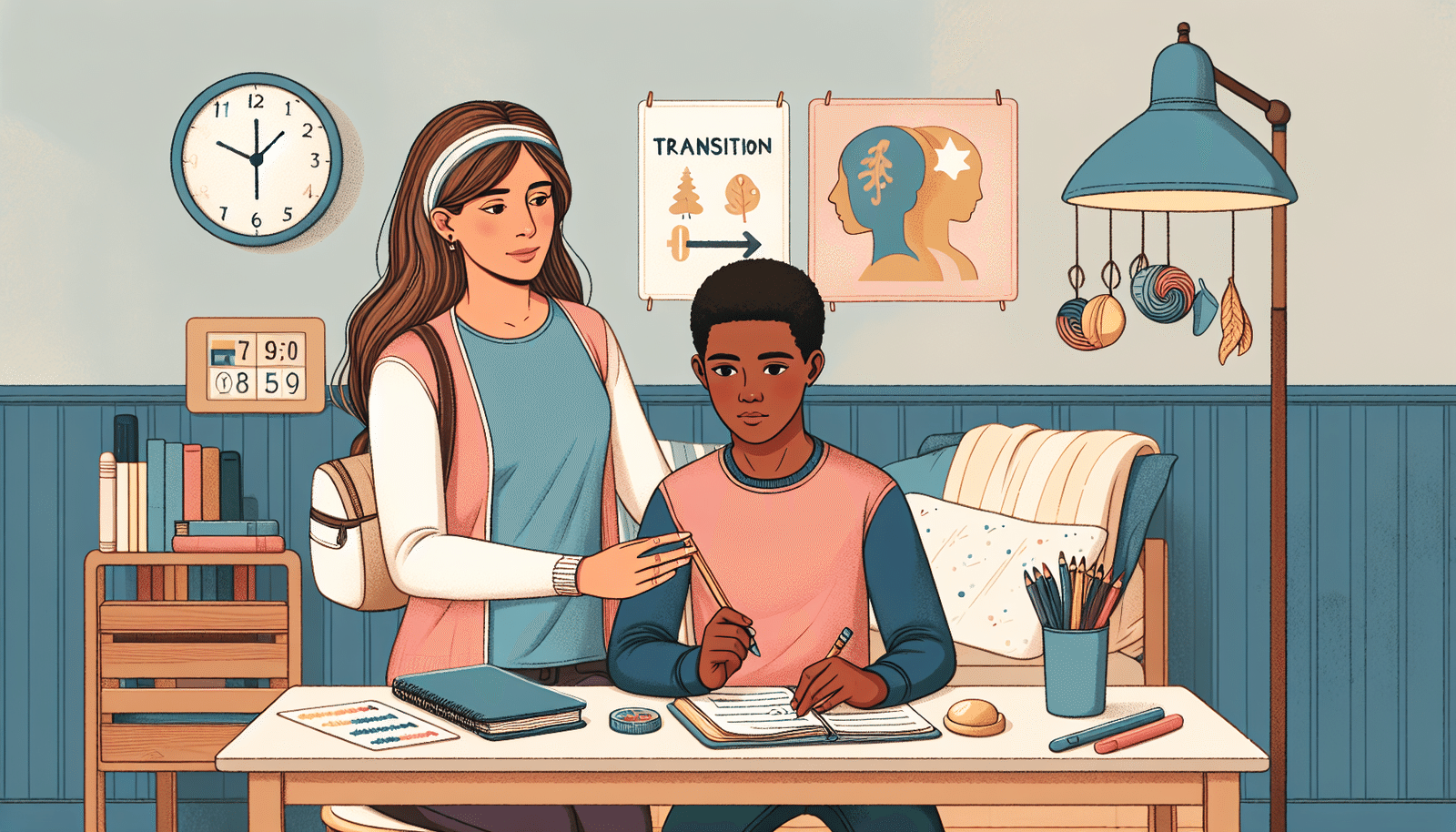
Supporting Autism During Transitions
Transitioning can be a challenging process for individuals on the autism spectrum. Changes in routines and environments can lead to heightened stress and anxiety. However, with proper support and transition planning, individuals with autism can navigate these changes more effectively, build resilience, and foster independence.
Challenges of Transitioning for Autistic Individuals
Transitioning from one phase of life to another, known as vertical transitions, can present unique challenges for individuals with autism. Progressions such as moving from primary school to high school or transitioning to adulthood require careful planning and support. These transitions may involve changes in social dynamics, academic expectations, and daily routines. The unfamiliarity and unpredictability of these new environments can be overwhelming for individuals on the autism spectrum. Strategies to help individuals prepare for these vertical transitions can be found in resources such as the Amaze/Autism Tasmania information sheet on effectively preparing individuals with Autism Spectrum Disorder for transitions.
In addition to vertical transitions, individuals with autism also face difficulties during everyday changes or new situations, known as horizontal transitions. These can include shifting from one activity to another or adapting to unexpected changes in routines. These transitions can lead to anxiety and behavioral challenges. Transition planning is crucial to help individuals with autism navigate these changes and alleviate stress and anxiety.
Importance of Transition Planning
Transition planning plays a vital role in supporting individuals with autism during periods of change. By creating a structured and supportive environment, individuals can better cope with transitions and develop important life skills.
One effective strategy for supporting transitions is the use of visual supports. Visual strategies, such as social stories, social scripts, task lists, schedules, and calendars, help individuals with autism understand and prepare for upcoming changes. These visual supports provide a clear and concrete representation of the transition, helping individuals anticipate and navigate the change. By using visual supports, individuals with autism can feel more prepared and in control during transitions. You can learn more about the use of visual supports in our article on using visual supports in autism.
Another helpful tool for successful transitions is the use of visual cues and timers. Visual schedules used in classrooms and home settings can decrease transition time and challenging behaviors, while increasing independence during transitions [1]. Visual timers, such as the Time Timer, have been shown to assist individuals with autism in transitioning from one activity to another. These visual cues provide a concrete representation of time and help individuals with autism understand when a transition is approaching.
By prioritizing transition planning and utilizing visual supports, individuals with autism can navigate transitions more smoothly. It is essential to provide a supportive and structured environment that fosters independence and builds coping skills. Transition planning should be tailored to the individual's unique needs and can be facilitated through the support of professionals, community resources, and the building of a support network for autism. With the right strategies and support, individuals with autism can successfully navigate transitions and thrive in various life phases.
Strategies for Successful Transitions
Smooth transitions can be particularly challenging for individuals with autism. However, there are various strategies that can help support successful transitions. Two effective strategies are the use of visual cues and timers, as well as transition cards and countdown systems.
Visual Cues and Timers
Using visual cues and timers can greatly assist individuals with autism during transitions. These tools provide consistency and predictability, which are essential for reducing stress and anxiety. Visual timers, in particular, can help signal the transition and provide a clear indication of the remaining time [2]. Whether it's a traditional kitchen timer or a visual timer based on the child's preference, the auditory or visual cues can help individuals shift their focus and prepare for the next activity.
Strategy Description
- Visual Cues:Use visual cues such as pictures, symbols, or written instructions to represent the different steps or activities involved in the transition. These cues can be placed in a visible location to provide a visual reminder and guide individuals through the process.
- Timers:Incorporate timers to establish a clear sense of time. This can be done using traditional kitchen timers or visual timers that visually represent the passage of time. Timers help individuals understand how much time is remaining in an activity, reducing uncertainty and increasing predictability.
By incorporating visual cues and timers, individuals with autism can better understand and anticipate transitions, leading to smoother and more successful outcomes. For more information on using visual supports in autism, you can refer to our article on using visual supports in autism.
Transition Cards and Countdown Systems
Transition cards and countdown systems are effective tools for supporting individuals with autism during transitions. These visual aids provide a clear and structured representation of the transition process, making it more predictable and manageable for individuals.
One example is the use of a star chart, which can visually represent the transition process by counting down time [2]. The star chart is not used for earning or losing stars but serves as a method of duration mapping. It helps individuals understand the duration of the transition and provides a visual representation of progress.
Another useful tool is a visual countdown system, where individuals can see how much time is remaining in an activity without a specific time increment [1]. This system allows individuals to visually track the progress of the transition and prepare for the upcoming change.
Strategy Description
- Transition CardsUse picture cards that show the different steps of changing activities. These cards help people see what's going to happen next and understand the order of things during the change.
- Countdown SystemsUse ways to show how much time is left in an activity. This could be charts, timers with pictures, or other ways to show time passing. These help people know how far along they are and get ready for what's next.
By incorporating transition cards and countdown systems, individuals with autism can better comprehend and navigate transitions, resulting in smoother and more successful experiences. For additional support in managing anxiety and depression related to autism, you may find our article on managing anxiety in autism helpful.
Utilizing Visual Supports
When it comes to supporting individuals with autism during transitions, visual supports play a crucial role in providing structure, predictability, and understanding. Visual strategies are effective tools for communicating upcoming changes, preparing individuals for new situations, and helping them navigate transitions more smoothly. In this section, we will explore two key visual supports: social stories and video models, as well as visual schedules and narratives.
Social Stories and Video Models
Social stories and video models are powerful tools that can assist individuals with autism in understanding expectations during transitions, coping with disruptions in routine, and learning effective coping mechanisms for stress and anxiety.
Social stories are personalized narratives that provide individuals with autism with information about specific social situations or transitions. These stories use visual cues and clear language to describe what will happen, why it is happening, and how the individual should respond. They help individuals with autism understand and anticipate what to expect, reducing anxiety and promoting successful transitions.
Video models, on the other hand, utilize audiovisual media to show individuals with autism how to navigate specific transitions or social situations. These videos can be created using real-life footage or animation and can depict step-by-step instructions for handling various scenarios. Video models provide visual examples that individuals can watch repeatedly to reinforce their understanding and build confidence.
By incorporating both social stories and video models into transition planning, individuals with autism can gain a better understanding of what to expect during different situations and transitions. This enables them to feel more prepared, reduces anxiety, and increases their chances of success.
Visual Schedules and Narratives
Visual schedules and narratives are effective tools for individuals with autism to navigate daily activities, transitions, and changes in routine. These visual supports provide a clear visual representation of the sequence of events, helping individuals understand the order and timing of activities.
Visual schedules can be created using pictures, symbols, or written words, depending on the individual's communication preferences and abilities. The schedule can be displayed in a variety of formats, such as a wall chart, a portable schedule, or a digital app. By following the visual schedule, individuals with autism gain a sense of structure and predictability, which can reduce anxiety and facilitate smoother transitions.
Visual narratives are similar to social stories, but focus more on the broader context of a situation or transition. They provide individuals with autism with a visual overview of what will happen, who will be involved, and any changes they can expect. Visual narratives can be especially helpful when preparing for significant transitions, such as starting a new school year or moving to a different living environment.
By utilizing visual supports like social stories, video models, visual schedules, and narratives, individuals with autism can better understand and navigate transitions. These visual tools provide the necessary structure, predictability, and guidance, ultimately promoting a smoother transition experience.
For additional strategies and resources on supporting individuals with autism during transitions, be sure to explore building a support network for autism, managing anxiety in autism, and using technology for autism support.
Promoting Independence and Coping Skills
When supporting individuals with autism during transitions, it is essential to focus on promoting independence and developing coping skills. By empowering individuals with the necessary tools and strategies, they can navigate transitions, manage stress, and navigate overwhelming situations more effectively. Two key approaches to achieve this are teaching independent living skills and creating sensory-friendly environments.
Teaching Independent Living Skills
Teaching independent living skills is crucial for individuals with autism as they transition into different stages of life. These skills encompass various aspects, including self-care, household tasks, and community engagement. By providing structured instruction and support, individuals with autism can learn to perform tasks independently, fostering their confidence and self-reliance.
Some important independent living skills to focus on may include:
- Personal hygiene, such as bathing, dressing, and grooming.
- Domestic skills, including cooking, cleaning, and laundry.
- Money management and budgeting.
- Time management and organization.
- Travel skills, such as using public transportation.
By breaking down these skills into manageable steps and utilizing visual supports, individuals with autism can develop the necessary skills to navigate daily life more independently. It is crucial to provide ongoing support and reinforcement to ensure the continued development and application of these skills.
Creating Sensory-Friendly Environments
Individuals with autism often experience sensory sensitivities, which can exacerbate challenges during transitions. Creating sensory-friendly environments can help minimize sensory overload and promote a sense of calm and security. Here are some strategies to consider:
- Visual Supports: Utilize visual supports, such as visual schedules, social stories, and task lists, to communicate upcoming changes and make transitions more predictable and manageable for individuals with autism [3]. Visual schedules, in particular, can decrease transition time and challenging behaviors, while increasing independence during transitions. For more information on using visual supports, refer to our article on using visual supports in autism.
- Sensory-Friendly Spaces: Consider creating designated sensory-friendly spaces where individuals with autism can retreat and regulate their sensory experiences. These spaces can include comfortable seating, dimmed lighting, noise-cancelling headphones, and sensory toys or tools.
- Reduce Sensory Overload: Minimize environmental stimuli that can contribute to sensory overload, such as loud noises, bright lights, or strong odors. Create a calm and soothing environment by using soft lighting, natural colors, and quiet background music.
By providing sensory-friendly environments, individuals with autism can feel more comfortable and supported during transitions, reducing anxiety and promoting successful outcomes.
Promoting independence and developing coping skills are vital components of supporting individuals with autism during transitions. By focusing on teaching independent living skills and creating sensory-friendly environments, individuals with autism can enhance their ability to navigate transitions successfully and build resilience. For additional support and resources, consider exploring community programs and services that cater to the unique needs of individuals with autism, as outlined in our article on building a support network for autism.
Addressing Specific Needs
Supporting individuals with autism during transitions requires a tailored approach that takes into account their specific needs and challenges. In this section, we will explore strategies for addressing the specific needs of autistic females and discuss ways to deal with anxiety and depression in individuals with autism.
Strategies for Autistic Females
Research suggests that autistic females may face unique challenges during transitions, including lower employment rates, earnings, and increased dependence on disability support compared to males. To provide effective support, it's essential to understand and address these specific needs. Here are some strategies that can be helpful:
- Building a support network: Creating a strong support network of family, friends, professionals, and other autistic individuals can provide valuable guidance, understanding, and encouragement. Connecting with support groups and organizations that focus on autism can be particularly beneficial [5].
- Providing targeted interventions: Tailoring interventions to address the unique needs and strengths of autistic females can be instrumental in supporting their development. This may involve incorporating individualized education plans, therapy approaches, and accommodations that address their specific challenges.
- Promoting self-advocacy: Encouraging autistic females to develop self-advocacy skills empowers them to express their needs, preferences, and concerns. This can involve teaching effective communication strategies, self-regulation techniques, and assertiveness skills.
Dealing with Anxiety and Depression
Anxiety and depression are common challenges experienced by individuals with autism. Research indicates that up to 84% of individuals with autism meet the criteria for clinically diagnosed anxiety disorders, highlighting the elevated levels of anxiety experienced by people with autism compared to their typically developing peers. However, communication difficulties in expressing anxiety can make it challenging to diagnose depressive or anxiety states in individuals with autism.
To address anxiety and depression in individuals with autism, the following strategies can be helpful:
- Creating a supportive environment: Establishing a nurturing and accepting environment that minimizes sensory triggers and provides predictability can help reduce anxiety. This can involve creating quiet spaces, implementing sensory-friendly strategies, and maintaining consistent routines.
- Using visual supports: Visual supports, such as social stories, visual schedules, and narratives, can help individuals with autism better understand and navigate their emotions [6]. These visual tools provide structure, clarity, and predictability, which can alleviate anxiety and enhance emotional regulation.
- Implementing coping skills: Teaching coping skills specific to anxiety and depression can empower individuals with autism to manage their emotions more effectively. Techniques such as deep breathing exercises, mindfulness practices, and sensory integration activities can be beneficial.
- Seeking professional support: Consulting with mental health professionals who specialize in autism can provide valuable guidance and support. They can help develop personalized strategies, recommend appropriate therapies, and assist in identifying additional resources and interventions that address anxiety and depression.
By addressing the specific needs of autistic females and providing support for anxiety and depression, we can help individuals with autism navigate transitions more effectively and enhance their overall well-being. It's important to approach each individual with empathy, understanding, and a person-centered approach to ensure their unique needs are met.
Community Support and Resources
When it comes to supporting individuals with autism during transitions, community support and resources play a vital role. These resources provide assistance to individuals with autism, their families, and professionals in navigating the challenges that arise during various life transitions. Two important aspects of community support and resources include professional development and interventions, as well as transition programs for young adults.
Professional Development and Interventions
Professional development and interventions are crucial for equipping educators, service providers, and families with the knowledge and skills necessary to support individuals with autism during transitions. One notable model is the Center on Secondary Education for Students with Autism Spectrum Disorder (CSESA) model. Developed by the Center on Secondary Education for Students with Autism Spectrum Disorder, this model focuses on providing high-quality professional development and evidence-based interventions for educators, families, and students during the high school years [8].
The CSESA model aims to adapt education and support programs for families to be used in high school settings. It offers free professional development curriculum and guides about evidence-based practices, providing educators and families with valuable resources to promote successful outcomes during the transition to adulthood.
Transition Programs for Young Adults
Transition programs specifically designed for young adults with autism are essential for facilitating a smooth transition into adulthood. These programs offer a range of services and supports tailored to the unique needs of individuals on the autism spectrum. They aim to enhance independence, social skills, vocational skills, and overall quality of life.
Engagement in post-secondary education and employment is a crucial aspect of successful transition for young adults with autism. Transition programs often focus on skills development, work experience placements, and support from service providers to improve the quality of life for individuals with autism. These programs provide a structured environment where individuals can learn and practice important life skills, such as independent living skills, social skills, and vocational skills.
Researchers are also exploring interventions aimed at reducing stress for young adults with autism and their families. These interventions aim to help young people take on adult roles by reducing stress and emotional intensity. By providing support and stability, these interventions can contribute to maintaining employment and promoting successful outcomes during the transition to adulthood.
By accessing professional development opportunities and participating in transition programs, individuals with autism and their families can benefit from the expertise and support of professionals, as well as the structured environments and resources provided by these programs. These community supports and resources play a crucial role in promoting successful transitions for individuals with autism, enhancing their independence, coping skills, and overall quality of life. For more information on other forms of support, such as using visual supports and technology, refer to our articles on using visual supports in autism and using technology for autism support.
References
- [1]: https://iidc.indiana.edu
- [2]: https://autismlittlelearners.com
- [3]: https://www.autismtas.org.au
- [4]: https://www.ncbi.nlm.nih.gov
- [5]: https://ies.ed.gov
Get started today
Ready to talk about ABA therapy?
Apex ABA Therapy helps families in North Carolina, Maryland, and Georgia access in-home, school-based, and daycare ABA services.
Popular services
Serving families in