

School Bus Transitions: A Step-by-Step Desensitization Plan for the Ride Itself
Struggling with school bus transitions? Get a step-by-step desensitization plan plus seat, schedule, and driver logistics tips today.
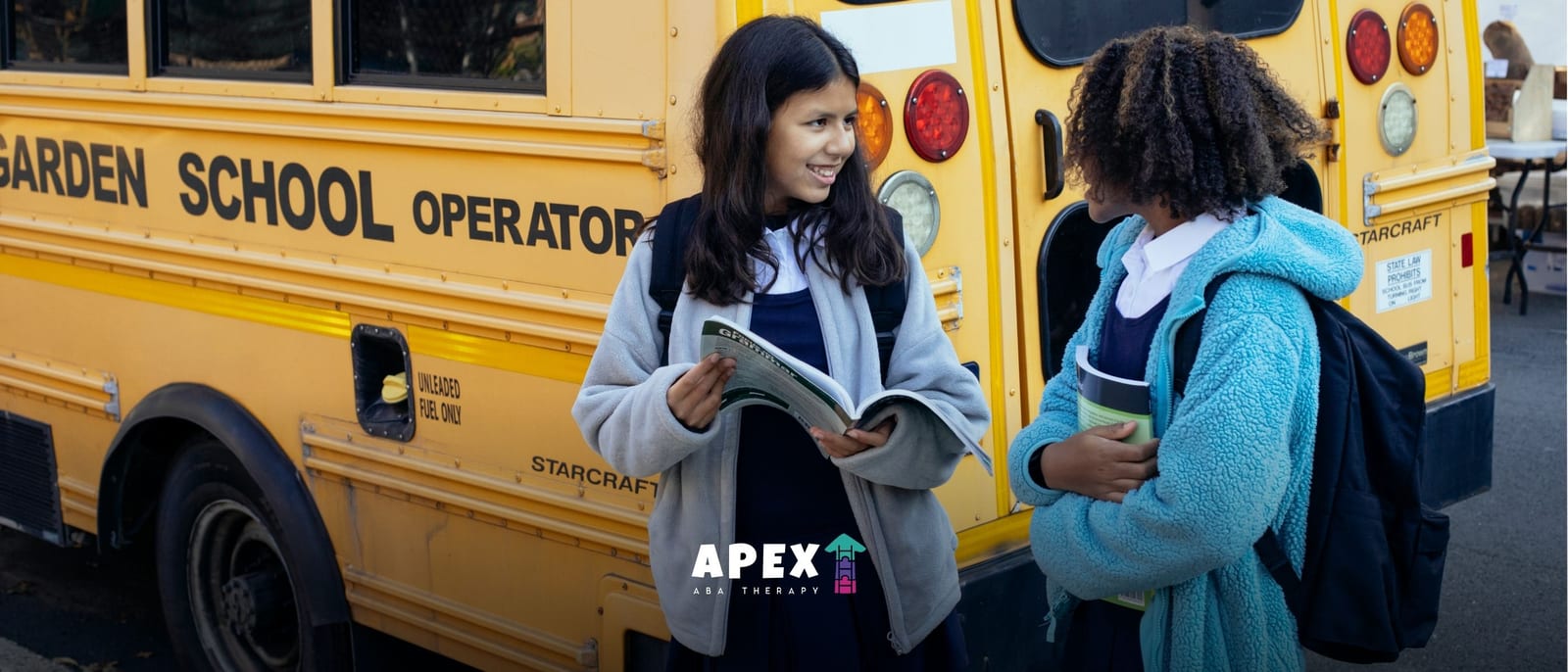
Quick answer: For many autistic children, the bus, not the classroom, is the hardest part of back to school. Engine noise, a new driver, an unfamiliar route, and unfamiliar seatmates all show up at once, with no parent there to help. A gradual desensitization plan, moving from bus photos, to a parked bus visit, to a short practice ride, to the real first day, helps kids build tolerance one small step at a time.
Getting ready for school usually means new supplies, a new teacher, and a walk-through of the building. Those steps matter. But for a lot of autistic kids, the toughest part of the morning happens before any of that. It happens on the bus.
The bus ride tends to get the least planning time of anything in the back-to-school routine, yet it stacks several hard things on top of each other at once: noise, a stranger driving, new rules, and zero parent supervision. Below is a breakdown of why school bus transitions are so difficult, plus a gradual, step-by-step way to prepare for one well before the first day.
Why the Bus Itself Is Often Harder Than the School Building
School bus transitions bring a specific mix of challenges that a classroom simply doesn't. A few reasons stand out.
The noise level is loud and unpredictable. A diesel engine, air brakes, road noise, and dozens of other kids talking or shouting all blend together, with no way to control the volume or step away mid-ride. Autism Speaks notes that riding a bus can feel overwhelming from a sensory standpoint, since there are many loud bus noises, plus other students, that can upset a child with sound sensitivity.
The driver, route, and schedule are all new. Kids meet a new adult in charge, learn a route they have never traveled, and follow bus rules that do not match classroom rules. Add a substitute driver, a traffic delay, or a route change, and the number of unknowns multiplies fast.
Seating means sitting with unfamiliar peers. Unlike a classroom seat a child gets used to over weeks, a bus seat puts a child next to a shifting group of peers, usually with less structure and less personal space than a classroom.
No parent is present to help with regulation. At home or in the car, a parent can narrate what is happening, hand over a fidget, or simply be a calm, familiar presence. On the bus, a child has to self-regulate, or lean on a driver or aide who may not yet know their triggers or calming strategies.
Autism Speaks lists these as recognized stressors for autistic children and points to the IEP meeting as the place where a family and school team decide what kind of bus and what accommodations a specific route needs.
https://youtu.be/Oee7a3iXENc?si=Ys43nTOofYJVOZGe
What Is a School Bus Transition, Exactly?
A school bus transition covers the full sequence between leaving home and settling into the school day, then the reverse trip in the afternoon: waiting at the stop, boarding, finding a seat, riding, exiting, and walking into the building. Each link in that chain carries its own sensory and social demands. A desensitization plan for school bus transitions works best when each link is treated as its own small skill to practice, rather than one big event to survive on day one.
Why Gradual Exposure Works for School Bus Transitions
Desensitization is not a new idea in behavioral health. Systematic desensitization, developed by psychiatrist Joseph Wolpe in the 1950s, rests on the idea that anxiety and a calm state cannot fully coexist at the same time. A person is exposed to a feared situation in small, manageable steps, staying in contact with each step long enough for the fear response to rise and then settle, before moving on to the next one.
In ABA, this same idea usually goes by the name graduated exposure. A peer-reviewed case study published in Behavior Analysis in Practice used a 12-step graduated exposure hierarchy to help a child with highly selective eating. Over nine months, the child's list of accepted foods grew from four items to more than 50, and food refusal dropped to zero during treatment sessions. The food itself has nothing to do with buses, but the method carries over directly: break a feared experience into small steps, and only move to the next step once the current one feels manageable.
Applied to school bus transitions, that means treating "riding the bus" as a hierarchy of separate, small steps, not one all-or-nothing event on the first morning of school.
A Step-by-Step Desensitization Timeline for School Bus Transitions
Here is a practical order for building comfort with school bus transitions, ideally starting several weeks before school starts.
Step 1: Bus Photos and Videos at Home
Start low-pressure. Show pictures or short videos of school buses, ideally the same model and color the district actually uses. Some families take their own photos of the exact bus stop or driveway where pickup will happen, since a familiar backdrop lowers the "unknown" factor described above.
Step 2: A Visit to a Parked Bus
Ask the school or transportation department about visiting a parked bus before the first day. Let the child sit in a seat, hear the doors open and close, and meet the driver if possible. POAC Autism Services notes that the driver and aide are often the first people a child sees each morning, and that relationship can set the tone for the entire day.
Step 3: A Short Practice Ride, If the District Allows It
Some districts run a short, low-stakes practice ride before the school year starts, sometimes tied to an open house or orientation day. If that option exists, take it. A five-minute loop around the neighborhood gives a child real sensory information, the sound of the engine, the feel of the seat, the motion, with a parent or familiar adult nearby.
Step 4: The Actual First Day, With a Plan Already in Place
By the time the real first ride happens, the noise, the seat, and the driver are no longer complete unknowns. The child has already practiced each piece. The first ride becomes the next rung on a ladder the child has already been climbing, not a cold start.
The Logistics Families Rarely Think to Ask About
A desensitization plan handles the emotional and sensory side of school bus transitions. These next few items handle the practical side, and they are easy to miss if nobody brings them up first.
Requesting a specific seat. Seat location changes the sensory experience of the whole ride. Some kids do best directly behind the driver, where it is easier to see what is coming and the noise pattern is more predictable. Others do better away from the engine or the very back row. POAC points out that seat preference varies by child, so it is worth asking the transportation department directly whether a seat assignment can be requested and kept consistent for the year.
A visual schedule card for the route. A simple card showing the sequence (leave house, wait at stop, get on bus, ride, get off bus, walk in) gives a child something concrete to check against as each step happens. Visual sequencing tools like this fall under social narratives, which the National Professional Development Center on ASD has identified as meeting evidence-based practice criteria, based on more than a dozen single-case research studies spanning preschool through high school ages.
Coordinating directly with the driver and school. Families do not have to wait for a bad ride before reaching out. If a child needs a specific seat, extra boarding time, a quieter route, or a paraprofessional on board, that request usually needs to go through an IEP or 504 process, in writing. Under IDEA, if transportation is necessary for a child to attend school and access the services in their IEP, the district must provide it at no cost to the family. A 504 plan does not carry that same automatic transportation guarantee, but families can still bring a written request for specific accommodations to the 504 team.
Asking early, well before the first week of school, gives the transportation department time to actually build a plan instead of reacting after a hard ride.
What This Can Look Like in Practice
The graduated exposure case study mentioned earlier offers a useful pattern, even though it was built around food rather than buses. The child started with a step that caused almost no distress, stayed at that step until it felt routine, and only then moved to a slightly harder one. Over months, the small steps added up to a completely different outcome.
The same pattern applies to school bus transitions. A child who starts with photos of a bus, then sits on a parked bus, then takes a short supervised ride, is following the same hierarchy logic, just applied to a different fear. None of the individual steps look dramatic on their own. The cumulative effect, over several weeks, is what makes the actual first day manageable instead of overwhelming.
A Ride Your Child Can Actually Look Forward To
School bus transitions do not have to be the roughest part of the school year. The families that see the smoothest first weeks are usually the ones who started building comfort with the bus well before the first bell, one small, manageable step at a time.
An individualized ABA plan can build school bus transitions in as a specific goal, right alongside communication, social skills, and daily routines, so the desensitization steps above are not something a family has to figure out alone. Apex ABA Therapy works with families across North Carolina, Maryland, and Georgia to build these kinds of practical, everyday goals into ongoing therapy.
Buses start rolling again soon. If a bus plan is not part of your child's goals yet, now is the time to build one. Reach out to the Apex ABA Therapy team and let's map out a ride your child can actually manage this year, before the first day arrives.
Frequently Asked Questions
How long does a school bus desensitization plan take?
Timelines vary by child. Some families start weeks before school begins, spending a few days at each step: photos, a parked bus visit, then a short ride. Others need more time at any single step before moving forward. The goal is not speed. It is building comfort at each step before adding the next one.
What if my school district will not allow a practice ride?
Not every district offers this. If a supervised ride is not available, lean more heavily on the parked bus visit, and ask whether the child can sit on the bus with the engine running, so the actual sound of a working bus becomes familiar even without full movement.
Can I request a specific bus seat for my child?
Yes. This is a reasonable request to bring to the transportation department or the IEP or 504 team, and it can be written into the plan as a documented accommodation.
What should go on a bus visual schedule card?
Keep it simple: leave house, walk to stop, wait, bus arrives, get on, find seat, ride, get off, walk in. Pictures or icons alongside short text work well for most kids.
What is the difference between using an IEP or a 504 plan for bus accommodations?
An IEP can include transportation as a related service, and under IDEA, districts must provide it at no cost when it is necessary for the child to access their IEP services. A 504 plan does not carry that same built-in transportation guarantee, but a family can still request specific accommodations from the 504 team, and it is worth putting that request in writing.
Sources
- https://www.autismspeaks.org/blog/helping-children-autism-get-ready-school-bus
- https://en.wikipedia.org/wiki/Systematic_desensitization
- https://pmc.ncbi.nlm.nih.gov/articles/PMC5048277/
- https://www.poac.net/blog/seven-tips-for-improving-your-childs-autism-school-bus-experience/
- https://files.eric.ed.gov/fulltext/ED595405.pdf
- https://www.everdriven.com/resources/blog/iep-504-transportation/
Get started today
Ready to talk about ABA therapy?
Apex ABA Therapy helps families in North Carolina, Maryland, and Georgia access in-home, school-based, and daycare ABA services.
Popular services
Serving families in