

Alexithymia: Causes, Symptoms & Treatments
Everything parents should know about alexithymia. Apex ABA Therapy breaks down the essentials in plain, caring language.
.jpeg)
What is Alexithymia?
Alexithymia is a personality trait that refers to an individual's difficulty in identifying and describing their own emotions, as well as the emotions of others.
People with alexithymia may have trouble distinguishing between emotional and physical sensations, which can lead to difficulties in managing their feelings. They may also struggle to understand social cues or respond appropriately in social situations.
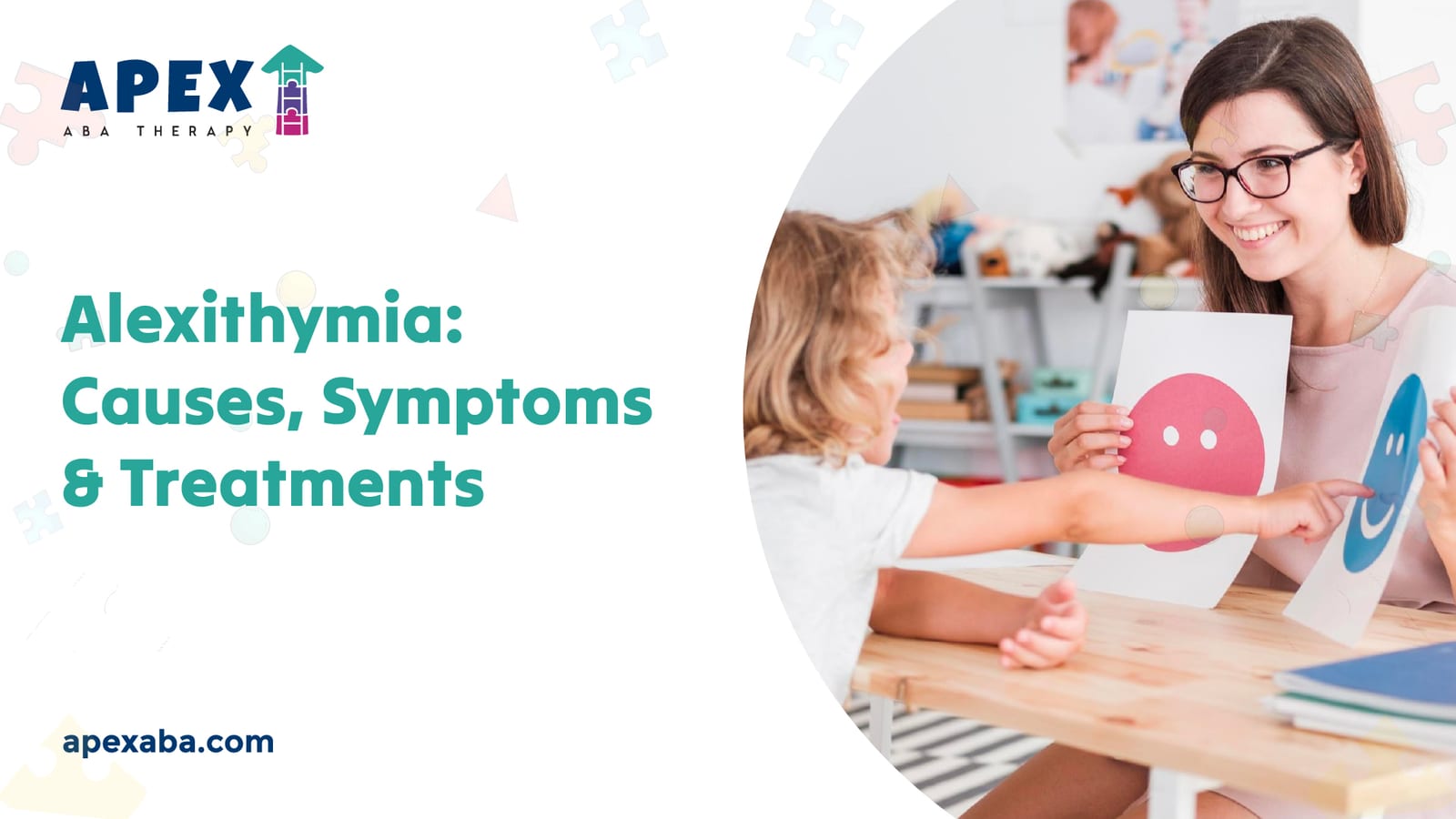
Alexithymia is not considered a mental disorder, but rather a personality trait that can be present in individuals with various psychiatric conditions, including depression, anxiety disorders, and post-traumatic stress disorder (PTSD).
In some cases, it may also be associated with neurological conditions such as autism spectrum disorder (ASD) or traumatic brain injury (TBI).
There are two primary types of alexithymia: primary and secondary. Primary alexithymia is thought to be a result of developmental factors that affect emotional functioning from an early age. Secondary alexithymia develops later in life as a result of trauma or other psychological stressors.
Causes of Alexithymia
The exact cause of alexithymia is still unknown, but research has revealed some interesting insights. It is widely believed that alexithymia is a complex condition that arises from a combination of genetic and environmental factors.
Some researchers suggest that alexithymia is linked to a lack of emotional stimulation during childhood; if a child doesn't have the opportunity to learn about emotions and how to express them, they may struggle to identify and articulate their own feelings later in life.
On the other hand, some researchers suggest that alexithymia may be a result of neurological differences in the brain. The brain is a complex organ that is responsible for regulating our emotions and behaviors, and if there are differences in how the brain processes emotions, this could contribute to alexithymia.
While the exact cause of alexithymia remains unknown, it is clear that this is a condition that can have a significant impact on a person's life. By understanding more about the factors that contribute to alexithymia, we can better support individuals who are affected by this condition and help them to develop strategies for managing their emotions.
Symptoms of Alexithymia
The most common symptom of alexithymia is difficulty identifying and expressing emotions. People with alexithymia may also have difficulty understanding other people's emotions and may struggle with social interactions. Other symptoms of alexithymia include:
- Difficulty describing physical sensations
- Limited imagination
- Inability to daydream
- Difficulty remembering dreams
- Difficulty recognizing facial expressions
What are the Treatments of Alexithymia?
There is currently no cure for alexithymia, but there are treatments available that can help manage the symptoms. The most common treatment for alexithymia is psychotherapy, which involves talking to a trained therapist about your emotions and learning how to identify and express them. Other treatments for alexithymia include:
- Mindfulness-based therapy
- Cognitive-behavioral therapy
- Group therapy
In some cases, medication may also be prescribed to help manage the symptoms of alexithymia.
Types of Alexithymia
There are two types of alexithymia, primary and secondary.
Primary Alexithymia
Primary alexithymia is a developmental disorder that usually begins in childhood. It is characterized by a person's inability to identify and describe their own emotions. People with primary alexithymia may also have difficulty understanding other people's emotions and often report feeling emotionally numb.
Secondary Alexithymia
Secondary alexithymia, on the other hand, occurs as a result of another condition or injury. For example, people with traumatic brain injuries or PTSD may develop secondary alexithymia as a result of damage to the areas of the brain responsible for processing emotions.
Similarly, people with depression or anxiety disorders may experience temporary periods of secondary alexithymia as a symptom of their underlying condition.
Both types of alexithymia can significantly impact a person's quality of life and relationships. However, identifying the type of alexithymia a person has can help guide treatment options and strategies for managing symptoms.
How Alexithymia Affects Personal Relationships?
Alexithymia can have a significant impact on personal relationships. People with alexithymia may struggle to express their emotions and this can make it difficult for them to form close connections with others. They may also have difficulty understanding other people's emotions and this can lead to misunderstandings and conflict.
In romantic relationships, alexithymia can be particularly challenging. Intimacy requires emotional openness and vulnerability, but people with alexithymia may find it hard to express their feelings or understand their partner's needs. This can lead to frustration, resentment, and ultimately, the breakdown of the relationship.
Even in non-romantic relationships, such as friendships or family connections, alexithymia can create barriers. For example, a person with alexithymia may come across as distant or uninterested in social situations because they struggle to engage emotionally with others.
However, that having alexithymia does not mean that a person cannot form meaningful relationships. With the right support and strategies, people with alexithymia can learn how to communicate their emotions effectively and build strong connections with others.
Therapy can be particularly helpful in this regard as it provides a safe space for individuals with alexithymia to explore their emotions and develop new skills for managing them in social situations.
The Impact of Alexithymia on Mental Health
Alexithymia can have a significant impact on mental health. People with alexithymia may struggle to identify and express their emotions, which can lead to feelings of frustration, anxiety, and even depression.
Without the ability to process and understand their emotions, individuals with alexithymia may find it difficult to cope with stress or traumatic events.
In addition, alexithymia has been linked to other mental health conditions such as eating disorders and substance abuse. People with alexithymia may turn to these behaviors as a way of coping with their emotional difficulties.
Furthermore, having alexithymia can make it more challenging for individuals to seek help for mental health issues. They may not recognize the symptoms of depression or anxiety in themselves or struggle to articulate their experiences to healthcare providers.
It is essential that we recognize the impact of alexithymia on mental health and provide support and resources for those affected by this condition. By raising awareness about the challenges faced by people with alexithymia, we can reduce stigma and encourage individuals to seek help when they need it.
Techniques for Improving Emotional Awareness in People with Alexithymia
While there is no cure for alexithymia, individuals with this condition can learn techniques to improve their emotional awareness and ability to express themselves. Here are some strategies that have been found to be effective:
Mindfulness Meditation
Mindfulness meditation involves paying attention to the present moment without judgment. It can help individuals with alexithymia become more aware of their physical sensations and emotions. By practicing mindfulness regularly, individuals may also develop a greater sense of self-awareness.
Journaling
Journaling is a technique that involves writing down thoughts and feelings. For people with alexithymia, journaling can be a helpful way to identify and label emotions. Writing down emotions can also provide an opportunity for reflection and processing.
Emotion-Focused Therapy
Emotion-focused therapy is a type of psychotherapy that focuses on helping individuals identify and express their emotions. This type of therapy can be particularly helpful for people with alexithymia as it provides a safe space to explore emotions.
Art Therapy
Art therapy involves using art as a means of expression. It provides an alternative way for individuals with alexithymia to communicate their emotions without relying solely on verbal communication.
By utilizing these techniques, individuals with alexithymia can improve their emotional awareness and enhance their ability to express themselves. Finding the right approach may take time, but with persistence and support from healthcare professionals, progress can be made towards managing symptoms associated with this condition.
The Connection between Alexithymia and Other Mental Health Conditions
Alexithymia has been linked to several other mental health conditions, including depression, anxiety, and post-traumatic stress disorder (PTSD). People with alexithymia may be at a higher risk of developing these conditions because they have difficulty identifying and expressing their emotions.
Depression is a common mental health condition that affects millions of people worldwide. Individuals with alexithymia may be more prone to developing depression because they struggle to recognize the symptoms of sadness or hopelessness in themselves.
In addition, the inability to express emotions can lead to feelings of isolation and loneliness, which are common triggers for depression.
Anxiety disorders are another group of mental health conditions that have been linked to alexithymia. People with alexithymia may experience heightened levels of anxiety because they struggle to identify and manage their emotions effectively.
They may also find it challenging to cope with stressful situations or social interactions because they lack the necessary emotional skills.
PTSD is a condition that develops after exposure to a traumatic event such as physical violence or natural disasters. People with alexithymia who experience traumatic events may be more likely to develop PTSD because they struggle to process their emotions effectively.
Without the ability to recognize and express their feelings about the traumatic event, individuals with alexithymia may find it challenging to recover from the experience.
It is essential that individuals with alexithymia who are experiencing symptoms of depression, anxiety, or PTSD seek help from healthcare professionals. By addressing these underlying conditions, individuals can improve their overall quality of life and reduce the impact of alexithymia on their mental health.
The Effectiveness of Medication in Treating Alexithymia
While psychotherapy is the most common treatment for alexithymia, medication may also be prescribed to help manage the symptoms. However, medication is not a cure for alexithymia and should be used in conjunction with other forms of therapy.
One class of medications that may be prescribed for alexithymia are antidepressants. Antidepressants can help improve mood and reduce anxiety, which may in turn make it easier for individuals with alexithymia to identify and express their emotions.
However, it can take several weeks or even months for antidepressants to take effect and they may not work for everyone.
Another class of medications that may be prescribed are anxiolytics or anti-anxiety medications. These drugs can help reduce feelings of anxiety and stress, which can make it easier for individuals with alexithymia to engage in therapy and learn new emotional skills. However, like antidepressants, anxiolytics may not work for everyone and can have side effects.
Medication should only be taken under the guidance of a healthcare professional. They will be able to determine if medication is appropriate based on an individual's specific symptoms and medical history.
Ultimately, while medication can be helpful in managing symptoms associated with alexithymia, it should not be seen as a standalone treatment option. Instead, medication should be used in conjunction with psychotherapy or other forms of therapy to provide a comprehensive approach to managing this condition.
The Role of Culture in the Development and Experience of Alexithymia
Culture plays an essential role in shaping how individuals experience emotions and express them. Certain cultures may place a greater emphasis on emotional expression, while others may value emotional restraint. This can impact the development and experience of alexithymia.
In some cultures, emotional expression is encouraged and even celebrated. For example, in Latin American cultures, it is common for people to express their emotions openly and passionately. In contrast, other cultures may view emotional expression as a sign of weakness or vulnerability.
The cultural norms surrounding emotional expression can impact the development of alexithymia. Individuals who grow up in cultures that value emotional restraint may be more likely to develop alexithymia because they are not taught how to identify and express their emotions effectively.
Furthermore, cultural differences in emotion regulation can impact how individuals with alexithymia experience their symptoms. For example, individuals from collectivistic cultures may experience more distress associated with alexithymia because they place a greater emphasis on social harmony and interpersonal relationships.
It is important for healthcare professionals to consider cultural factors when diagnosing and treating alexithymia. By understanding how culture shapes the development and experience of this condition, healthcare providers can provide more effective treatment options that are tailored to each individual's unique background and needs.
How to Support a Friend or Family Member with Alexithymia?
If you have a friend or family member with alexithymia, it can be challenging to know how to support them. Here are some strategies that may be helpful:
Educate Yourself
One of the most important things you can do is educate yourself about alexithymia. By learning more about this condition, you can better understand what your loved one is going through and how you can help.
Listen Without Judgment
People with alexithymia may struggle to express their emotions, but this does not mean they do not have feelings. When your loved one does open up, it is essential to listen without judgment. Avoid giving unsolicited advice or making assumptions about what they are feeling.
Be Patient
Building trust and rapport with someone who has alexithymia takes time. Be patient and allow your loved one to open up at their own pace.
Encourage Therapy
Therapy can be incredibly helpful for individuals with alexithymia as it provides a safe space for them to explore their emotions and develop new skills for managing them effectively. Encourage your loved one to seek therapy if they have not already done so.
Offer Non-Verbal Support
Physical touch or gestures such as hugs or holding hands can communicate emotional support without relying on verbal communication. These non-verbal cues may be particularly helpful for individuals with alexithymia who struggle to express themselves verbally.
By utilizing these strategies, you can provide meaningful support for your loved one with alexithymia. Remember that everyone's experience is unique, so it is essential to tailor your approach based on their specific needs and preferences.
FAQs
What is the difference between alexithymia and autism?
Alexithymia and autism share some similarities, but they are distinct conditions. While both conditions can affect a person's ability to identify and express emotions, there are some key differences.
Autism is a developmental disorder that affects social communication and behavior, while alexithymia specifically impacts emotional processing.
Can alexithymia be cured?
There is currently no cure for alexithymia, but there are treatments available that can help manage the symptoms. Psychotherapy, mindfulness-based therapy, cognitive-behavioral therapy, and group therapy have all been found to be effective in helping individuals with alexithymia learn how to identify and express their emotions.
Is alexithymia a personality disorder?
While alexithymia shares some characteristics with personality disorders such as borderline personality disorder or narcissistic personality disorder, it is not considered a personality disorder itself. Alexithymia is more accurately described as an emotion processing difficulty rather than a specific type of personality trait.
Can medication help with alexithymia?
While medication cannot cure alexithymia, certain medications may be prescribed to help manage symptoms such as anxiety or depression that often co-occur with this condition. That medication should only be used as part of a comprehensive treatment plan that includes therapy and other strategies for managing symptoms.
Conclusion
Alexithymia is a complex condition that can have a significant impact on a person's life. It is important to seek treatment if you think you may have alexithymia, as there are treatments available that can help manage the symptoms.
If you or someone you know is struggling with alexithymia, talk to a healthcare professional to learn more about the available treatment options.
Sources
Get started today
Ready to talk about ABA therapy?
Apex ABA Therapy helps families in North Carolina, Maryland, and Georgia access in-home, school-based, and daycare ABA services.
Popular services
Serving families in