
Was Albert Einstein Autistic? What Historians and Researchers Say
Was Albert Einstein autistic? His speech delay, social isolation and sensory habits match ASD — here's what historians and psychologists actually found.
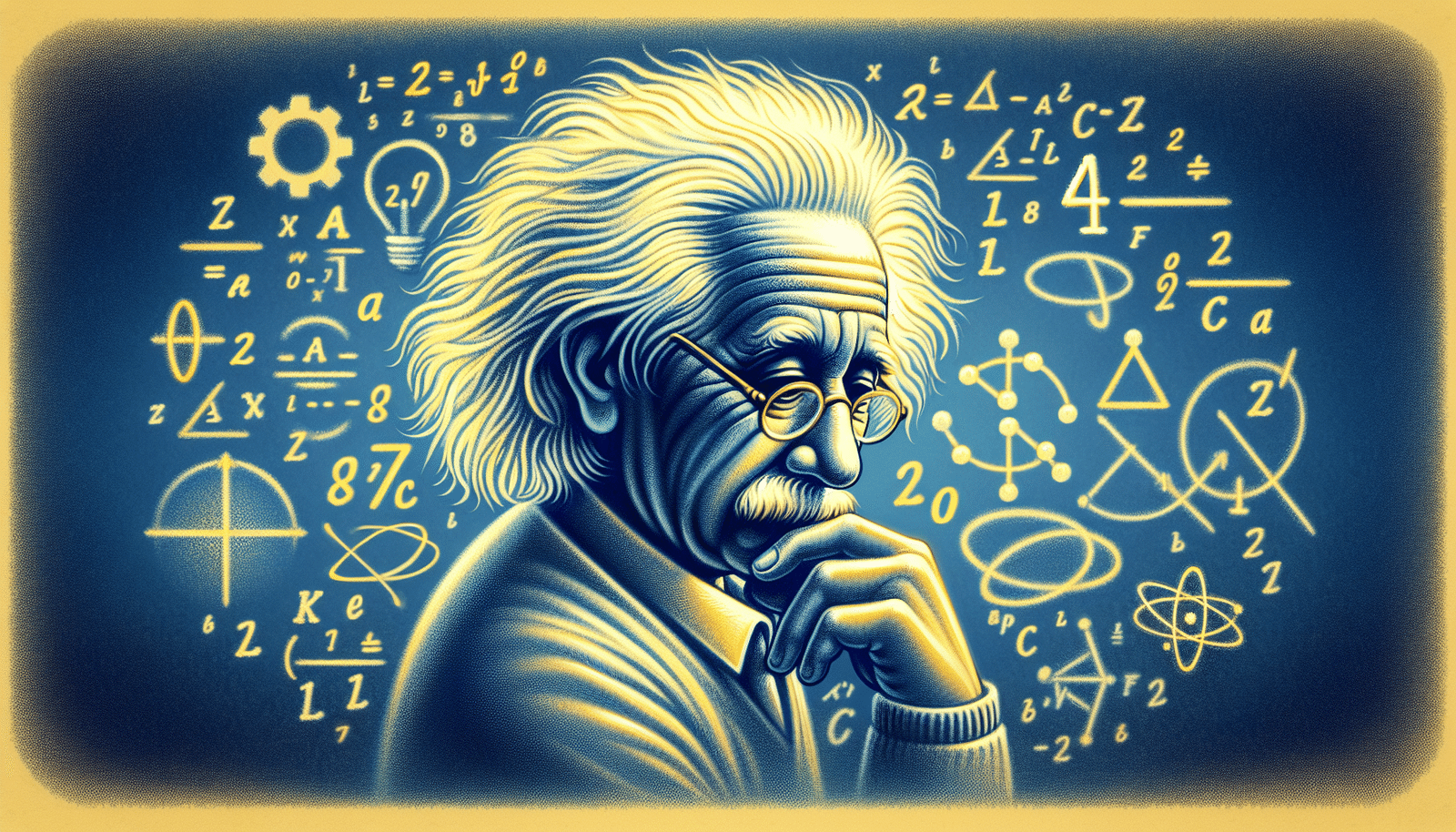
Albert Einstein almost certainly had significant neurodevelopmental differences — but whether he was autistic is a question historians and clinicians continue to debate, because no diagnosis was ever made during his lifetime. What we do have is a documented record: Einstein did not speak until age two or three, a delay noted by his family and confirmed by biographers. His sister Maja described him as speaking slowly and deliberately for years after that. He was known for social isolation, difficulties maintaining friendships, and an intense, narrow focus on physics to the exclusion of almost everything else. Whether that constellation meets DSM-5-TR criteria for autism is where the honest answer gets complicated.
Families who find themselves asking similar questions about their own children can exploreApex ABA's assessment processto get clarity from experienced BCBAs.
Understanding Autism Spectrum
To comprehend the potential connection between Albert Einstein and autism, it is important to first understand the traits associated with theautism spectrumand the challenges involved in diagnosing it.
Traits of Autism Spectrum
Autism spectrum refers to a range of neurodevelopmental conditions characterized by challenges in social interaction, communication difficulties, and repetitive behaviors. Individuals on the autism spectrum may exhibit a wide variety of traits, which can vary in severity and presentation.
Some commontraits of the autismspectrum include:
- Difficulties in social interaction, such as trouble understanding and interpreting nonverbal cues, challenges withmaintaining eye contact, and struggling with reciprocal conversation.
- Communication difficulties, which can manifest as delayed speech development, repetitive speech patterns, or a preference for solitary activities.
- Repetitive behaviors and restricted interests, often demonstrated through repetitive movements (e.g., hand flapping, rocking),adherence to strict routines, and an intense focus on specific topics or objects.
It's important to note that every individual on the autism spectrum is unique, and the traits they exhibit can vary greatly. Autism is a spectrum disorder, meaning that individuals may experience these traits to different degrees and in different combinations.
Diagnosis Challenges: Then and Now
Diagnosing autism has always been a nuanced process. The diagnostic criteria for autism spectrum disorder have evolved significantly over the past several decades. What we now recognize as autism was not formally categorized in its modern form until the late 20th century, long after Einstein's lifetime.
Today, the diagnosis process typically involves comprehensive assessments conducted by professionals specializing in autism spectrum disorders. These include structured observations, interviews with the individual and their caregivers, and standardized tools to evaluate social communication, behavior, and development. Even with modern tools, diagnosis can take time, particularly for individuals who have developed compensatory strategies that mask their difficulties.
For historical figures like Einstein, the challenge is compounded. We rely on second-hand accounts, letters, and biographical records, sources that were never intended to document neurodevelopmental traits. This is why any discussion of Einstein and autism must be approached with intellectual humility. We are exploring possibilities and patterns, not delivering verdicts.
Albert Einstein's Early Life
Several aspects of Einstein's childhood suggest the presence of traits commonly associated with the autism spectrum. Examining these early years provides the most compelling evidence for the ongoing speculation about his neurodevelopmental profile.
Delayed Speech Development
Einstein did not start speaking until he was three or four years old, significantly later than the typical developmental milestone. Even after he began speaking, he exhibited repetitive speech patterns, often whispering words to himself before saying them aloud. This behavior, sometimes referred to as echolalia in a mild form, was noted by family members and stood out even among his peers. Delayed speech development remains one of the most discussed early indicators of autism spectrum disorder today.
Social Interaction Challenges
Einstein found it genuinely difficult to make friends and consistently preferred solitude. He spent significant amounts of time alone, sailing, reading, or working through complex problems in his study. Rather than engaging in the energetic, unstructured social games typical of childhood, he gravitated toward books, the violin, puzzles, mathematical problems, and building elaborate structures.
His preference for solitary, structured, intellectually driven activities over open-ended social play aligns closely with patterns commonly seen in autistic children today. As an adult, Einstein maintained few close friendships, often struggled to sustain meaningful personal relationships, and was known to be emotionally distant even with those closest to him.
Unique Interests and Hyperfocus
Perhaps the most striking of Einstein's autistic-adjacent traits was his extraordinary capacity for deep,sustained focus on subjectsthat captured his interest. From a young age, he demonstrated an intense, consuming passion for scientific exploration, particularly physics and mathematics. This ability to immerse himself completely in a problem, often for hours or days at a time, is consistent with what is now commonly called hyperfocus.
Hyperfocus is a trait frequently observed in individuals on the autism spectrum and is often one of their greatest cognitive strengths. For Einstein, this capacity for total immersion was arguably central to his ability to develop ideas as revolutionary as the theory of relativity.
Connections to the Autism Spectrum
Expert Opinions
British psychiatrist Michael Fitzgerald has argued that some of history's most celebrated scientists, including Einstein, Isaac Newton, and Ludwig Wittgenstein, showed traits consistent with Asperger's syndrome, a diagnosis that falls within thehigh-functioning end of the autismspectrum. Fitzgerald goes further, suggesting that the genes associated with autism and exceptional creativity may be closely intertwined, that the same neurological wiring that creates social and communicative challenges may also enable the kind of lateral, systematic, pattern-driven thinking that produces scientific breakthroughs.
Other researchers have been more cautious, noting that retrospective diagnosis is inherently speculative. The understanding and classification of autism have changed dramatically over time, making it difficult, and arguably inappropriate, to apply modern diagnostic criteria to individuals who lived in a different era entirely.
What these expert perspectives share, however, is an acknowledgment that Einstein's behavioral profile was unusual in ways that align meaningfully with what we now understand about the autism spectrum.
Behavioral Characteristics in Context
Einstein's delayed speech, preference for solitude, hyperfocus on complex subjects, and difficulty forming and maintaining social relationships are all consistent with traits associated with autism spectrum disorder. Taken individually, each could be explained by other factors. Taken together, they form a pattern that clinicians and researchers find difficult to ignore.
When these kinds of traits appear in children today, social withdrawal, communication delays, intense singular interests, difficulty with unstructured social environments, families often find themselves searching for answers.ABA therapy for children in North Carolina, Maryland, and Georgiaoffers structured, evidence-based support tailored to each child's unique profile, helping them build on their strengths while developing skills that make daily life more manageable.
The Link Between Genius and Autism
The idea that there is a meaningful overlap between exceptional intellectual ability and autism spectrum traits has gained traction in scientific research. In 2015, researchers at Ohio State University identified a potential chromosomal connection, suggesting that families with a higher likelihood of having autistic children are also more likely to produce individuals withexceptional intellectual abilities.
While this study does not establish a direct causal link, it adds scientific weight to the idea that neurodivergent cognitive profiles and extraordinary ability may share underlying genetic factors. The same variations that contribute to social and communicative differences may also shape the kind of mind capable of reimagining the laws of physics.
This does not mean all geniuses are autistic, or that all autistic individuals are geniuses. Autism is a spectrum: wide, varied, and deeply individual. But the research does suggest that the neurological architecture associated with autism may, in certain configurations, enable forms of thinking that are genuinely rare and enormously valuable.
The Asperger's Syndrome Debate
The specific question of whether Einstein hadAsperger's syndrome, a diagnosis that no longer exists as a standalone category in the DSM-5 but continues to be used colloquially, remains unresolved and likely always will be.
Those who argue in favor point to his delayed speech, pronounced social difficulties, rigid personal routines, and the intensity of his intellectual focus. Those who argue against suggest that his eccentricities are better explained by the pressures and preoccupations of extraordinary genius, and that there is insufficient evidence to support a neurodevelopmental diagnosis.
Both perspectives are intellectually defensible. The honest answer is that we cannot know for certain and that may be the most important thing to acknowledge. What we can say is that Einstein's profile raises questions worth asking, not just about him, but about how we understand the relationship betweenneurodiversity and human achievementmore broadly.
Impact on Perception and the Neurodiversity Conversation
Einstein's unconventional personality has long contributed to the archetype of the eccentric genius, someone whose mind operates on a fundamentally different frequency from those around them. Whether or not he was autistic, his story has become a touchstone in conversations about neurodiversity and what it means to think differently.
The ongoing speculation about Einstein's place on the spectrum matters not because of the diagnosis itself, but because of what it signals: that autistic ways of thinking and engaging with the world can produce extraordinary things. That reframe from deficit to difference, from disorder to divergence, is central to how modern, evidence-based approaches to autism support are evolving.
Understanding figures like Einstein through a neurodiversity lens helps shift the cultural conversation. It moves us away from the idea that autism is purely something to be fixed or overcome, and toward the recognition that it represents a genuinely different way of processing and engaging with the world. One that comes with its own challenges, yes, but also with its own strengths, perspectives, and contributions.
This shift in understanding is not just philosophical. It has practical implications for how we support autistic children and adults. When support is built around a child's actual profile: their strengths, their interests, their specific challenges, rather than a generic deficit model, outcomes improve significantly. That is the foundation of good ABA therapy: not changing who a child is, but helping them navigate a world that was not always designed with them in mind.
For families currently navigating questions about their child's development, the story of Einstein is a reminder that the traits that feel most confusing or challenging in childhood can, with the right support and environment, become the foundation for a remarkable life.
If your child shows traits similar to those explored in this article and you would like expert guidance on next steps,book an evaluation with Apex ABA. We verify insurance upfront and most families acrossNorth Carolina,Maryland, andGeorgiaare able to get started within 2–4 weeks.
References
Get started today
Ready to talk about ABA therapy?
Apex ABA Therapy helps families in North Carolina, Maryland, and Georgia access in-home, school-based, and daycare ABA services.
Popular services
Serving families in