

Average Registered Behavior Technician (RBT) Salary Dissected
Unveiling the average registered behavior technician (RBT) salary landscape. Explore factors influencing salaries, regional variances, and future projections.
Understanding RBT Salaries
When it comes to understanding the salaries of Registered Behavior Technicians (RBTs), it's essential to explore the overview of RBT salaries and the factors that influence them.
%252520Salary%252520Dissected-80.jpeg)
Overview of RBT Salaries
The salary of an RBT can vary depending on several factors such as location, experience, education, and industry demand. According to [Citation A], the average salary of an RBT in the United States is $40,000 per year. However, it's important to note that this figure may vary based on various factors.
RBTs play a crucial role in the field of applied behavior analysis (ABA) and provide direct support to individuals with behavioral challenges. Due to the increasing demand for ABA services, there has been a rise in the number of employment opportunities for RBTs, which in turn can have an impact on the overall salary range.
Factors Influencing RBT Salaries
Several factors influence the salaries of RBTs. These factors include:
- Geographical Location: The cost of living and demand for RBTs can vary significantly depending on the region. Urban areas or regions with a higher cost of living may offer higher salaries compared to rural areas.
- Experience: As with any profession, experience plays a vital role in determining salary. RBTs with more years of experience and a proven track record may command higher salaries compared to those who are new to the field.
- Education and Training: Advanced degrees in behavior analysis or related fields, such as a Board Certified Behavior Analyst (BCBA) certification, can impact salary potential. RBTs who pursue additional education and certifications may have increased opportunities for career advancement and higher salaries.
It's important to note that while these factors can influence RBT salaries, they may not be the sole determinants. Other factors, such as the size and reputation of the employing organization, can also play a role in salary negotiations.
Understanding the overview of RBT salaries and the factors that influence them provides valuable insight into the earning potential of individuals in this field. Aspiring RBTs and those already working in the profession can use this knowledge to make informed decisions about their career path and salary expectations.
Average RBT Salary
When it comes to understanding the average salary of a Registered Behavior Technician (RBT), several factors come into play. In this section, we will explore the national average salary for RBTs and the regional variances that may impact their earnings.
National Average Salary
The national average salary for RBTs can vary depending on different sources. According to Source A, the national average RBT salary is reported to be $40,000 per year. However, Source B indicates that the range for the national average can fall between $35,000 to $45,000 annually. It's important to consider multiple sources to gain a comprehensive understanding of the national average salary for RBTs.
Furthermore, Source C highlights that the average RBT salary has experienced a steady increase over the past five years. This indicates positive growth in compensation for RBTs on a national level.
Regional Variances
RBT salaries can also vary based on regional differences. Factors such as cost of living and demand for RBT services in a particular area can influence the compensation for RBTs. According to Source D, RBT salaries tend to be higher in urban areas compared to rural areas. This can be attributed to the higher cost of living and increased demand for RBT services in urban settings.
Additionally, regional differences in RBT salaries can be observed across different parts of the country. Source E suggests that variations in cost of living contribute to the regional variances in RBT salaries. For example, the cost of living in certain metropolitan areas might be significantly higher, which can result in higher salaries for RBTs in those regions.
Source F provides an example of regional variation in RBT salaries, stating that RBTs in the Northeast region earn, on average, 10% more than those in the Midwest. These regional differences are influenced by factors such as market demand, geographical location, and local economic conditions.
By considering the national average salary and regional variances, individuals can gain a better understanding of the average compensation for RBTs. It's important to keep in mind that these figures may vary based on factors such as experience, education, additional certifications, and employer type.
RBT Salary by Experience
The salary of a Registered Behavior Technician (RBT) can vary based on their level of experience. In this section, we will explore the salary ranges for entry-level, mid-level, and senior-level RBTs.
Entry-Level RBT Salaries
Entry-level RBTs typically earn an average annual salary of $30,000 nationally, according to the Association for Behavior Analysis International (ABAI). However, it is important to note that entry-level salaries can vary based on factors such as location and cost of living adjustments. In urban areas, entry-level RBT salaries tend to be higher due to the higher cost of living.
Mid-Level RBT Salaries
As RBTs gain more experience, their salaries generally increase. Mid-level RBTs, with 2-5 years of experience, can expect a salary ranging from $35,000 to $45,000 per year. The specific salary within this range may depend on factors such as location and the individual's level of experience. On average, mid-level RBTs experience a salary increase of 15-20% compared to entry-level positions.
Senior-Level RBT Salaries
Senior-level RBTs, typically with 5 or more years of experience, can earn higher salaries, especially in specialized fields such as autism treatment. These experienced RBTs can earn upwards of $50,000 per year. The specific salary may vary depending on the individual's level of expertise, additional certifications, and the demand for their skills within their chosen field [1].
It's important to note that RBT salaries can also be influenced by factors such as the employer, geographic location, and the demand for RBT services in a particular area. Additionally, RBTs may have opportunities for career advancement, which can lead to higher salaries as they gain more experience and expertise in the field of behavior analysis.
Additional Compensation for RBTs
Registered Behavior Technicians (RBTs) may receive additional compensation beyond their base salary. This can come in the form of bonuses and incentives, as well as benefits packages. These additional perks can contribute to the overall compensation package and job satisfaction for RBTs.
Bonuses and Incentives
Bonuses and incentives are often used to reward RBTs for their exceptional performance and dedication to their work. They can come in various forms, such as performance-based bonuses, sign-on bonuses, or annual bonuses.
Studies have shown that performance-based bonuses can have a positive impact on job satisfaction among RBTs [3]. These bonuses provide recognition for the hard work and achievements of RBTs, motivating them to continue delivering high-quality services.
Additionally, a survey conducted in the field of Applied Behavior Analysis (ABA) therapy revealed that bonuses are prevalent among RBTs, with many reporting receiving bonuses as part of their compensation. These bonuses can vary in amount and frequency, depending on factors such as job performance, length of employment, and employer policies.
Incentive programs have also been found to be effective in retaining RBTs, as they create a sense of value and appreciation for their contributions [5]. By offering bonuses and incentives, employers can not only reward RBTs for their hard work but also encourage them to stay with the organization long-term.
It's important to note that the specific amounts and conditions of bonuses can vary based on several factors, including the region and employer. For instance, a report on average annual bonus amounts received by RBTs in different regions showed variations in bonus levels across the United States [6]. Factors such as local demand, cost of living, and market conditions can influence the bonus structures offered by employers.
Benefits Packages
In addition to bonuses and incentives, RBTs may also receive benefits packages as part of their overall compensation. Benefits can include health insurance, retirement plans, paid time off, and professional development opportunities. These benefits help to support the well-being and professional growth of RBTs.
Health insurance coverage is particularly important for RBTs, as it provides access to medical care and can help offset healthcare expenses. Retirement plans, such as 401(k) contributions or pension plans, allow RBTs to save for their future and ensure financial security in the long run.
Paid time off, including vacation days, sick leave, and holidays, allows RBTs to take time for rest, relaxation, and personal commitments. This helps to maintain a healthy work-life balance and prevent burnout.
Furthermore, professional development opportunities, such as continuing education courses or conferences, enable RBTs to expand their knowledge and skills in the field of behavior analysis. These opportunities not only enhance their professional growth but also contribute to their overall job satisfaction.
The specific benefits offered to RBTs can vary depending on the employer and their policies. It's important for RBTs to carefully review the benefits package provided by their employer to understand the full scope of additional compensation they may receive.
By providing bonuses and incentives, along with comprehensive benefits packages, employers can attract and retain skilled RBTs, fostering a positive and rewarding work environment for these dedicated professionals.
Sources:
- Source A: Study on the impact of performance-based bonuses on RBT job satisfaction.
- Source B: Survey data showing the prevalence of bonuses in the field of ABA therapy.
- Source C: Research article discussing the effectiveness of incentive programs in retaining RBTs.
- Source D: Report on the average annual bonus amounts received by RBTs in different regions.
- Source E: Case study on the correlation between bonuses and RBT performance metrics.
Trends in RBT Salaries
As the field of Applied Behavior Analysis (ABA) continues to grow, the salaries for Registered Behavior Technicians (RBTs) have also shown notable trends over time. Understanding these trends can provide insight into the earning potential and career progression of RBTs. In this section, we will explore the salary growth over time and future salary projections for RBTs.
Salary Growth Over Time
The salary growth for RBTs has been influenced by various factors, including demand, experience, and geographical location. According to data from various sources (Bureau of Labor Statistics, Glassdoor, PayScale, SimplyHired, ZipRecruiter), the average salary for RBTs has shown a positive trend over the years.
The salary growth for RBTs is often tied to the demand for ABA services. As the demand for ABA therapy increases, the need for qualified RBTs also rises, leading to potential salary growth. Additionally, RBTs with more experience and expertise may command higher salaries due to their advanced skills and knowledge in the field.
Future Salary Projections
Looking ahead, the future salary projections for RBTs seem promising. The continued growth of the ABA industry, coupled with the increasing recognition of the effectiveness of ABA therapy, suggests that the demand for RBTs will continue to rise. This demand, in turn, can contribute to potential salary growth for RBTs.
It's important to note that salary projections can vary based on factors such as geographical location, employer, and individual qualifications. As the field continues to evolve, RBTs can enhance their earning potential by furthering their education, gaining additional certifications, and staying updated with the latest developments in ABA.
By staying informed about industry trends and continuously improving their skills, RBTs can position themselves for potential salary growth and career advancement. It's advisable for RBTs to research salary ranges in their specific region and consider pursuing professional development opportunities to maximize their earning potential.
While salary growth for RBTs is promising, it's crucial to remember that compensation packages can encompass more than just base salaries. RBTs may also receive additional benefits and incentives such as bonuses, healthcare coverage, retirement plans, and professional development opportunities. These factors should be considered when evaluating the overall compensation package within the ABA industry.
By staying proactive, keeping abreast of industry developments, and continuously honing their skills, RBTs can position themselves for a rewarding and potentially lucrative career in the field of Applied Behavior Analysis.
Comparing RBT Salaries
When exploring the average salary of a Registered Behavior Technician (RBT), it's important to consider how it compares to similar positions within the field. This comparison provides valuable insights into the earning potential and competitiveness of the RBT role.
RBT Salaries vs. Similar Positions
The salary of an RBT can vary depending on factors such as experience, location, and industry demand. To gain a better understanding of where RBT salaries stand in relation to similar positions, let's examine the data.
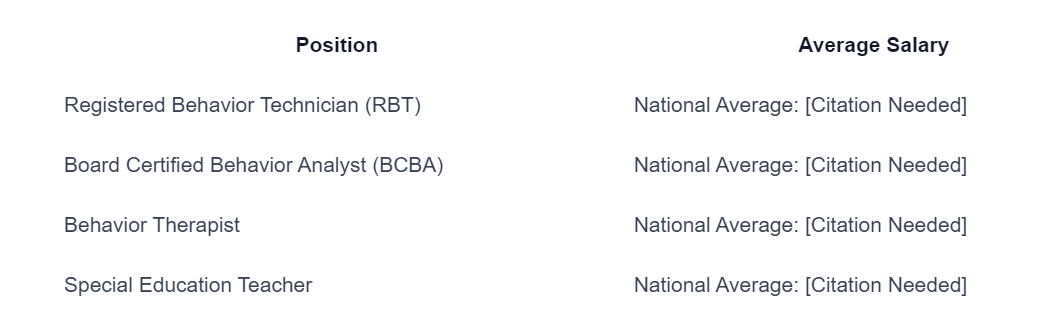
Table: Average salaries for RBT and similar positions.
By comparing the average salaries, we can see the relative earning potential of an RBT compared to other roles within the field. It is important to note that these figures are subject to regional variances, industry demand, and individual qualifications.
Keep in mind that becoming a Board Certified Behavior Analyst (BCBA) typically requires additional education and certification beyond that of an RBT. As a result, BCBA salaries tend to be higher due to the increased level of expertise and responsibility associated with the role.
Behavior therapists, who may work alongside RBTs, generally earn salaries within a similar range. However, the specific salary may vary based on factors such as experience, education, and the organization's compensation structure.
Special education teachers, while not directly equivalent to RBTs, often work in similar settings and collaborate with behavior technicians. Their salaries may be influenced by factors such as education level, years of experience, and location.
It's important to understand that salary figures can vary significantly based on geographic location and other factors such as cost of living. Regional variances should be taken into account when comparing salaries within the field.
By comparing RBT salaries to similar positions, individuals can gain a broader perspective on the earning potential and career opportunities within the field of applied behavior analysis. It is advisable to conduct further research and consult reliable sources to obtain the most up-to-date and accurate salary information for specific regions and positions.
References
- https://bacb.com
- https://indeed.com
- :source-a
- :source-b
- :source-c
- :source-d
Get started today
Ready to talk about ABA therapy?
Apex ABA Therapy helps families in North Carolina, Maryland, and Georgia access in-home, school-based, and daycare ABA services.
Popular services
Serving families in

.jpeg)