
BCBA vs. RBT: Comparing Certifications in Behavior Analysis
BCBA vs. RBT: Choosing the right certification in behavior analysis. Compare education, responsibilities, and job demand.
Understanding BCBA and RBT Certifications
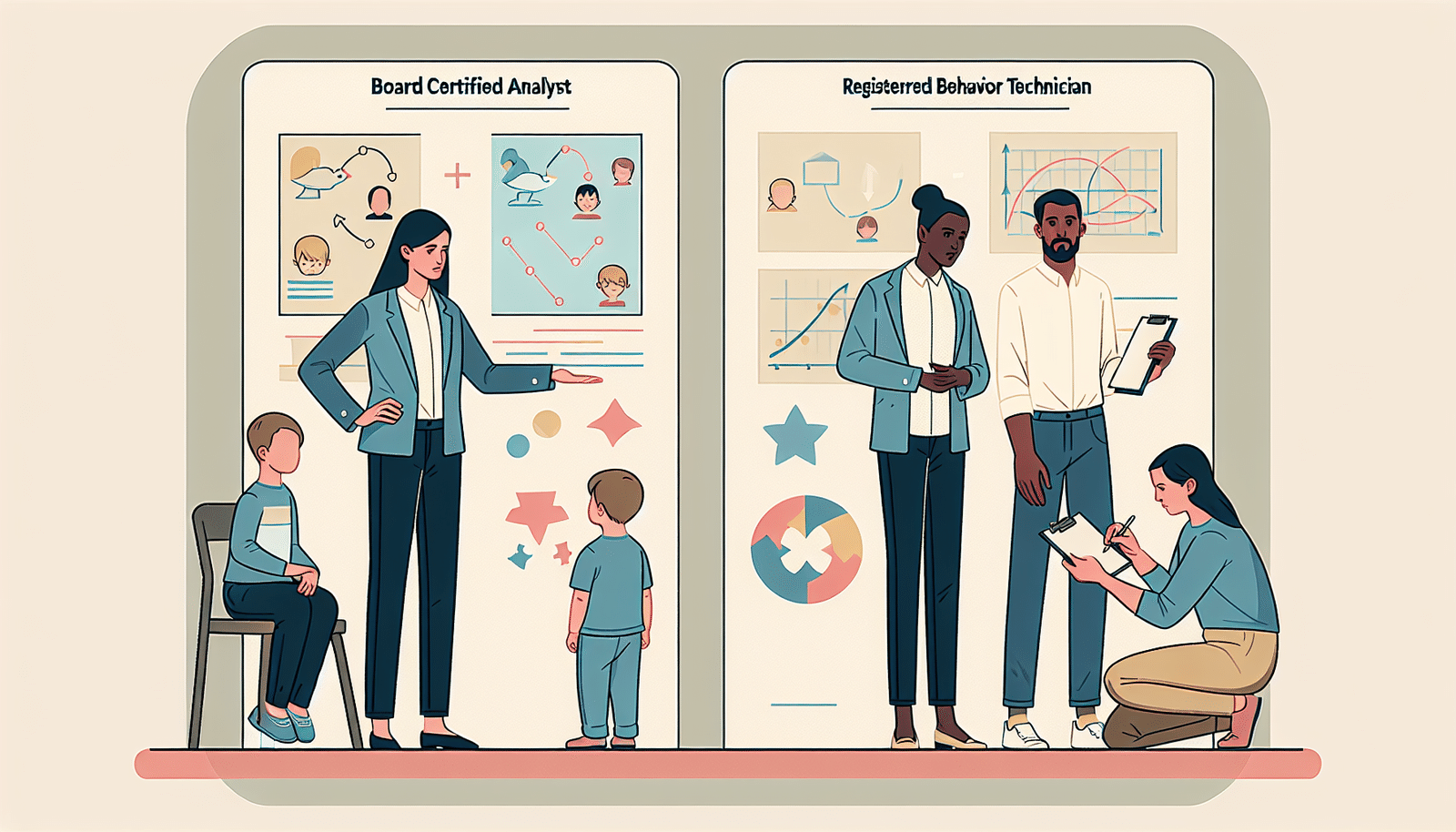
In the field of behavior analysis, two certifications stand out: Board Certified Behavior Analyst (BCBA) and Registered Behavior Technician (RBT). While both certifications are valuable within the field, they differ in terms of responsibilities and qualifications.
What is a BCBA?
A BCBA, which stands for Board Certified Behavior Analyst, is a highly trained professional in behavior analysis. BCBAs have typically obtained a master's degree in behavior analysis or a related field, completed a specified number of coursework hours, and gained supervised practical experience.
BCBAs possess a comprehensive understanding of behavior principles and are qualified to conduct assessments, design and implement behavior-change programs, and provide supervision and training to other professionals in the field, including RBTs. Their expertise allows them to work with individuals diagnosed with autism or other developmental disabilities, using evidence-based strategies to improve behavior and promote positive outcomes.
What is an RBT?
On the other hand, an RBT, or Registered Behavior Technician, is an entry-level certification in behavior analysis. RBTs work under the supervision of BCBAs and are responsible for implementing behavior-analytic interventions. They directly work with individuals to help them learn new skills or modify existing behaviors, utilizing strategies such as positive reinforcement and shaping.
RBTs do not require a master's degree; however, they must complete the necessary training and pass the RBT certification exam. Their role primarily involves implementing treatment plans designed by BCBAs, collecting data on behavior changes, and documenting findings for evaluation of treatment efficacy.
The distinction between a BCBA and an RBT lies in their level of responsibility, qualifications, and scope of practice. While BCBAs are responsible for program development, conducting assessments, and designing and implementing behavior-change programs, RBTs focus on implementing treatment plans, monitoring behavior changes, and providing support to individuals under the supervision of a BCBA. BCBAs possess a more advanced skill set and are qualified to supervise and provide training to RBTs and other professionals in the field.
Understanding the differences between these two certifications is important when considering a career in behavior analysis or when seeking services for individuals with behavioral needs. Both BCBAs and RBTs play integral roles in improving the lives of individuals through behavior analysis interventions.
Education and Training Requirements
To become a Board Certified Behavior Analyst (BCBA) or a Registered Behavior Technician (RBT), individuals must meet specific education and training requirements. These certifications differ in terms of educational background, coursework, and practical experience.
BCBA Education and Training
A BCBA certification is a graduate-level certification in behavior analysis. In order to become a BCBA, individuals must hold a master's degree in a related field. The coursework for BCBA certification typically includes a specified number of hours in Applied Behavior Analysis (ABA), which covers topics such as behavioral assessment, behavior-change procedures, and ethical considerations.
In addition to completing the required coursework, individuals pursuing BCBA certification must also gain supervised practical experience. This involves working directly with individuals diagnosed with autism or other developmental disabilities under the supervision of a qualified professional. The Behavior Analyst Certification Board (BACB) sets specific guidelines for the number of supervised hours required for BCBA certification.
RBT Education and Training
On the other hand, RBT certification is an entry-level certification. The educational requirements for RBT certification are less extensive compared to BCBA certification. Individuals seeking RBT certification must have a high school degree or equivalent.
To become an RBT, individuals must complete 40 hours of training, which covers topics such as behavior measurement, behavior analysis, and ethical considerations. After completing the training, individuals must pass a competency assessment and the RBT exam. This exam evaluates their knowledge and skills in implementing behavior-analytic services under the supervision of a BCBA or BCaBA.
The educational and training requirements for BCBA and RBT certifications reflect the difference in the level of responsibility and expertise associated with each role. BCBAs, with their advanced education and training, are qualified to conduct assessments, design and implement behavior-change programs, and supervise other professionals in the field. RBTs, while still working under the supervision of a BCBA, focus on the direct implementation of behavior-analytic services and assisting in the assessment process.
Scope of Responsibilities
When comparing the BCBA and RBT certifications in behavior analysis, it's essential to understand the distinct responsibilities associated with each role. While both certifications work towards improving behavior and implementing treatment plans, their levels of responsibility and expertise differ.
BCBA Responsibilities
Board Certified Behavior Analysts (BCBAs) possess a higher level of responsibility and expertise in behavior analysis. Their role involves designing comprehensive treatment plans, overseeing the activities of Registered Behavior Technicians (RBTs), conducting assessments, analyzing data, developing intervention strategies, and monitoring client progress.
BCBAs are trained to conduct functional behavior assessments and assessments, allowing them to identify the underlying causes of behavior and develop effective intervention plans. They play a crucial role in task analysis, behavior intervention plans, and training staff on implementation procedures. BCBAs often work in school settings, clinics, or in-home programs, where they utilize their expertise to provide guidance and oversight throughout the treatment process.
RBT Responsibilities
Registered Behavior Technicians (RBTs) work under the supervision of BCBAs and focus on the direct implementation of treatment plans created by the BCBA. Their responsibilities primarily involve implementing skill acquisition and behavior reduction plans as directed by the BCBA. RBTs collect data on behavior changes, document findings for the evaluation of treatment efficacy, and provide feedback to clients.
RBTs work hands-on with individuals in various settings, such as homes, schools, or clinics. They play a crucial role in helping individuals learn new skills or modify existing behaviors using strategies like positive reinforcement or shaping. RBTs are responsible for implementing the treatment plans developed by BCBAs, monitoring behavior changes, and providing support to clients.
It's important to note that BCBAs possess a more advanced set of skills compared to RBTs due to the higher level of responsibility associated with their role. While BCBAs oversee the overall treatment process and engage in complex tasks such as assessments and intervention plan development, RBTs focus on the implementation of treatment plans and data collection. Both certifications play vital roles in behavior analysis and contribute to the overall success of treatment programs.
Supervision and Independence
When comparing the certifications of BCBA and RBT in the field of behavior analysis, it's important to consider the differences in terms of supervision and independence.
BCBA Supervision and Independence
BCBAs, or Board Certified Behavior Analysts, have the ability to practice independently and supervise the activities of other Applied Behavior Analysis (ABA) professionals. As highly trained and certified professionals, BCBAs have the knowledge and expertise to assess individuals' behavioral issues and develop treatment strategies for improving targeted behaviors in various industries, such as education and healthcare.
The independence of BCBAs allows them to work in a variety of settings, including schools, clinics, and in-home programs. They have the authority to design behavior intervention plans, oversee their implementation, and make necessary adjustments based on the individual's progress. Additionally, BCBAs often have the opportunity to work with a diverse range of clients, addressing a wide array of behavioral challenges.
RBT Supervision and Independence
On the other hand, RBTs, or Registered Behavior Technicians, work under the supervision of BCBAs. They are trained and certified to provide ABA services designed by and under the guidance of BCBAs. RBTs play a crucial role in implementing treatment plans, working hands-on with individuals in various settings, to help improve their behavioral skills and achieve their goals.
RBTs assist BCBAs in delivering interventions, collecting data, and modifying treatment plans as directed by the supervising BCBA. They work closely with individuals, following the strategies outlined by the BCBA, to ensure consistency and progress in their behavioral development. RBTs provide direct support and implement behavior intervention plans under the supervision of BCBAs, allowing BCBAs to focus on assessment, analysis, and treatment plan design.
While RBTs work collaboratively with BCBAs, it's important to note that they do not have the same level of independence as BCBAs. They rely on the guidance and expertise of BCBAs to provide effective ABA services and make informed decisions regarding treatment strategies.
The distinctions in supervision and independence between BCBAs and RBTs highlight the varying levels of responsibility and expertise associated with each certification. BCBAs possess the necessary qualifications to practice independently, supervise others, and design comprehensive behavior intervention plans, while RBTs work closely with individuals to implement these plans under the supervision of BCBAs.
Salary and Job Demand
When comparing the BCBA and RBT certifications in behavior analysis, salary and job demand are important factors to consider. Let's take a closer look at the salary ranges and employment prospects for both roles.
BCBA Salary and Job Demand
BCBAs, or Board Certified Behavior Analysts, have a higher average salary compared to RBTs. The average BCBA salary in the United States is $75,784 per year. However, it's important to note that salaries can vary based on factors such as location and years of experience. The BCBA salary range can be influenced by factors such as geographic location, work setting, and level of experience.
In addition to a competitive salary, BCBAs also benefit from a strong job demand. Employment opportunities for BCBAs have significantly increased in recent years, with a growth rate of 5,852% observed between 2010 and 2021. The demand for BCBAs is particularly high in states such as California, Massachusetts, Texas, Florida, and Illinois.
RBT Salary and Job Demand
RBTs, or Registered Behavior Technicians, typically have a lower average salary compared to BCBAs. The average RBT salary in the United States is approximately $54,000 per year. However, similar to BCBA salaries, RBT salaries can vary based on factors such as location and years of experience.
While RBT salaries may be lower, there is still a demand for individuals with RBT certification. RBTs play a crucial role in supporting the implementation of behavior analysis interventions. The demand for RBTs can vary based on factors such as geographic location and the availability of behavior analysis services in different regions.
It's important to note that both BCBA and RBT salaries may also be influenced by factors such as the work setting (e.g., clinic, school, private practice) and additional certifications or specializations held by the individuals.
By considering the salary ranges and job demand for both BCBAs and RBTs, individuals can make informed decisions about their career paths in behavior analysis. It's essential to evaluate personal preferences, long-term goals, and the level of responsibility one is seeking in their role within the field of behavior analysis.
Certification Process
Obtaining a certification in behavior analysis requires meeting specific requirements and successfully completing the certification process. In this section, we will outline the steps to become a Board Certified Behavior Analyst (BCBA) and a Registered Behavior Technician (RBT).
Becoming a BCBA
Becoming a BCBA, which stands for Board Certified Behavior Analyst, requires a master's degree in a related field. Individuals interested in pursuing this certification must complete specific coursework in Applied Behavior Analysis (ABA) and gain supervised practical experience in the field. After meeting the education and practical experience requirements, candidates must pass a comprehensive exam provided by the Behavior Analyst Certification Board (BACB).
The certification process for a BCBA involves the following steps:
- Education: Complete a master's degree in a related field with coursework focused on ABA.
- Supervised Experience: Gain supervised practical experience in implementing ABA techniques and interventions.
- Exam: Pass the BCBA certification exam administered by the BACB.
- Renewal: Renew the BCBA certification every two years by completing continuing education credits.
Becoming an RBT
To become a Registered Behavior Technician (RBT), individuals must meet specific requirements outlined by the BACB. Unlike the BCBA certification, the RBT certification focuses on direct implementation of behavior-analytic services under the supervision of a BCBA or BCaBA.
The certification process for an RBT involves the following steps:
- Education: Obtain a high school degree or equivalent.
- Training: Complete 40 hours of training in behavior analysis, which covers topics such as ethical considerations, data collection, and behavior intervention techniques. It is important to note that the completion of the 40-hour training alone does not certify an individual as an RBT.
- Competency Assessment: Successfully pass a competency assessment to demonstrate proficiency in applying behavior-analytic techniques.
- Exam: Pass the RBT certification exam administered by the BACB.
- Background Check: Undergo a criminal background check.
- Renewal: Renew the RBT certification every three years by completing 40 hours of continuing education credits.
By following the respective certification processes, individuals can become a BCBA or an RBT, gaining recognition for their knowledge and expertise in behavior analysis. The certifications open doors to opportunities in various settings, including schools, clinics, and community-based programs, where they can make a positive impact on the lives of individuals through evidence-based behavioral interventions.
References
- https://docs.github.com/en/get-started/writing-on-github/working-with-advanced-formatting/creating-and-highlighting-code-blocks
- https://blueabatherapy.com/aba/what-is-an-rbt/
- https://www.discoveryaba.com/aba-therapy/bcba-vs-rbt
- https://www.connectncareaba.com/rbt-job-description
- https://drexel.edu/soe/resources/career-path/rbt-vs-bcba/
- https://onlinecounselingprograms.com/mental-health-careers/how-to-become-behavior-analyst-bcba/
- https://www.onlinerbttraining.com/pages/faqs
- https://www.bacb.com/rbt/
Get started today
Ready to talk about ABA therapy?
Apex ABA Therapy helps families in North Carolina, Maryland, and Georgia access in-home, school-based, and daycare ABA services.
.jpeg)