
Autism Noise Sensitivity: What's Actually Happening in Your Child's Brain
Autism noise sensitivity affects 50–70% of autistic individuals. Learn what causes it, how to spot it, and the strategies that actually help.
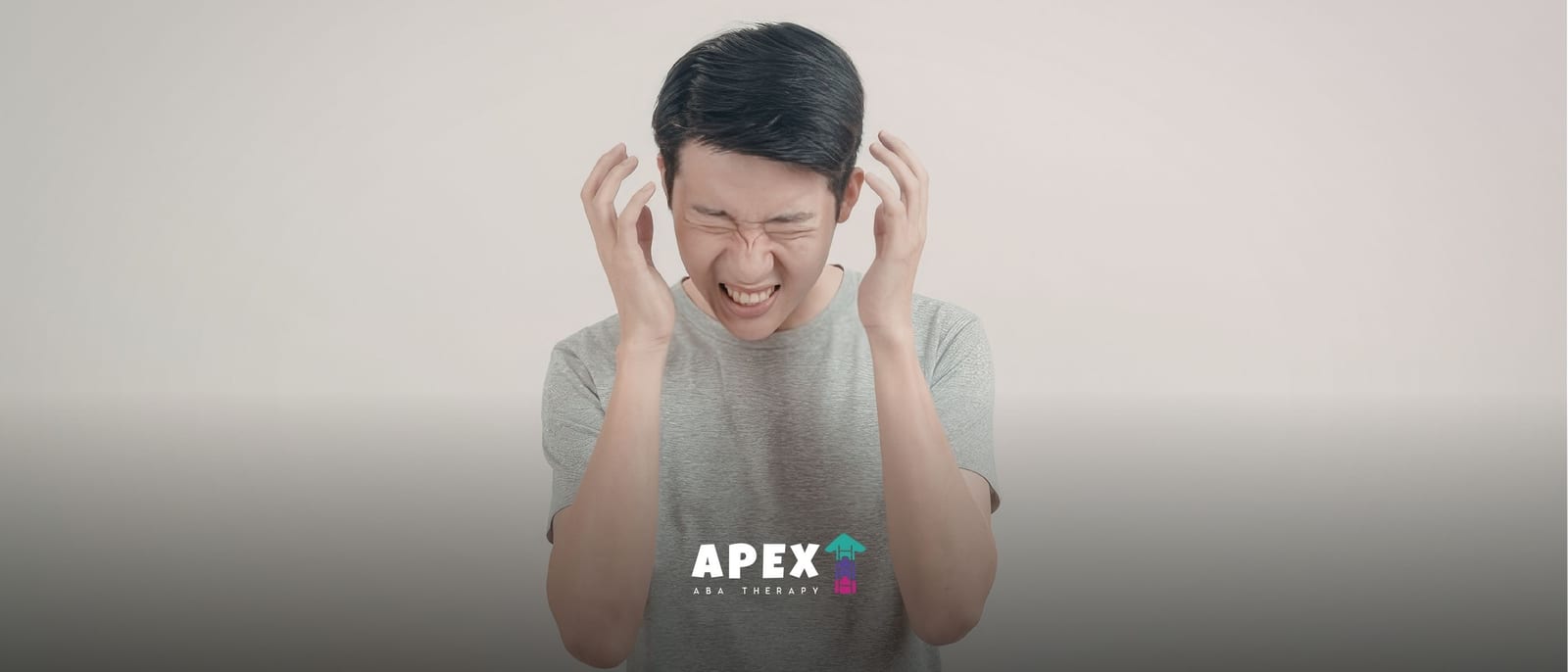
A fire alarm goes off at school. Every child flinches — but one child covers their ears, drops to the floor, and cannot recover for the next hour.
That's not a behavioral issue. That's autism noise sensitivity at work.
Here's the direct answer: Autism noise sensitivity — also called auditory hypersensitivity or hyperacusis — is a neurological difference in how the brain processes sound. Research published in PMC (National Institutes of Health) estimates that 50 to 70 percent of autistic individuals experience hypersensitivity to everyday sounds at some point in their lives. For many, certain sounds aren't just unpleasant — they're physically painful, emotionally destabilizing, and impossible to filter out.
This guide covers what causes autism noise sensitivity, how to recognize it, how it affects daily life, and the evidence-based strategies that actually reduce its impact.
What Is Autism Noise Sensitivity?
Autism noise sensitivity refers to an exaggerated or distressing response to sounds that most people would consider ordinary or tolerable. The clinical term is hyperacusis — defined as decreased tolerance to sounds at levels that wouldn't bother the average person.
It falls under the broader category of Decreased Sound Tolerance Disorders (DSTD), which are routinely observed in autism spectrum disorder (ASD), according to a review published in PMC (Frontiers in Psychiatry, 2021).
There are three distinct types of sound intolerance that autistic individuals may experience:
- Hyperacusis — Sounds perceived as excessively loud, uncomfortable, or physically painful
- Misophonia — Intense emotional reactions (anger, anxiety, disgust) triggered by specific sounds like chewing or tapping
- Phonophobia — Fear or anticipatory dread of specific sounds
These aren't mutually exclusive. Some autistic individuals experience all three.
It's also important to note that not all sensory differences in autism involve hypersensitivity. Some autistic individuals are hyposensitive — seeking louder, more intense sounds rather than avoiding them. Sensory profiles vary widely, which is why individualized assessment always comes before intervention.
How Common Is Autism Noise Sensitivity?
The data is consistent across multiple studies:
- A meta-analysis published in PMC (2021) found that a majority of autistic individuals experience hyperacusis at some point in their lives, with current prevalence estimates ranging from 18% to 69% depending on methodology and age group studied.
- A separate 2015 study cited in the same meta-analysis found that 69% of ASD participants reported hyperacusis, with an average Hyperacusis Questionnaire score of 20.7.
- A pilot study conducted in 1995 reported a 40% prevalence rate of hyperacusis in the ASD population — one of the earliest systematic assessments of this phenomenon.
- Nearly 90% of autistic individuals report some form of sensory hypersensitivity or hyposensitivity, including hearing, touch, and smell — with sound being among the most commonly reported.
The DSM-5-TR (Diagnostic and Statistical Manual of Mental Disorders, Fifth Edition) now formally recognizes sensory processing differences as a diagnostic criterion for autism, which includes hyper- and hypo-reactivity to auditory input.
Why Does It Happen? The Neuroscience of Autism Noise Sensitivity
Autism noise sensitivity isn't a choice or an overreaction. It's rooted in measurable differences in how the autistic brain is wired.
1. Overactive Auditory Processing Regions
Brain imaging studies using fMRI and EEG have found that when autistic individuals hear sounds, specific brain regions show significantly increased activation compared to neurotypical individuals. These include:
- The auditory cortex and inferior colliculus — core sound-processing regions
- The amygdala — involved in emotional responses and threat detection
- The insula — linked to pain perception and interoception
A UCLA study scanned children with autism during exposure to noisy environments and scratchy textures. The results showed elevated activity in both the amygdala and sensory processing cortices — regions that wouldn't fire as intensely in neurotypical brains during the same exposures.
2. Excitation-Inhibition Imbalance
One of the leading neurobiological hypotheses involves a disruption in the balance between excitatory and inhibitory neural signals in the brain. Inhibitory neurons normally act as a filter — dampening responses to irrelevant stimuli, including background noise.
In autism, this inhibitory system may function atypically, which results in the brain amplifying signals it would otherwise tune out. Researchers at the University of Texas at Dallas are actively investigating this mechanism through NIH-funded studies, using EEG and pupillometry to measure central nervous system hyperactivity in autistic individuals with and without hyperacusis (UT Dallas News Center, 2023).
3. Enhanced Central Auditory Gain
Related to the excitation-inhibition imbalance is a concept called increased central auditory gain — where the brain's auditory system amplifies incoming sound signals more than is typical. The result: sounds that register at a normal volume for most people may register as significantly louder, harsher, or more intrusive to an autistic individual.
4. Atypical Habituation
Neurotypical brains gradually habituate to repeated stimuli — meaning a repeated sound becomes less noticeable over time. Research indicates that autistic individuals often show atypical habituation patterns, making it harder for their brains to diminish the impact of repeated auditory exposure.
Together, these neurobiological differences explain why autism noise sensitivity is not simply "being bothered" by noise. The response is physiologically different — and often beyond voluntary control.
What Sounds Trigger Autism Noise Sensitivity?
Common auditory triggers vary by individual, but frequently reported ones include:
- Loud, sudden noises — fire alarms, sirens, balloons popping
- High-pitched sounds — babies crying, microphone feedback, certain music
- Repetitive or droning sounds — fans, fluorescent lights, air conditioners
- Crowds and overlapping speech — cafeterias, malls, public transit
- Specific sounds tied to misophonia — chewing, tapping, breathing, typing
A UK study found that when teenagers with autism were categorized into subgroups, approximately 20% showed exceptional pitch perception, while another subgroup specifically struggled with determining loudness and coping with ambient noise — demonstrating that triggers are not one-size-fits-all.
How Autism Noise Sensitivity Affects Daily Life
At School
Noisy classrooms, crowded cafeterias, and unexpected fire drills are among the most commonly reported challenges. Autism noise sensitivity can directly interfere with a child's ability to focus, participate, and regulate their emotions in school settings.
Research is clear: difficulty filtering irrelevant sounds reduces sustained attention, limits participation in group activities, and increases anxiety and stress for autistic students.
Socially
Sound sensitivity can create barriers to social participation. Many autistic individuals avoid social gatherings, restaurants, and public spaces because the auditory environment is unpredictable and overwhelming. This avoidance, while protective in the short term, can limit social development over time.
Physical and Emotional Well-being
Autism noise sensitivity is not just emotional — it can be physically painful. Some autistic individuals experience genuine pain in response to sounds that others find merely annoying. The downstream effects include elevated anxiety, distress, meltdowns, and exhaustion from sustained sensory vigilance throughout the day.
Children who are nonverbal may express this distress through self-injurious behaviors, covering their ears, repetitive vocalizations, or bolting from environments.
Recognizing the Signs of Autism Noise Sensitivity
Parents, teachers, and caregivers often wonder what autism noise sensitivity actually looks like in real life. Here are observable signs to watch for:
Behavioral indicators:
- Covering ears frequently, even to sounds that don't seem loud
- Leaving or attempting to leave noisy environments
- Crying, screaming, or becoming extremely upset in response to specific sounds
- Freezing or becoming rigid when unexpected sounds occur
- Refusing to go to certain places (stores, gyms, schools)
- Difficulty recovering after exposure to a triggering sound
Physical indicators:
- Visible startle responses that seem disproportionate
- Complaints of ear pain in the absence of an ear infection
- Increased heart rate or sweating in noisy environments (autonomic arousal)
According to research, children with autism show stronger autonomic reactions to noise than typically developing children — meaning their heart rate, skin temperature, and sweat response are measurably more intense.
Strategies That Help: Managing Autism Noise Sensitivity
Autism noise sensitivity cannot be "fixed," but its impact can be significantly reduced through a combination of environmental modifications, therapeutic approaches, and support tools.
Environmental Modifications
Making spaces more sensory-friendly is one of the most accessible first steps. Strategies include:
- Designating a quiet retreat space in the home, classroom, or workplace
- Using curtains, rugs, and padded furniture to absorb sound
- Visiting public places during off-peak hours when crowds and noise are lower
- Applying soundproofing materials in key areas
- Providing visual schedules so children can anticipate potentially noisy situations in advance
Noise-Canceling Headphones
One of the most practical and immediately effective tools for autism noise sensitivity. A 2018 study found that wearing noise-canceling headphones increased autistic kids' participation at home, in the community, and at school.
Headphones work best when used proactively — before entering a triggering environment — rather than reactively. Clinicians also recommend guided use rather than all-day blocking, which can delay the desensitization process.
Gradual Sound Desensitization
This is a structured, clinical process in which a child is gradually and systematically exposed to triggering sounds in a controlled environment — starting at very low volumes and progressively increasing exposure as tolerance builds.
ABA therapists use this approach to reduce sensory avoidance behaviors.The key implementation steps include:
- Creating a safe, reinforcement-rich environment first
- Beginning with familiar, lower-intensity sounds
- Using visual supports to help the child understand the process
- Gradually increasing volume or exposure duration as comfort grows
This should always be conducted with professional guidance. Forced or unsupervised exposure can cause trauma rather than tolerance.
Cognitive Behavioral Therapy (CBT)
CBT helps individuals identify thought patterns associated with specific sounds and develop coping strategies — including relaxation techniques, cognitive restructuring, and distraction methods. It is particularly effective for older children and adolescents who can engage in reflective work.
Hyperacusis Retraining Therapy (HRT)
HRT, also known as tinnitus retraining therapy, involves listening to broadband pink noise to habituate the brain to sound and rebuild sound tolerance. It targets the emotional and non-classical auditory pathways to reduce the fear response associated with specific sounds.
How ABA Therapy Addresses Noise Sensitivity
ABA therapy provides a structured, data-driven framework for managing autism noise sensitivity through several key approaches:
- Functional Behavior Assessment (FBA): Identifying specific triggers and the function of avoidance behaviors
- Behavior modification: Teaching adaptive responses to replace maladaptive ones
- Systematic desensitization: Gradual, reinforced exposure to sounds under controlled conditions
- Coping skills training: Teaching self-regulation, communication, and requesting strategies
- Environmental coordination: Working with schools and families to implement consistent sensory accommodations
ABA interventions are individually tailored based on each child's specific triggers, tolerances, and behavioral profile — which is essential given how much autism noise sensitivity varies from person to person.
What Apex ABA Does Differently
At Apex ABA, we don't approach sensory challenges with a checklist. Our BCBAs begin every child's program with a thorough assessment — including identification of specific auditory triggers and how those sensitivities are affecting daily routines, learning, and social participation.
From there, we build individualized plans that address the real-world environments your child navigates: the school cafeteria, the grocery store, the family birthday party. We work with families to implement consistent strategies across home, school, and community — because what works in a therapy session only becomes meaningful when it generalizes to life.
If your child is showing signs of autism noise sensitivity, and it's getting in the way of their learning or quality of life, the next step is an assessment — not a wait-and-see.
Conclusion: Noise Sensitivity Is Real — and It's Manageable
Autism noise sensitivity is one of the most documented and impactful sensory features of autism spectrum disorder. It affects the majority of autistic individuals to varying degrees, and its roots are neurobiological — not behavioral.
The research is clear: with the right environment, the right tools, and the right clinical support, children can build greater tolerance, develop reliable coping strategies, and participate more fully in the spaces that used to overwhelm them.
Here's your next move:
Don't wait for the next meltdown to tell you something needs to change. Book a free intake consultation with Apex ABA today. Walk in with your questions about your child's sensory profile — walk out with a clear, personalized plan.
👉 Get started with Apex ABA — serving families across North Carolina, Maryland, and Georgia.
Sources
- PMC / NIH — Prevalence of Decreased Sound Tolerance (Hyperacusis) in Individuals with ASD: A Meta-analysishttps://pmc.ncbi.nlm.nih.gov/articles/PMC8349927/
- Cleveland Clinic – https://my.clevelandclinic.org/health/diseases/24460-misophonia
- PubMed Central – Phonophobia and Hyperacusis: Practical Points from a Case Report https://pmc.ncbi.nlm.nih.gov/articles/PMC3216140/
- PMC / NIH — Hyperacusis in Autism Spectrum Disorders (Frontiers in Psychiatry, 2021) https://pmc.ncbi.nlm.nih.gov/articles/PMC8544234/
- Sciencedirect – A qualitative study of noise sensitivity in adults with autism spectrum disorder https://www.sciencedirect.com/science/article/pii/S1750946716301027
- UT Dallas News Center — Audiologist Gets New Support in Study of Disorder Common in Autism (2023) https://news.utdallas.edu/health-medicine/hyperacusis-autism-research-2023/
- PMC / NIH — Hyperacusis in Autism Spectrum Disorders https://pmc.ncbi.nlm.nih.gov/articles/PMC8544234/
Get started today
Ready to talk about ABA therapy?
Apex ABA Therapy helps families in North Carolina, Maryland, and Georgia access in-home, school-based, and daycare ABA services.
Popular services
Serving families in