How ABA Therapy Improves Quality of Life for Children with Autism

Exploring the Transformative Effects of ABA Therapy on Children with Autism

Published on
March 30, 2026
How ABA Therapy Improves Quality of Life for Children with Autism

How ABA Therapy Improves Quality of Life for Children with Autism

There's a reason ABA therapy has been the subject of more peer-reviewed research than any other autism intervention. Over decades of studies, one finding keeps showing up: children who receive ABA therapy make measurable, lasting gains — in how they communicate, how they interact, how they move through the world, and how they feel in it.

This isn't about "fixing" autism. It's about giving children with autism spectrum disorder (ASD) the skills to live fuller, more independent lives. And the data backs that up clearly.

Here's a thorough, research-grounded look at how ABA therapy improves quality of life for children with autism — and what families can realistically expect.

Quick Answer: Does ABA Therapy Actually Improve Quality of Life?

Yes. A 2022 scoping review published in BMC Psychiatry found that comprehensive ABA-based interventions produced medium effects for intellectual functioning and adaptive behavior compared to control groups. A 2024 replication study tracking 98 autistic children confirmed statistically significant improvement in target behaviors after ABA intervention.

Improvements span communication, social skills, academic readiness, self-help, and independence — all core pillars of quality of life.

What "Quality of Life" Actually Means for a Child with Autism

Quality of life isn't one thing. For a child with autism, it includes:

  • Being able to communicate needs without frustration
  • Participating in family life and social activities
  • Managing daily routines with confidence
  • Reducing behaviors that interfere with learning and connection
  • Building toward future independence

Autism can create significant barriers in all of these areas. Children on the spectrum often face challenges with sensory sensitivities, social interaction, language, and self-regulation — all of which affect daily functioning and well-being. Left without targeted support, these gaps can widen over time, particularly during the transition to adolescence and adulthood.

ABA therapy addresses these gaps directly, systematically, and early.

The Core Methods Behind ABA's Effectiveness

Understanding how ABA therapy improves quality of life for children with autism starts with understanding how it actually works.

ABA (Applied Behavior Analysis) is not a single technique — it's a framework built on behavioral science that uses multiple evidence-based strategies, tailored to each child. Key methods include:

Positive Reinforcement. Desired behaviors are followed by meaningful rewards, increasing the likelihood they're repeated. This is one of the most researched mechanisms in behavioral psychology.

Discrete Trial Training (DTT). Skills are broken into small, teachable steps with clear prompts and feedback. Especially effective for building language and academic foundations.

Naturalistic Teaching. Skills are taught in real-world contexts — at home, during play, during meals — so they generalize to actual life situations rather than staying locked in a clinic.

Functional Behavior Assessment (FBA). Before any intervention, therapists identify why a behavior is happening. This makes interventions more targeted and effective.

Prompting and Fading. Support is gradually reduced as a child masters a skill, building genuine independence rather than dependency on cues.

The intensity matters too. Research from the Council of Autism Service Providers confirms that outcomes are consistently correlated with treatment intensity — children receiving 26–40 hours weekly showed the greatest gains in adaptive behavior, IQ, and autism symptom ratings compared to lower-intensity groups.

How ABA Therapy Improves Quality of Life | Apex ABA
Evidence-Based Guide

5 Ways ABA Therapy Transforms Your Child's Life

A research-backed look at how Applied Behavior Analysis builds real skills across the areas that matter most.

5Key Life Areas
632+Children Studied
2025Latest Research
💬

Communication — The Foundation of Everything

Building the ability to express needs, thoughts, and feelings

For many children with autism, communication is the most significant barrier to a good quality of life. The inability to express needs, thoughts, or feelings doesn't just cause frustration — it drives challenging behaviors, creates isolation, and impacts every relationship a child has. ABA therapy targets communication directly, at whatever level a child is currently functioning — from pre-verbal to complex sentence building.

Prompting and modeling to teach word approximations and requests

Augmentative and Alternative Communication (AAC) for non-speaking children

Social communication training to build back-and-forth interaction

Natural environment teaching during play and daily routines

Effect Size
Large
Receptive language skills vs. control groups
Study
2025
Meta-analysis — Review Journal of Autism and Developmental Disorders (Springer)
🔬

What the Research Shows

A 2025 meta-analysis found that ABA-based interventions produced a large effect size for receptive language skills compared to control groups — meaning children understood and processed language significantly better after treatment.

Springer — Review Journal of Autism and Developmental Disorders, 2025

The Real-World Impact

When a child can communicate, their world expands. They can advocate for themselves, build relationships, participate in school, and connect with their family in ways that weren't possible before.

🤝

Social Skills — Learning to Connect

Structured, explicit instruction for the skills that build friendships

Social interaction is rarely intuitive for children with autism. Reading facial expressions, understanding tone of voice, initiating a conversation, knowing when to stop talking — these are complex, layered skills that most children learn incidentally. Children with ASD often need explicit, structured instruction. ABA therapy provides exactly that.

Learning to make eye contact during greetings

Taking turns in a game or conversation

Understanding nonverbal cues — body language and facial expressions

Managing frustration in group settings

Role-playing and real-world social practice

Peer interaction skills during structured activities

Result
Significant
Measurable gains in peer interaction and daily social functioning
Study
2023
Published in PMC — ABA Emotional-Social Skills study
🔬

What the Research Shows

A 2023 study published in PMC demonstrated that ABA programs significantly improved social and communicative skills in children with ASD, with results showing measurable gains in peer interaction and daily social functioning.

PMC – ABA Emotional-Social Skills Study, 2023

The Real-World Impact

Better social skills translate directly into better quality of life — more friendships, more inclusion in school and community, and more moments of genuine connection with peers and family.

🏠

Daily Living Skills — The Path to Independence

Self-help and adaptive skills that allow children to function independently

One of the most practical ways ABA therapy improves quality of life is through self-help and adaptive skill development. These are the skills that allow children to function more independently in everyday life — and they are taught through a proven method called task analysis, breaking each skill into small, sequential steps.

Personal hygiene — brushing teeth, washing hands, bathing

Getting dressed independently

Preparing simple foods

Following a daily routine without constant prompting

Managing transitions between activities

Generalizing skills to new environments and settings

Effect Size
Moderate
Adaptive behavior in ABA-treated children vs. controls
Study
2025
Meta-analysis — Review Journal of Autism and Developmental Disorders (Springer)
🔬

What the Research Shows

The 2025 meta-analysis found moderate effect sizes for adaptive behavior in ABA-treated children compared to controls. This is clinically meaningful: better adaptive skills mean more independence and less reliance on caregivers for basic functioning.

Springer — Review Journal of Autism and Developmental Disorders, 2025

The Real-World Impact

Skills mastered in therapy generalize to real life. Greater independence in daily routines reduces caregiver burden and gives children a sense of confidence and self-sufficiency that carries into every area of life.

🧘

Reducing Challenging Behaviors

Addressing the root causes — not just the surface symptoms

Challenging behaviors — aggression, self-injury, meltdowns, elopement — are among the most difficult aspects of autism for families to manage. ABA therapy addresses these through Functional Behavior Assessment (FBA): a systematic process to identify what function a behavior is serving, then develop replacement behaviors that meet the same need more appropriately.

Identify the function: escape from demand, attention-seeking, or sensory need?

Develop a Behavior Intervention Plan (BIP) targeting root causes

Teach functionally equivalent replacement behaviors

Use positive reinforcement to build alternative coping skills

Train parents and caregivers on consistent implementation

Monitor progress with data and adjust strategies accordingly

Sample Size
98
Autistic children — statistically significant reductions in problem behaviors
Study
2024
Replication study — PMC, Peterson et al.
🔬

What the Research Shows

A 2024 replication study found statistically significant reductions in problem behaviors following ABA intervention across a sample of 98 autistic children — reinforcing earlier findings across multiple study designs.

PMC – Peterson et al., 2024

The Real-World Impact

When challenging behaviors decrease, children gain access to more learning opportunities, more social experiences, and greater freedom in their daily lives. Families experience less stress and more positive moments together.

📚

Academic Readiness & Cognitive Growth

Building the foundational skills that make school accessible

Children with autism often face significant challenges in educational settings — not because of lack of ability, but because the environment isn't structured to support their learning style. ABA therapy builds the foundational skills that make school accessible and provides in-school support that works directly alongside educators.

Attending to tasks and following multi-step instructions

Expanding receptive and expressive vocabulary

Pre-academic skills — sorting, matching, and early literacy

Reducing classroom behaviors that interfere with learning

In-school ABA support alongside classroom teachers

Generalization of skills from therapy to the classroom

Participants
632
Medium effects for intellectual functioning in comprehensive ABA programs
Study
2023
Meta-analysis of 11 studies — BMC Psychiatry
🔬

What the Research Shows

A BMC Psychiatry meta-analysis (2023) examining 11 studies with 632 participants found medium effects for intellectual functioning in children who received comprehensive ABA treatment — showing meaningful cognitive gains alongside behavioral progress.

BMC Psychiatry Meta-Analysis, 2023

The Real-World Impact

Apex ABA's in-school therapy brings evidence-based support directly into the classroom, working alongside educators to apply strategies where children spend most of their day — so progress doesn't stay within the therapy session.

Ready to See What's Possible?

Every child is different. Our team creates individualized treatment plans built around your child's strengths, needs, and goals — in-home, in-school, and in daily life.

Start Your Enrollment Today →

The Importance of Starting Early

Research consistently shows that earlier intervention produces better outcomes. The brain's plasticity is greatest in the first years of life — which means skills learned early have more time to compound, generalize, and become permanent.

The CASP 2025 white paper, reviewing 341 children across multiple intensity groups, confirmed that average improvements in adaptive behavior, IQ, and autism symptom severity were consistently tied to treatment intensity — and that early, high-intensity intervention produced the most clinically significant gains.

Apex ABA's Early Intervention ABA Therapy is designed for children as young as toddler age, building the communication, social, and adaptive foundations that carry through a lifetime.

Long-Term Outcomes: What the Research Shows

The benefits of ABA therapy extend well beyond the period of active treatment.

Longitudinal data shows that children who complete intensive ABA programs as young children go on to:

  • Demonstrate higher rates of integration into mainstream educational settings
  • Achieve greater employment outcomes as adults
  • Retain skills in communication, independence, and adaptive behavior years after treatment ends

A retrospective chart review published in JMIR Pediatrics and Parenting (2024) found that children receiving ABA treatment progressed meaningfully toward skill acquisition goals across multiple functional domains — and that parent involvement further strengthened those outcomes.

These long-term gains underscore why how ABA therapy improves quality of life for children with autism isn't just a short-term question — it's a foundation for a more independent adulthood.

ABA vs. Other Autism Interventions: How Does It Compare?

ABA therapy is endorsed as a best-practice treatment for autism by the U.S. Surgeon General, the American Psychological Association, and the Centers for Medicare and Medicaid Services — a level of institutional backing few other interventions for ASD have earned.

Autism Therapy Comparison | Apex ABA
Research-Based Comparison

Autism Therapy Options Compared

Understanding the evidence behind each intervention helps families make confident, informed decisions.

Filter by focus:

Side-by-Side Comparison

Click any row to expand detailed notes. Filter by focus area using the tabs above.

Evidence strength:
Extensive
Moderate
Limited
Intervention Primary Focus Evidence Base
ABA Therapy Recommended Communication, behavior, adaptive skills, social skills
Communication Behavior Social Adaptive Skills
Extensive; endorsed by the U.S. Surgeon General and APA
Extensive

Why It's Recommended

ABA is the most comprehensively studied intervention for autism. It is the only therapy endorsed by both the U.S. Surgeon General and the American Psychological Association for children with ASD.

Best For

  • Early intervention (ages 2–6)
  • Non-verbal or minimally verbal children
  • Reducing challenging behaviors
  • Building independence in daily life

Apex ABA Services

  • In-home ABA therapy
  • School-based ABA therapy
  • Daycare-based ABA
  • Parent training included
Cognitive Behavioral Therapy (CBT) Emotional regulation
Emotional Anxiety Coping Skills
Most effective for older children with milder symptoms
Moderate

How It Works

CBT helps children identify and reframe negative thought patterns. It is particularly useful for managing anxiety, depression, and emotional dysregulation in autistic children who have verbal and cognitive ability.

Best For

  • Older children (7+) with verbal skills
  • Co-occurring anxiety or depression
  • Milder presentations of ASD
  • Emotional regulation goals

Compared to ABA

CBT has limited evidence for core autism symptoms. It is most beneficial when used alongside ABA to address anxiety or emotional challenges that develop over time.

Social Skills Training Peer interaction
Social Peer Play Conversation
Useful, but limited evidence for long-term behavioral change
Limited

How It Works

Social skills groups teach specific conversational and interaction skills in a structured setting, often using role-play and peer practice. While gains can be made in the moment, generalizing skills to real-world settings is a known challenge.

Best For

  • Children with some existing language
  • Short-term social skills practice
  • Supplementing primary intervention
  • School-age peer group settings

Compared to ABA

ABA incorporates social skills training as part of a broader, individualized plan with data-driven generalization strategies — making social gains more durable and transferable to daily life.

Speech Therapy Language and communication
Communication Language AAC
Effective; often used alongside ABA for best outcomes
Moderate–High

How It Works

Speech-language pathologists target articulation, language comprehension, expressive language, and AAC (Augmentative & Alternative Communication) for non-speaking children. Results are strongest when combined with behavioral therapy.

Best For

  • Children with speech or language delays
  • Non-verbal children needing AAC support
  • Improving articulation clarity
  • Complementing ABA communication goals

ABA + Speech Therapy

The combination of ABA and speech therapy is widely considered the gold standard for children with autism who have communication challenges. ABA applies behavioral strategies to reinforce language goals between sessions.

4 Interventions Compared
#1 ABA — Evidence Strength
2025 Latest Research Year
APA Endorses ABA Therapy

See What ABA Can Do for Your Child

Our team creates individualized plans across all five key development areas — in-home, at school, and in daily life.

Start Enrollment Today →

How Apex ABA Delivers This

At Apex ABA, every child receives an individualized treatment plan developed by a Board Certified Behavior Analyst (BCBA), with therapy delivered by trained Registered Behavior Technicians (RBTs) under direct BCBA supervision.

Services are designed to meet children where they are — literally:

Apex ABA serves families across three states:

  • North Carolina — in-home and school-based therapy statewide
  • Georgia — serving families across the state
  • Maryland — in-home and community-based services

Most families begin therapy within 2–4 weeks of first contact. Insurance is verified upfront. Check your coverage here.

The Bottom Line

How ABA therapy improves quality of life for children with autism is documented across decades of peer-reviewed research — and it shows up in practical, measurable ways: a child who can ask for what they want, navigate a classroom, get dressed independently, make a friend.

These gains don't happen by accident. They happen through structured, individualized, evidence-based intervention — delivered consistently, and started as early as possible.

Start Building the Skills That Last a Lifetime

Every week without the right support is a week of potential development left on the table. Apex ABA exists to close that gap — with research-backed therapy that's built around your child's unique profile, not a one-size-fits-all program.

Get started today and your child's next milestone could be closer than you think.

Sources

Frequently Asked Questions

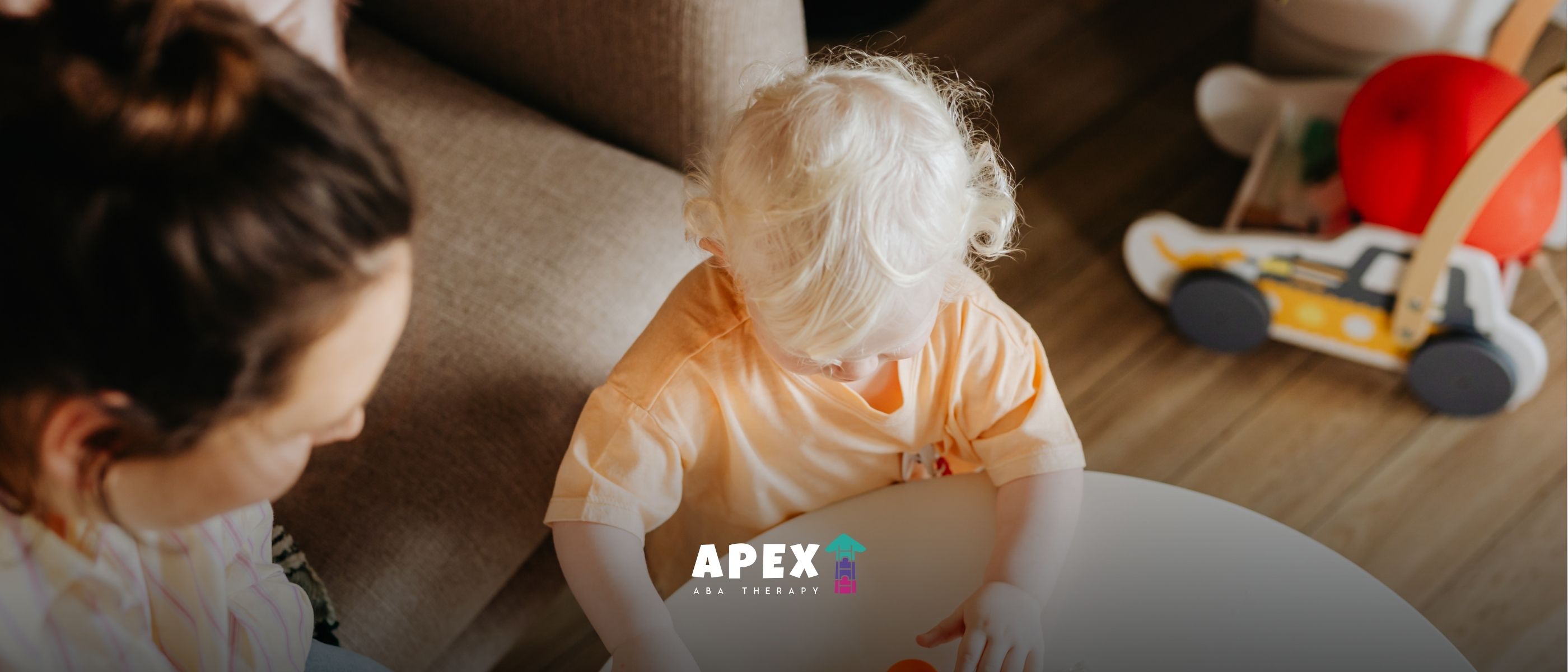
a little girl sitting at a table with a woman

More posts you’ll enjoy

Life-Changing ABA Therapy Case Studies You Need to Know

March 30, 2026

Real Success Stories from ABA Therapy Journeys | Apex ABA

Understanding the Power of Functional Behavior Assessment ABA

March 30, 2026

Effective ABA Techniques for Behavioral Intervention
Early ABA Intervention: How Starting Sooner Shapes Skills, Habits, and Life Beyond the Clinic

March 30, 2026

Early ABA intervention builds communication, habits, and independence in kids with autism — starting as young as 18 months. Here's what the research shows.