

Importance of Play Therapy for Autism
Unlocking the power of play therapy for autism. Discover the benefits and find qualified therapists for tailored support.

The Role of Play Therapy for Autism
Play therapy plays a vital role in supporting children with autism by providing a safe and supportive environment where they can express themselves, explore emotions, and develop essential skills through play activities of their interest and choice. This therapeutic approach focuses on utilizing play as a means of communication and intervention to address the unique needs of children on the autism spectrum.
Benefits of Play Therapy
Play therapy for autism has been found to have numerous benefits for individuals with autism. Some of the key benefits include:
- Improvements in Communication Skills: Through play therapy, children with autism can enhance their communication abilities. Engaging in play activities tailored to their individual needs allows them to practice and develop their verbal and non-verbal communication skills.
- Enhancement of Social Skills: Play therapy provides a supportive environment where children with autism can improve their social skills. By engaging in play activities, they have the opportunity to practice turn-taking, sharing, and interacting with others, fostering social interaction and connection.
- Emotional Regulation: Play therapy promotes emotional expression and regulation in children with autism. By engaging in play, they can explore and express their emotions in a safe and non-threatening manner, helping them develop strategies for managing their emotions effectively.
Types of Play Therapy
Several types of play therapy can be beneficial for children with autism. These approaches are tailored to the specific needs and goals of the child:
- Child-Centered Play Therapy: This approach focuses on providing a child-led and non-directive environment where the child has control over the play session. It enhances social skills by promoting self-expression, imagination, and creativity.
- Floortime Therapy: Floortime therapy emphasizes back-and-forth interactions between the child and therapist or caregiver. Through play, the therapist engages the child in activities that foster communication skills, emotional engagement, and shared attention.
- Pivotal Response Treatment (PRT): PRT targets pivotal developmental areas, such as motivation, responsivity to multiple cues, self-regulation, and social initiations. Play activities are designed to improve communication skills and increase the child's responsiveness to their environment.
By tailoring play activities to the specific interests and preferences of children with autism, play therapy offers a unique and effective approach to address their developmental challenges. It provides a natural and engaging environment for children to learn and develop essential skills while honoring their individuality.
When considering play therapy for a child with autism, it's important to consult with professionals experienced in this intervention approach. Organizations such as the Association for Play Therapy (APT) can provide resources and guidance in locating qualified play therapists in your area. By leveraging the benefits of play therapy, children with autism can enhance their social skills, improve communication abilities, and address developmental challenges in a supportive and engaging manner.
Child-Centered Play Therapy
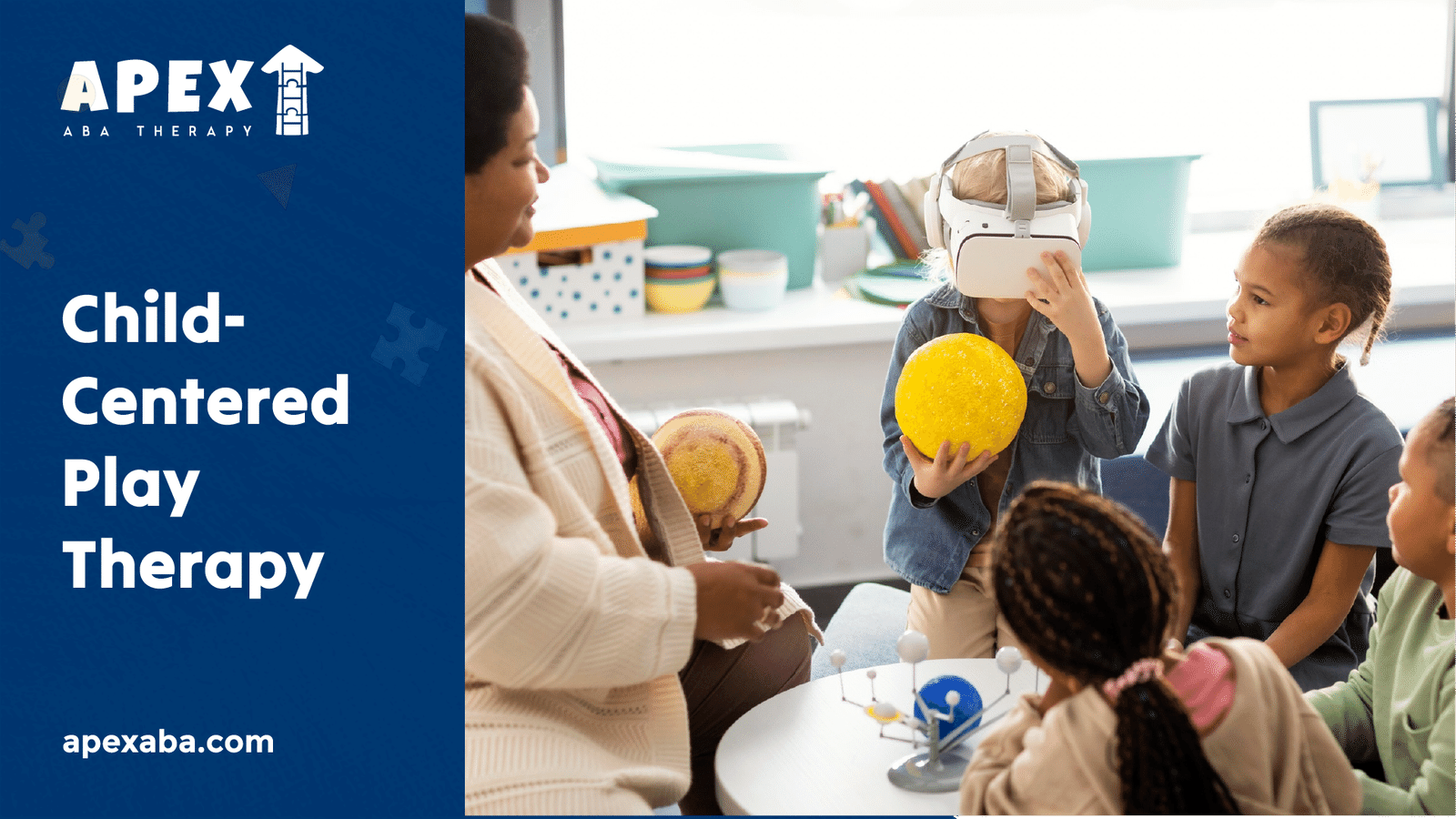
Child-Centered Play Therapy is an approach that allows children with autism to take the lead in therapy sessions, providing them with a safe and supportive environment for exploration and self-expression. This form of play therapy has shown promising results in enhancing social skills and promoting emotional expression among children with autism.
Enhancing Social Skills
Through Child-Centered Play Therapy, play therapists engage autistic children in play activities that focus on building reciprocal skills, imaginative skills, abstract thinking skills, and social skills. By encouraging children to take the lead and follow their interests, therapists can create opportunities for social interaction and practice important social skills.
According to studies, Child-Centered Play Therapy has shown a small increase in social engagement and play interactions among participants aged five to 11 years old. By providing a supportive environment for social play, children with autism can develop and refine their social skills, such as turn-taking, sharing, and cooperation.
Promoting Emotional Expression
Children with autism often face challenges in expressing their emotions. Child-Centered Play Therapy offers a therapeutic space for them to express their emotions and feelings through play. Play therapists enter the child's world and utilize the therapeutic relationship to intervene rather than directly instructing or training the child.
Through play, children with autism can explore and express their emotions, helping them develop emotional awareness and regulation. Play therapy allows for non-verbal expression, which can be especially beneficial for children with limited verbal communication skills. By using toys or activities of their choice, children can express their suppressed emotions in a non-injurious and non-aggressive manner [2].
Parents and guardians can also participate in Child-Centered Play Therapy sessions, strengthening their relationship with their autistic child and providing them with additional support and guidance [3]. This collaboration between the therapist, child, and parents helps create a holistic approach to therapy and enhances the child's emotional and social development.
Child-Centered Play Therapy is a promising intervention that addresses the unique needs of children with autism, providing them with a supportive and enriching environment to enhance their social skills and promote emotional expression. By entering the child's world and utilizing play, therapists can help children with autism develop important skills and improve their overall well-being.
Floortime Therapy
Floortime therapy is a type of play therapy that focuses on back-and-forth interactions and is highly beneficial for children with autism. This approach aims to promote emotional and social development by engaging the child in play that reflects their interests, fostering communication, problem-solving, and emotional regulation skills.
Back-and-Forth Interactions
One of the key components of Floortime therapy is the emphasis on back-and-forth interactions. This involves the therapist, parent, or caregiver actively participating in play with the child, following their lead, and responding to their actions and cues. By engaging in reciprocal play, the child has the opportunity to develop important social skills, such as turn-taking, sharing attention, and joint problem-solving.
During these interactions, the therapist or caregiver creates a safe and supportive environment where the child feels comfortable and motivated to engage. This approach helps strengthen the bond between the child and the adult, fostering a sense of trust and connection.
Fostering Communication Skills
Floortime therapy also aims to foster communication skills in children with autism. By engaging in play experiences that are meaningful and interesting to the child, this therapy encourages them to communicate their needs, thoughts, and feelings. Through play, children with autism can develop and expand their vocabulary, improve their ability to express themselves, and enhance their overall communication skills.
The therapist or caregiver actively participates in the child's play, using gestures, facial expressions, and verbal cues to support and encourage communication. They provide a language-rich environment, modeling appropriate language and helping the child develop their receptive and expressive language abilities.
Floortime therapy has shown promising results when conducted for extended periods of time. According to a study in the American Journal of Orthopsychiatry, engaging in Floortime therapy for up to 25 hours a week for 2 years or longer can lead to improvements in all areas of development, including social interaction, communication, and emotional understanding.
By incorporating back-and-forth interactions and promoting communication skills, Floortime therapy provides a valuable approach for children with autism to enhance their social and emotional development. This therapy can be conducted at home or in a therapist's office, creating a nurturing environment that supports the child's individual needs and strengths. To find qualified therapists who specialize in play therapy, you can consult the Association for Play Therapy (APT) or explore other reputable sources for locating professionals in your area [2]. For more information on autism and related topics, feel free to explore our articles on benefits of ABA therapy, preparing for an autism assessment, fostering independence in autism, and navigating autism healthcare services.
Pivotal Response Treatment (PRT)
Pivotal Response Treatment (PRT) is a form of play therapy that has shown promising results in supporting children with autism. PRT targets various developmental areas, such as motivation, self-management, and response to cues, with the goal of improving communication skills and social interactions [1].
Targeting Developmental Areas
One of the key aspects of Pivotal Response Treatment is its focus on pivotal developmental areas. These areas serve as building blocks for other skills and behaviors. By targeting these pivotal areas, PRT aims to create a positive impact on a broader range of skills and behaviors in children with autism.
The pivotal areas addressed in PRT may include motivation, self-initiation, responding to multiple cues, and self-regulation. By working on these areas, PRT helps children develop essential skills that can improve their overall functioning and independence.
Improving Communication Skills
Communication difficulties are common among individuals with autism, and Pivotal Response Treatment aims to address these challenges through play-based interventions. In PRT sessions, therapists integrate the child's interests and preferences into play activities, creating a motivating and engaging environment for the child.
Through these play activities, therapists encourage verbal and non-verbal communication, such as role-playing, storytelling, and using puppets. By providing a safe and supportive space, PRT helps children with autism develop and practice their communication skills in a natural and enjoyable context.
PRT also emphasizes the use of natural cues and prompts to encourage meaningful communication. By responding to the child's initiations and facilitating back-and-forth interactions, therapists help children develop turn-taking skills, expand their vocabulary, and improve their overall communication abilities.
Pivotal Response Treatment is a valuable approach within the realm of play therapy for autism. By specifically targeting pivotal developmental areas and focusing on improving communication skills, PRT aims to enhance the overall well-being and social functioning of children with autism.
Importance of Tailoring Play Activities
When it comes to play therapy for autism, the importance of tailoring play activities to the specific needs and preferences of each child cannot be overstated. Customizing play sessions allows therapists to focus on enhancing social skills and addressing developmental challenges unique to each individual.
Enhancing Social Skills
Play therapy provides a safe and supportive environment where children with autism can freely engage in play activities tailored to their individual needs, helping them develop essential social skills in a natural and engaging manner. Through structured play activities, group play, and cooperative play, children have the opportunity to foster social engagement, interaction, and learn important skills like turn-taking, sharing, and listening [5]. These activities allow children to interact with others in a cooperative and competitive way, communicate needs and wants, strategize, and interpret intentions of others, all crucial skills for successful social interactions.
Addressing Developmental Challenges
Play therapy plays a vital role in addressing the developmental challenges faced by children with autism. By tailoring play activities to their interests and preferences, therapists can focus on areas of development that require attention. Play therapy helps children change their way of self-expression from unwanted behavior to more non-injurious expressive behavior using toys or activities of their choice as their words. The therapeutic approach aims to provide a safe environment for children to learn self-regulatory behavior, develop independence, and improve social and emotional skills [2].
By tailoring play activities, therapists can address specific developmental challenges such as sensory integration, motor skills, language and communication, and cognitive abilities. Each play session is designed to target these key areas, allowing children with autism to make progress in their overall development [4].
In summary, the importance of tailoring play activities in play therapy for autism cannot be emphasized enough. By customizing play sessions, therapists can enhance social skills, address developmental challenges, and provide a nurturing environment for children to learn and grow. Play therapy offers a unique opportunity for children with autism to engage in meaningful play experiences that promote their overall development and well-being.
Finding Play Therapists
When seeking play therapy for children with autism, it is crucial to find qualified play therapists with the necessary training and expertise. The Association for Play Therapy (APT) is a national professional society that offers directories to help families locate licensed mental health professionals specializing in play therapy. These directories can assist in finding a qualified play therapist for children with autism [3].
Association for Play Therapy (APT)
The Association for Play Therapy (APT) is a valuable resource for families seeking play therapy services for their autistic child. This national professional society provides directories that allow families to search for licensed mental health professionals trained in play therapy. By utilizing these directories, families can find qualified play therapists who have the expertise to work effectively with children on the autism spectrum.
Locating Qualified Therapists
In addition to the directories provided by the Association for Play Therapy (APT), there are other avenues to explore when searching for qualified play therapists for children with autism. Play therapy may be offered through local early intervention programs or specialized preschool programs. It is worth exploring these options within your community to find play therapists who have experience working with children on the autism spectrum.
Other professionals to consider when searching for a play therapist include occupational therapists, child psychologists, or autism clinics. These professionals may have connections to qualified play therapists or be able to provide recommendations based on their expertise in the field.
It is important to note that insurance coverage for play therapy services for autistic children may vary. In some cases, insurance may not cover play therapy, requiring parents or guardians to find and pay for a qualified play therapist out-of-pocket. It is advisable to check with your insurance provider to determine whether play therapy services are covered and to what extent.
While there are certification programs for play therapy, these programs are not officially recognized by national therapeutic associations. However, many certified play therapists are highly qualified ABA professionals with extensive experience and training, often holding the BCBA credential recognized in the field of autism behavioral therapy.
Finding the right play therapist is crucial for the success of play therapy interventions for children with autism. By utilizing resources such as the directories provided by the Association for Play Therapy (APT) and exploring local programs and professionals experienced in working with autistic children, families can connect with qualified play therapists who can provide the necessary support and guidance for their child's developmental needs.
References
- [1]: https://www.rainbowtherapy.org
- [2]: https://www.ncbi.nlm.nih.gov
- [3]: https://www.verywellhealth.com
- [4]: https://www.webmd.com
- [5]: https://www.abtaba.com
- [6]: https://www.appliedbehavioranalysisedu.org
Get started today
Ready to talk about ABA therapy?
Apex ABA Therapy helps families in North Carolina, Maryland, and Georgia access in-home, school-based, and daycare ABA services.
Popular services
Serving families in