

Free Sensory Toys for Autism: What Works, What's Free, and How to Choose

Discover life-changing free sensory toys for autism! Unlock the power of sensory play for children with autism.

Published on
June 11, 2026
Free Sensory Toys for Autism: What Works, What's Free, and How to Choose

Free Sensory Toys for Autism: What Works, What's Free, and How to Choose

You do not need a cart full of specialty products to support your child's sensory needs. Most of the best sensory toys for autistic children can be made from things already in your kitchen, or found for free through your community. They are also many of the same tools our team reaches for in ABA therapy sessions. This guide covers what sensory toys actually do, free and DIY options organized by sensory system and by age, and how to know when it is time to bring in a professional. If your child reacts strongly to certain sounds, textures, or lights, our guide to sensory sensitivity in autism is a helpful companion to this one.

What Are Sensory Toys and Why Do They Help?

Sensory toys are objects designed to engage one or more of the senses: sight, sound, touch, smell, taste, and the body-based senses of movement and pressure. For autistic children, they are more than entertainment. They offer predictable, controllable sensory input that a child can use to stay regulated, focus, and explore comfortably.

Sensory differences are not a side note in autism. They are part of how autism is formally identified: the diagnostic criteria include hyper- or hyporeactivity to sensory input, such as strong responses to specific sounds or textures, or a deep fascination with lights and movement. Research suggests that most autistic people, by some estimates up to 90 percent, experience sensory processing differences across one or more senses. Some sensory input feels soothing or joyful; other input can feel overwhelming or even painful.

A well-chosen sensory toy works with your child's profile rather than against it. A child who seeks movement may settle after time on a swing. A child overwhelmed by noise may focus better while squeezing a quiet putty. One small study found that giving autistic children control over sensory changes in a multi-sensory environment was associated with increased attention and fewer repetitive sensory behaviors. The key word is control: the goal is to give your child tools, not to train away their sensory traits.

A note on honesty: while families and clinicians widely report benefits, the formal research base for sensory-based interventions is still developing. The American Academy of Pediatrics has advised that evidence for sensory therapies remains limited and inconclusive, and that families should weigh these tools as one part of a broader plan. That is not a reason to skip sensory play, which is low-cost and low-risk. It is a reason to observe your own child closely and keep what genuinely helps them. You can read more about the evidence in our post on sensory integration therapy and autism.

When the input matches what a child needs, families often see gains in several areas: calmer self-regulation during stressful moments, longer focus and attention, fine and gross motor practice through squeezing, pouring, and climbing, and natural openings for language and shared play. A parent-report study published in Springer found fidget toys were perceived as helpful for anxiety, particularly for children with stronger sensory-seeking profiles.

Free Sensory Toys for Autism by Sensory System

Therapists often group sensory input into five everyday categories. Mixing across categories gives your child options for different moments and moods. Every idea below is free or nearly free.

Visual (sight)

  • Calm-down bottle: fill a clear water bottle with water, a squeeze of clear glue or dish soap, and glitter or beads. Seal the lid with strong tape. Shaking and watching the swirl settle is mesmerizing and calming.
  • Flashlight and shadow play: in a dim room, trace shapes on the wall, play shadow tag with hands, or shine light through a colander.
  • Window watching station: a cushion by a window with passing cars, birds, or rain can be a reliable visual regulator.

Tactile (touch)

  • Sensory bin: a storage tub filled with dry rice, beans, or pasta, plus cups and spoons for scooping and burying small toys.
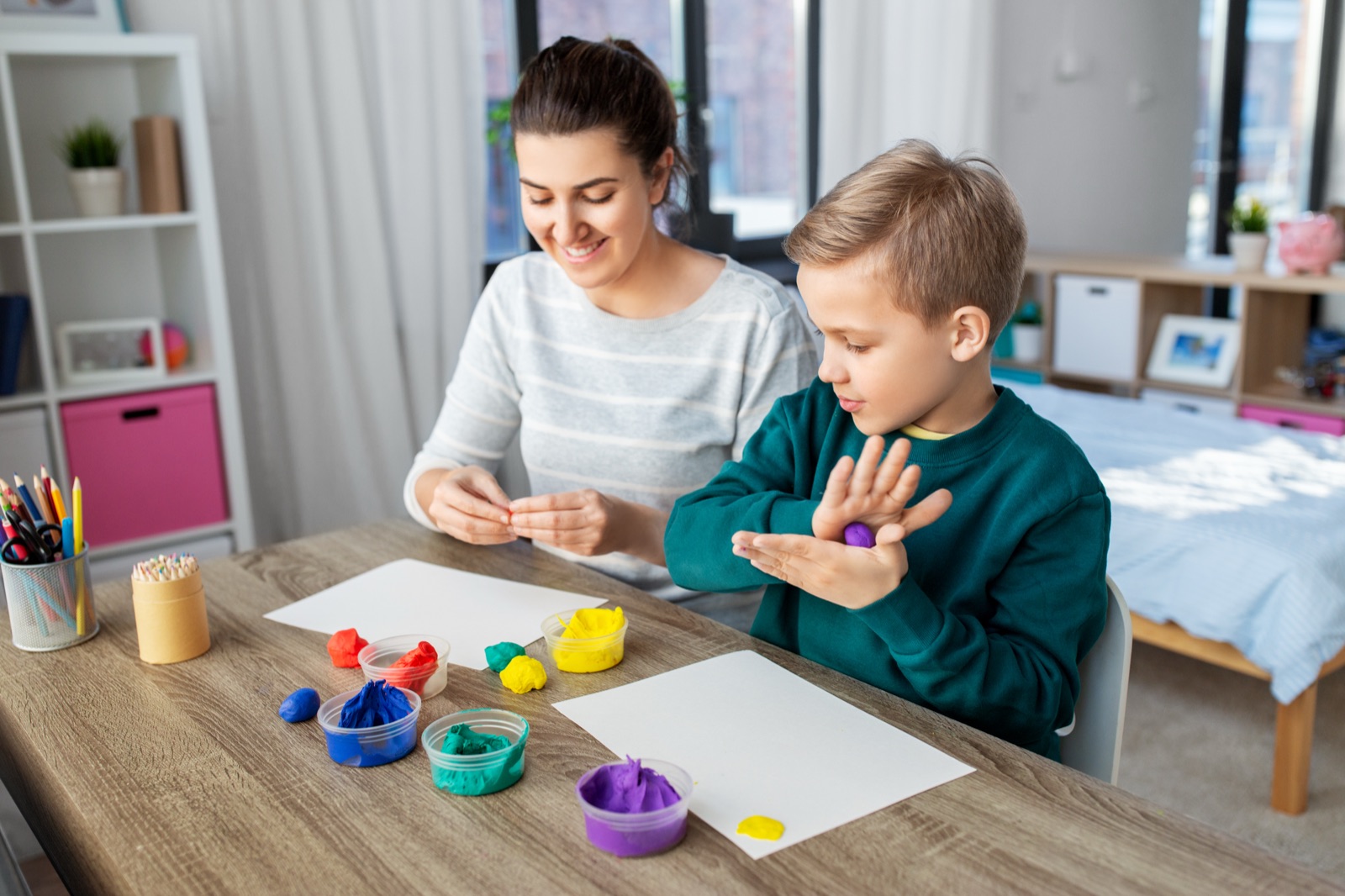
  • Homemade playdough: flour, salt, water, and oil, with optional food coloring. Kneading and squashing provides rich touch and hand-strength practice.
  • Texture board: glue scraps of sandpaper, felt, bubble wrap, sponge, and ribbon onto cardboard for fingertip exploration.
  • Water play: a basin of warm water with cups, funnels, and sponges engages several senses at once. Our post on water play activities has full setups.

Auditory (sound)

  • Rice shakers: dry rice or beans sealed inside a plastic egg or bottle becomes an instant rhythm instrument.
  • Calming playlist or white noise: free apps and videos offer rain, ocean, and fan sounds. Headphones give a child control over volume.
  • Sound matching game: fill pairs of opaque containers with different materials and match them by sound alone.

Proprioceptive (body pressure and "heavy work")

  • Heavy work jobs: carrying a basket of books, pushing a laundry hamper, or wall push-ups give deep input to muscles and joints that many children find organizing.
  • Blanket burrito: rolling up snugly in a blanket (head always out, child always in control) offers comforting deep pressure.
  • Couch cushion crash pad: a pile of cushions for safe jumping and squishing.

Vestibular (movement and balance)

  • Playground swings and slides: the original free vestibular toys.
  • Spinning and rocking: an office chair spin, rocking chair time, or rolling down a grassy hill, always at the child's pace and with supervision.
  • Homemade balance beam: painter's tape on the floor or a low garden plank.

One important principle across all of these: follow your child's lead. The same input that soothes one child can distress another, and a child's needs can shift over the day. Watch their reaction and let them opt out at any time.

Sensory Toys by Age

Babies and young toddlers (0 to 2)

For infants, nearly all learning is sensory, and everyday objects work beautifully: crinkly paper to grasp, fabric scraps with different textures, a metal bowl and wooden spoon, gentle knee bounces, and peekaboo with a scarf. Keep everything larger than a toilet-paper tube to avoid choking risks, and supervise closely. If you have concerns about your baby's development or strong reactions to touch, sound, or movement, raise them with your pediatrician early; if your child is later identified as autistic, an early intervention program can build supports around exactly these kinds of play routines.

Toddlers and preschoolers (2 to 5)

This is prime sensory-bin and playdough age. Add sorting games (separating colors of pom-poms), simple obstacle courses over couch cushions, bubble play, and finger painting (or yogurt painting for children who still mouth materials). Toddlers gain independence from cause-and-effect play: pouring, dumping, stacking, and knocking down.

School-age children (6 and up)

Older children often prefer tools that are discreet and portable: a smooth "worry stone" from the yard, a homemade stress ball (a balloon filled with flour or rice), quiet putty, or a chewable pencil topper if they seek oral input. Heavy-work jobs like carrying groceries or raking leaves double as real responsibilities. Many schools will add sensory breaks or quiet fidgets to a student's plan; ask the teacher or the school occupational therapist.

Looking for more than sensory tools?

Sensory support is one piece of the picture. Our ABA team helps families across Maryland, Georgia, and North Carolina build a fuller plan for their child.

See how we can help

DIY Sensory Toys: Five-Minute Recipes

These three favorites cover the most common sensory needs and cost almost nothing:

  1. Squish bag: pour hair gel and a few drops of food coloring into a freezer zip bag, tape it shut on all sides, and tape it to a table or window. Children can draw in it with a fingertip with zero mess.
  2. Flour stress ball: stretch a balloon, funnel in flour or rice, knot it, and double-bag it with a second balloon for durability.
  3. Scent jars: cotton balls dabbed with vanilla, lemon, or cinnamon inside small jars with holes in the lids, for gentle smell exploration.

Safety basics for any homemade toy: use non-toxic materials, skip small parts for children who mouth objects, check seams and seals often, and supervise water and balloon play. For ideas on store-bought options when you are ready to spend a little, see our roundup of the best toys for autistic kids.

Where to Find Free or Low-Cost Sensory Toys

Beyond DIY, families have several realistic routes to free sensory items. Programs change frequently, so always verify details directly before applying:

  • Your child's school or IEP team. If sensory supports help your child access learning, items like fidgets, wiggle cushions, or headphones can often be written into the IEP or 504 plan and provided by the school.
  • Toy lending libraries. Many public libraries and nonprofit toy libraries lend toys, including adaptive and sensory items, the same way they lend books.
  • Local autism societies and parent groups. Chapters frequently run equipment swaps, sensory kit giveaways, and sensory-friendly events where kits are provided.
  • Nonprofit family grants. Some autism nonprofits, such as ACT Today (Autism Care Today), offer grants families can apply toward equipment and supports. Application windows and criteria change, so check current program pages.
  • Insurance and Medicaid. When a clinician documents medical necessity, some plans cover items like compression garments or therapy equipment. Your child's therapist can advise what is realistic in your state.
  • Buy Nothing groups and secondhand. Neighborhood gifting groups are a steady source of outgrown swings, trampolines, and toys. Inspect used items carefully for wear and missing parts.

When to Involve an Occupational Therapist

Free toys are a wonderful starting point, but they are not a substitute for professional assessment when sensory differences are getting in the way of daily life. Consider asking your pediatrician for an occupational therapy (OT) referral if your child's sensory responses regularly prevent eating a reasonable range of foods, sleeping, dressing, or leaving the house; if meltdowns from sensory overload are frequent or intense; or if your child seeks input in ways that are unsafe, like crashing into hard surfaces or mouthing dangerous objects.

An OT can map your child's individual sensory profile and design a personalized plan, often called a sensory diet, that goes far beyond generic toy lists. They can also tell you which equipment is worth pursuing through insurance. Caregivers matter enormously here too: learning to read your child's sensory signals and respond early is a skill, and structured parent training can help you build it.

How ABA Therapy Fits In

Sensory tools and behavioral support work best together. At Apex ABA Therapy, our BCBAs start with what motivates and regulates your child, including their sensory preferences, and build individualized goals around communication, daily living skills, and play. If your child does best in familiar surroundings, in-home ABA therapy lets us work with the exact toys, rooms, and routines your family already uses, including the DIY tools from this article. We never aim to eliminate harmless sensory behaviors like stimming; we aim to give your child more ways to communicate, cope, and thrive.

We support families across North Carolina, Georgia, and Maryland, with services in Charlotte, Atlanta, Baltimore, and surrounding communities. If you would like help turning sensory play into real progress for your child, talk to us to start enrollment today.

Sources:

  • https://www.cdc.gov/autism/hcp/diagnosis/index.html
  • https://publications.aap.org/pediatrics/article/129/6/1186/32067/Sensory-Integration-Therapies-for-Children-With
  • https://www.ncbi.nlm.nih.gov/pmc/articles/PMC9340127/
  • https://pmc.ncbi.nlm.nih.gov/articles/PMC11506176/
  • https://link.springer.com/article/10.1007/s12144-023-05483-3
  • Frequently Asked Questions

    What are sensory toys for autism?

    Sensory toys are objects that provide controlled input to the senses, such as textured items, calm-down bottles, swings, or weighted materials. Autistic children often use them to self-regulate, focus, and explore comfortably.

    How can I get free sensory toys for autism?

    Make them from household items, borrow from toy lending libraries, request them through your child's IEP, check local autism society giveaways, or apply for nonprofit family grants. Verify each program's current requirements first.

    What is the best free sensory toy to start with?

    A rice or bean sensory bin is the most versatile starter: it offers rich tactile input, supports scooping and pouring skills, and can be rethemed endlessly with toys you already own.

    Do sensory toys actually work?

    Many families and clinicians report real benefits for calming and focus, and small studies are encouraging. Formal evidence is still limited, so observe your own child and keep what clearly helps them.

    When should I see a professional about my child's sensory needs?

    If sensory differences regularly disrupt eating, sleep, dressing, or outings, or lead to unsafe behavior, ask your pediatrician for an occupational therapy referral and discuss supports with your child's care team.

    a little girl sitting at a table with a woman

    Free Sensory Toys for Autism: What Works, What's Free, and How to Choose

    Discover life-changing free sensory toys for autism! Unlock the power of sensory play for children with autism.

    Published on
    June 11, 2026
    Free Sensory Toys for Autism: What Works, What's Free, and How to Choose

    Free Sensory Toys for Autism: What Works, What's Free, and How to Choose

    You do not need a cart full of specialty products to support your child's sensory needs. Most of the best sensory toys for autistic children can be made from things already in your kitchen, or found for free through your community. They are also many of the same tools our team reaches for in ABA therapy sessions. This guide covers what sensory toys actually do, free and DIY options organized by sensory system and by age, and how to know when it is time to bring in a professional. If your child reacts strongly to certain sounds, textures, or lights, our guide to sensory sensitivity in autism is a helpful companion to this one.

    What Are Sensory Toys and Why Do They Help?

    Sensory toys are objects designed to engage one or more of the senses: sight, sound, touch, smell, taste, and the body-based senses of movement and pressure. For autistic children, they are more than entertainment. They offer predictable, controllable sensory input that a child can use to stay regulated, focus, and explore comfortably.

    Sensory differences are not a side note in autism. They are part of how autism is formally identified: the diagnostic criteria include hyper- or hyporeactivity to sensory input, such as strong responses to specific sounds or textures, or a deep fascination with lights and movement. Research suggests that most autistic people, by some estimates up to 90 percent, experience sensory processing differences across one or more senses. Some sensory input feels soothing or joyful; other input can feel overwhelming or even painful.

    A well-chosen sensory toy works with your child's profile rather than against it. A child who seeks movement may settle after time on a swing. A child overwhelmed by noise may focus better while squeezing a quiet putty. One small study found that giving autistic children control over sensory changes in a multi-sensory environment was associated with increased attention and fewer repetitive sensory behaviors. The key word is control: the goal is to give your child tools, not to train away their sensory traits.

    A note on honesty: while families and clinicians widely report benefits, the formal research base for sensory-based interventions is still developing. The American Academy of Pediatrics has advised that evidence for sensory therapies remains limited and inconclusive, and that families should weigh these tools as one part of a broader plan. That is not a reason to skip sensory play, which is low-cost and low-risk. It is a reason to observe your own child closely and keep what genuinely helps them. You can read more about the evidence in our post on sensory integration therapy and autism.

    When the input matches what a child needs, families often see gains in several areas: calmer self-regulation during stressful moments, longer focus and attention, fine and gross motor practice through squeezing, pouring, and climbing, and natural openings for language and shared play. A parent-report study published in Springer found fidget toys were perceived as helpful for anxiety, particularly for children with stronger sensory-seeking profiles.

    Free Sensory Toys for Autism by Sensory System

    Therapists often group sensory input into five everyday categories. Mixing across categories gives your child options for different moments and moods. Every idea below is free or nearly free.

    Visual (sight)

    • Calm-down bottle: fill a clear water bottle with water, a squeeze of clear glue or dish soap, and glitter or beads. Seal the lid with strong tape. Shaking and watching the swirl settle is mesmerizing and calming.
    • Flashlight and shadow play: in a dim room, trace shapes on the wall, play shadow tag with hands, or shine light through a colander.
    • Window watching station: a cushion by a window with passing cars, birds, or rain can be a reliable visual regulator.

    Tactile (touch)

    • Sensory bin: a storage tub filled with dry rice, beans, or pasta, plus cups and spoons for scooping and burying small toys.
    • Homemade playdough: flour, salt, water, and oil, with optional food coloring. Kneading and squashing provides rich touch and hand-strength practice.
    • Texture board: glue scraps of sandpaper, felt, bubble wrap, sponge, and ribbon onto cardboard for fingertip exploration.
    • Water play: a basin of warm water with cups, funnels, and sponges engages several senses at once. Our post on water play activities has full setups.

    Auditory (sound)

    • Rice shakers: dry rice or beans sealed inside a plastic egg or bottle becomes an instant rhythm instrument.
    • Calming playlist or white noise: free apps and videos offer rain, ocean, and fan sounds. Headphones give a child control over volume.
    • Sound matching game: fill pairs of opaque containers with different materials and match them by sound alone.

    Proprioceptive (body pressure and "heavy work")

    • Heavy work jobs: carrying a basket of books, pushing a laundry hamper, or wall push-ups give deep input to muscles and joints that many children find organizing.
    • Blanket burrito: rolling up snugly in a blanket (head always out, child always in control) offers comforting deep pressure.
    • Couch cushion crash pad: a pile of cushions for safe jumping and squishing.

    Vestibular (movement and balance)

    • Playground swings and slides: the original free vestibular toys.
    • Spinning and rocking: an office chair spin, rocking chair time, or rolling down a grassy hill, always at the child's pace and with supervision.
    • Homemade balance beam: painter's tape on the floor or a low garden plank.

    One important principle across all of these: follow your child's lead. The same input that soothes one child can distress another, and a child's needs can shift over the day. Watch their reaction and let them opt out at any time.

    Sensory Toys by Age

    Babies and young toddlers (0 to 2)

    For infants, nearly all learning is sensory, and everyday objects work beautifully: crinkly paper to grasp, fabric scraps with different textures, a metal bowl and wooden spoon, gentle knee bounces, and peekaboo with a scarf. Keep everything larger than a toilet-paper tube to avoid choking risks, and supervise closely. If you have concerns about your baby's development or strong reactions to touch, sound, or movement, raise them with your pediatrician early; if your child is later identified as autistic, an early intervention program can build supports around exactly these kinds of play routines.

    Toddlers and preschoolers (2 to 5)

    This is prime sensory-bin and playdough age. Add sorting games (separating colors of pom-poms), simple obstacle courses over couch cushions, bubble play, and finger painting (or yogurt painting for children who still mouth materials). Toddlers gain independence from cause-and-effect play: pouring, dumping, stacking, and knocking down.

    School-age children (6 and up)

    Older children often prefer tools that are discreet and portable: a smooth "worry stone" from the yard, a homemade stress ball (a balloon filled with flour or rice), quiet putty, or a chewable pencil topper if they seek oral input. Heavy-work jobs like carrying groceries or raking leaves double as real responsibilities. Many schools will add sensory breaks or quiet fidgets to a student's plan; ask the teacher or the school occupational therapist.

    Looking for more than sensory tools?

    Sensory support is one piece of the picture. Our ABA team helps families across Maryland, Georgia, and North Carolina build a fuller plan for their child.

    See how we can help

    DIY Sensory Toys: Five-Minute Recipes

    These three favorites cover the most common sensory needs and cost almost nothing:

    1. Squish bag: pour hair gel and a few drops of food coloring into a freezer zip bag, tape it shut on all sides, and tape it to a table or window. Children can draw in it with a fingertip with zero mess.
    2. Flour stress ball: stretch a balloon, funnel in flour or rice, knot it, and double-bag it with a second balloon for durability.
    3. Scent jars: cotton balls dabbed with vanilla, lemon, or cinnamon inside small jars with holes in the lids, for gentle smell exploration.

    Safety basics for any homemade toy: use non-toxic materials, skip small parts for children who mouth objects, check seams and seals often, and supervise water and balloon play. For ideas on store-bought options when you are ready to spend a little, see our roundup of the best toys for autistic kids.

    Where to Find Free or Low-Cost Sensory Toys

    Beyond DIY, families have several realistic routes to free sensory items. Programs change frequently, so always verify details directly before applying:

    • Your child's school or IEP team. If sensory supports help your child access learning, items like fidgets, wiggle cushions, or headphones can often be written into the IEP or 504 plan and provided by the school.
    • Toy lending libraries. Many public libraries and nonprofit toy libraries lend toys, including adaptive and sensory items, the same way they lend books.
    • Local autism societies and parent groups. Chapters frequently run equipment swaps, sensory kit giveaways, and sensory-friendly events where kits are provided.
    • Nonprofit family grants. Some autism nonprofits, such as ACT Today (Autism Care Today), offer grants families can apply toward equipment and supports. Application windows and criteria change, so check current program pages.
    • Insurance and Medicaid. When a clinician documents medical necessity, some plans cover items like compression garments or therapy equipment. Your child's therapist can advise what is realistic in your state.
    • Buy Nothing groups and secondhand. Neighborhood gifting groups are a steady source of outgrown swings, trampolines, and toys. Inspect used items carefully for wear and missing parts.

    When to Involve an Occupational Therapist

    Free toys are a wonderful starting point, but they are not a substitute for professional assessment when sensory differences are getting in the way of daily life. Consider asking your pediatrician for an occupational therapy (OT) referral if your child's sensory responses regularly prevent eating a reasonable range of foods, sleeping, dressing, or leaving the house; if meltdowns from sensory overload are frequent or intense; or if your child seeks input in ways that are unsafe, like crashing into hard surfaces or mouthing dangerous objects.

    An OT can map your child's individual sensory profile and design a personalized plan, often called a sensory diet, that goes far beyond generic toy lists. They can also tell you which equipment is worth pursuing through insurance. Caregivers matter enormously here too: learning to read your child's sensory signals and respond early is a skill, and structured parent training can help you build it.

    How ABA Therapy Fits In

    Sensory tools and behavioral support work best together. At Apex ABA Therapy, our BCBAs start with what motivates and regulates your child, including their sensory preferences, and build individualized goals around communication, daily living skills, and play. If your child does best in familiar surroundings, in-home ABA therapy lets us work with the exact toys, rooms, and routines your family already uses, including the DIY tools from this article. We never aim to eliminate harmless sensory behaviors like stimming; we aim to give your child more ways to communicate, cope, and thrive.

    We support families across North Carolina, Georgia, and Maryland, with services in Charlotte, Atlanta, Baltimore, and surrounding communities. If you would like help turning sensory play into real progress for your child, talk to us to start enrollment today.

    Sources:

  • https://www.cdc.gov/autism/hcp/diagnosis/index.html
  • https://publications.aap.org/pediatrics/article/129/6/1186/32067/Sensory-Integration-Therapies-for-Children-With
  • https://www.ncbi.nlm.nih.gov/pmc/articles/PMC9340127/
  • https://pmc.ncbi.nlm.nih.gov/articles/PMC11506176/
  • https://link.springer.com/article/10.1007/s12144-023-05483-3
  • Frequently Asked Questions

    What are sensory toys for autism?

    Sensory toys are objects that provide controlled input to the senses, such as textured items, calm-down bottles, swings, or weighted materials. Autistic children often use them to self-regulate, focus, and explore comfortably.

    How can I get free sensory toys for autism?

    Make them from household items, borrow from toy lending libraries, request them through your child's IEP, check local autism society giveaways, or apply for nonprofit family grants. Verify each program's current requirements first.

    What is the best free sensory toy to start with?

    A rice or bean sensory bin is the most versatile starter: it offers rich tactile input, supports scooping and pouring skills, and can be rethemed endlessly with toys you already own.

    Do sensory toys actually work?

    Many families and clinicians report real benefits for calming and focus, and small studies are encouraging. Formal evidence is still limited, so observe your own child and keep what clearly helps them.

    When should I see a professional about my child's sensory needs?

    If sensory differences regularly disrupt eating, sleep, dressing, or outings, or lead to unsafe behavior, ask your pediatrician for an occupational therapy referral and discuss supports with your child's care team.

    a little girl sitting at a table with a woman

    More posts you’ll enjoy

    How Do You Help a Child With Autism Prepare for a Dentist Visit or Medical Appointment?

    June 12, 2026

    How to help a child with autism prepare for a dentist visit or medical appointment with visual supports and simple routines.

    What Causes Head Banging in Autism — and What Evidence-Based Intervention Looks Like

    June 12, 2026

    Head banging in autism: when to call your doctor, the 4 functions that drive it, and how ABA's functional assessment builds a plan that actually works.

    What Causes Rigid Thinking in Autism — and What Actually Works to Build Flexibility

    June 12, 2026

    Rigid thinking in autism is neurological, not defiance. Learn what drives it, 5 dimensions of rigidity, emotional regulation strategies, and how ABA helps.