

AuDHD vs ADHD vs Autism: A Parent's Guide to Three Overlapping Profiles
What is AuDHD vs ADHD vs autism? See the core differences, shared traits, and how ABA therapy approaches each profile in children.
Two kids sit at the same kitchen table. One never starts the worksheet. The other starts it, then disappears mid-sentence to reorganize the crayon drawer. Same blank page at bedtime. Completely different reason.
That gap, between what a behavior looks like and what actually drives it, is the whole story here.
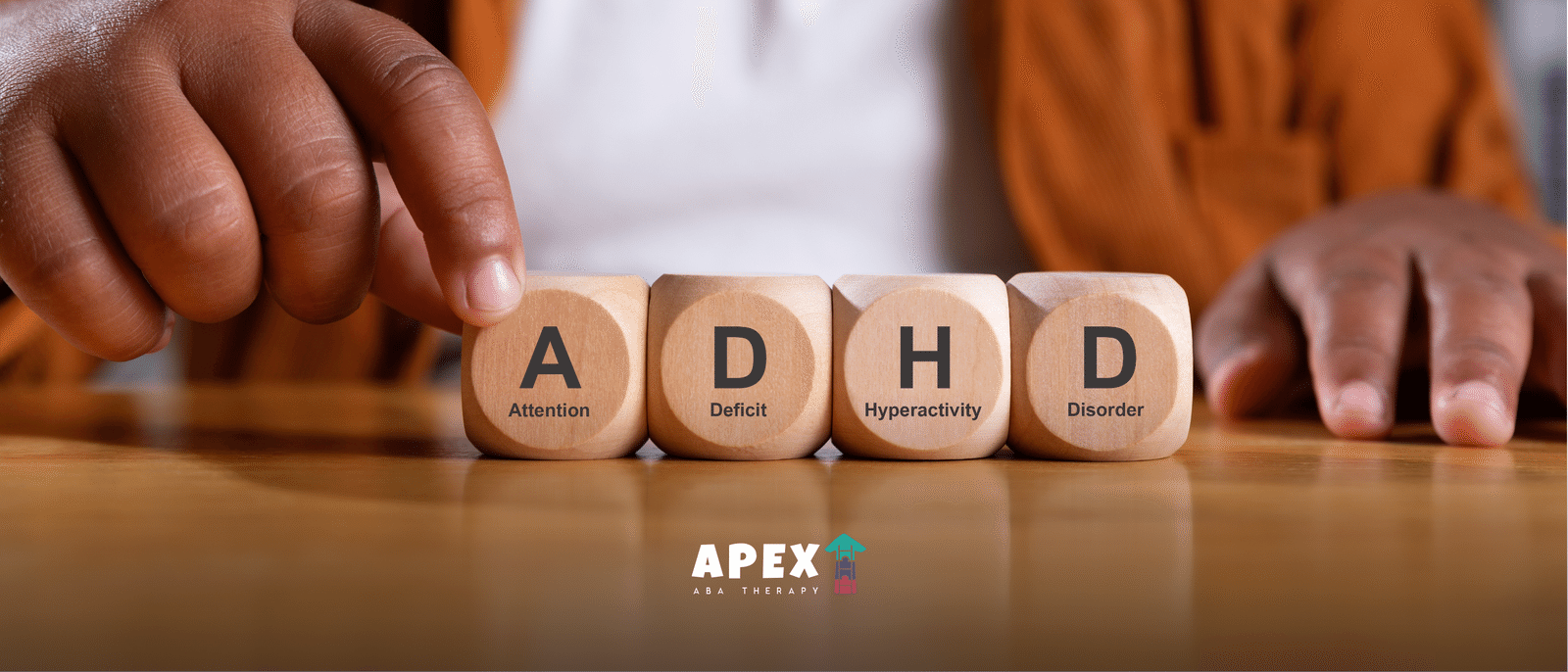
What is AuDHD vs ADHD vs autism? ADHD is a neurodevelopmental condition defined by inattention, hyperactivity, and impulsivity. Autism is a neurodevelopmental condition defined by differences in social communication alongside repetitive patterns, focused interests, and sensory processing differences. AuDHD is not an official diagnosis. It is community shorthand for a person who meets criteria for both.
The three profiles overlap on the surface and diverge underneath, which is why they call for different support. In practice, behavior therapy services built on applied behavior analysis are structured around an autism diagnosis, while ADHD is guided by parent-focused behavioral training and, past age six, medication.
What Is AuDHD vs ADHD vs Autism? Three Definitions, Plainly
ADHD affects an estimated 7 million U.S. children aged 3 to 17, roughly 11.7% of that age group, according to national survey data collected by the CDC in 2024. The core features are attention regulation, activity level, and impulse control.
Autism is identified in about 1 in 31 eight-year-olds in the United States, based on the CDC's ADDM Network estimates. The core features are social communication differences plus restricted or repetitive behaviors, including sensory sensitivities.
AuDHD describes both together. The American Psychiatric Association notes that this term has entered common use for co-occurring ADHD and autism. It will not appear on an insurance form. Two separate diagnoses will.
The Difference Between ADHD and Autism Starts With Function, Not Behavior
Here is where parents get stuck. A child in either group might interrupt, melt down at the grocery store, refuse homework, or bolt from a birthday party. The behavior is identical. The engine is not.
Attention. ADHD attention is hard to capture and hard to hold. Autistic attention is often intensely held, and hard to shift away from a topic of interest. One child cannot land. The other cannot leave.
Transitions. An ADHD-driven transition problem usually looks like losing the thread. An autism-driven transition problem usually looks like losing predictability.
Social difficulty. ADHD social friction tends to come from impulsivity and missed timing. Autistic social difficulty tends to come from a different underlying read of social rules and cues.
Sensory input. Sensory sensitivity is written into the autism criteria. A child who covers their ears in a cafeteria may be managing sensory overload, not being defiant.
One framing worth retiring: a child who escalates before a dentist visit is not being manipulative. That is anxiety with a behavioral output. The distinction changes what you do next. You can start to consult with our clinical teams in North Carolina, Georgia, and Maryland.
AuDHD Symptoms Are Not Simply ADHD Plus Autism
Families often expect the combined profile to read like a longer checklist. It rarely does. AuDHD symptoms frequently pull in opposite directions inside the same child.
Common patterns clinicians see:
- Novelty-seeking colliding with routine-seeking. The child wants sameness and gets bored by it.
- Deep focus that cannot be summoned. Hours on a preferred subject, four minutes on a spelling list.
- Executive function gaps that hide behind strong verbal skills. The child explains the plan and cannot begin it.
- Sensory-seeking and sensory-avoiding in the same hour. Craving deep pressure, fleeing loud rooms.
- Uneven mornings. Structure helps, but only when it is visible. Tools like token systems for routines often outperform verbal reminders here.
This is also why one diagnosis frequently masks the other. Clinicians call it diagnostic overshadowing. Whichever profile is louder gets named first.
Can You Have ADHD and Autism? Yes, and That Only Became Official in 2013
For years, the answer was legally no. The DSM-IV treated the two as mutually exclusive. If a child had autism, ADHD could not be added.
That changed with the DSM-5. The American Psychiatric Association's own summary of changes from DSM-IV-TR lists it directly: a comorbid diagnosis with autism spectrum disorder is now allowed.
The practical effect is significant. Anyone diagnosed before 2013 was evaluated under a rule that forced a choice. Many adults now seeking answers were assessed under that rule as children. Co-occurrence estimates vary widely across studies depending on population and method, so treat any single percentage with caution.
How ABA Therapy Approaches Each Profile
This is the part most articles blur. The three profiles do not get the same service.
Autism
Applied behavior analysis is an autism-indicated service. A BCBA identifies the function of a behavior, then teaches a replacement skill that meets the same need more effectively. Programming targets communication, daily living skills, flexibility, and safety.
Modern practice has moved away from compliance for its own sake. Goals are screened for social validity, meaning the family and the child would actually want the outcome. Skills like requesting a break, asking for help, and self-advocacy carry more weight than sitting still.
ADHD
ADHD alone is generally not treated with ABA. The American Academy of Pediatrics' 2019 clinical practice guideline, led by Dr. Mark Wolraich, names parent training in behavior management as the primary intervention for preschool-aged children with ADHD. For children six and older, the guideline pairs behavior therapy with FDA-approved medication.
Parent training and ABA come from the same behavioral science, but the delivery differs. The CDC's overview of behavior therapy describes parents typically attending 8 to 16 sessions with a therapist. Apex offers parent training built on those same principles.
There is also a funding reality worth naming early: ABA benefits are usually tied to an autism diagnosis. An ADHD-only diagnosis rarely opens that door.
AuDHD
When both are documented, ABA typically anchors the plan under the autism diagnosis, while the ADHD profile shapes how sessions run. That means shorter teaching blocks, more movement, heavier visual supports, earlier prompting, and pacing that respects a shorter window before attention drifts.
Coordination matters here. If a physician is managing medication, session data becomes a useful feedback loop for the prescriber.
A Real-World Scenario
The following is a composite drawn from patterns common in clinical practice, not an individual client.
Micah is six, living outside Charlotte. He was diagnosed with ADHD at four after his preschool flagged constant motion and difficulty staying with a group. Stimulant medication helped the running. It did not touch the meltdowns.
The meltdowns had a pattern his family had not connected: fire drills, the cafeteria, and any unannounced substitute teacher. Micah also lined up his dinosaurs in the same order every night and became distressed if a sibling moved one.
At six, a developmental evaluation added an autism diagnosis. Nothing about Micah changed. The explanation did.
His BCBA ran a functional assessment and found that most escalations were escape-driven, triggered by sensory load and unpredictability rather than task difficulty. The plan taught Micah to hand over a break card and to use noise-reducing headphones before the room got loud. His teacher added a visual schedule with a dedicated card for surprises, one of several classroom strategies the team layered in.
Sessions were also restructured for his ADHD profile: ten-minute teaching blocks, movement between each, and immediate reinforcement rather than end-of-day tallies.
Nine months later, his cafeteria meltdowns had largely been replaced by a break request. Not a cure. A different set of tools.
What Parents Should Take From This
Three things hold up across the research and the clinic.
One diagnosis does not rule out the other. If a child's ADHD support is working on activity level but nothing else, a second evaluation is reasonable.
The label matters less than the function. Two children can produce the same behavior for opposite reasons, and the reason determines the intervention.
Honest uncertainty is part of the field. Co-occurrence rates vary widely between studies. Medication response in autistic children with ADHD is less predictable than in ADHD alone. Any provider who promises certainty on either point is overselling.
Micah's family spent two years working from an incomplete picture. That is common, and it is fixable.
If your child's profile has never fit cleanly into one column, that is worth a conversation rather than another year of guessing. Our BCBAs across North Carolina, Georgia, and Maryland work with kids whose attention and autism profiles pull in different directions every week, and we can walk you through what a plan looks like when both are in play, including what insurance will and will not cover.
Send us a note and let's map out where your child actually is.
Frequently Asked Questions:
What is AuDHD vs ADHD?
ADHD is a formal diagnosis involving inattention, hyperactivity, and impulsivity. AuDHD is informal shorthand for someone who meets criteria for both ADHD and autism.
Is AuDHD a real diagnosis?
No. It is a widely used community term, not a DSM-5 category. A clinician documents two separate diagnoses instead.
Can you have ADHD and autism at the same time?
Yes. The DSM-5, published in 2013, removed the previous rule that barred diagnosing both conditions in the same person.
What are the signs of AuDHD in a child?
Look for contradictory patterns, such as craving routine while seeking constant novelty, or intense focus on preferred topics alongside difficulty starting simple tasks.
How is AuDHD treated differently in ABA therapy?
The plan is built around the autism diagnosis, but sessions are restructured for attention: shorter teaching blocks, more movement breaks, and faster reinforcement.
Sources:
- https://www.cdc.gov/adhd/data/index.html
- https://www.cdc.gov/autism/data-research/index.html
- https://www.psychiatry.org/File%20Library/Psychiatrists/Practice/DSM/APA_DSM_Changes_from_DSM-IV-TR_-to_DSM-5.pdf
- https://publications.aap.org/pediatrics/article/144/4/e20192528/81590/Clinical-Practice-Guideline-for-the-Diagnosis
- https://www.cdc.gov/adhd/treatment/behavior-therapy.html
- https://www.psychiatry.org/news-room/apa-blogs/when-autism-and-adhd-occur-together
Get started today
Ready to talk about ABA therapy?
Apex ABA Therapy helps families in North Carolina, Maryland, and Georgia access in-home, school-based, and daycare ABA services.
Popular services
Serving families in